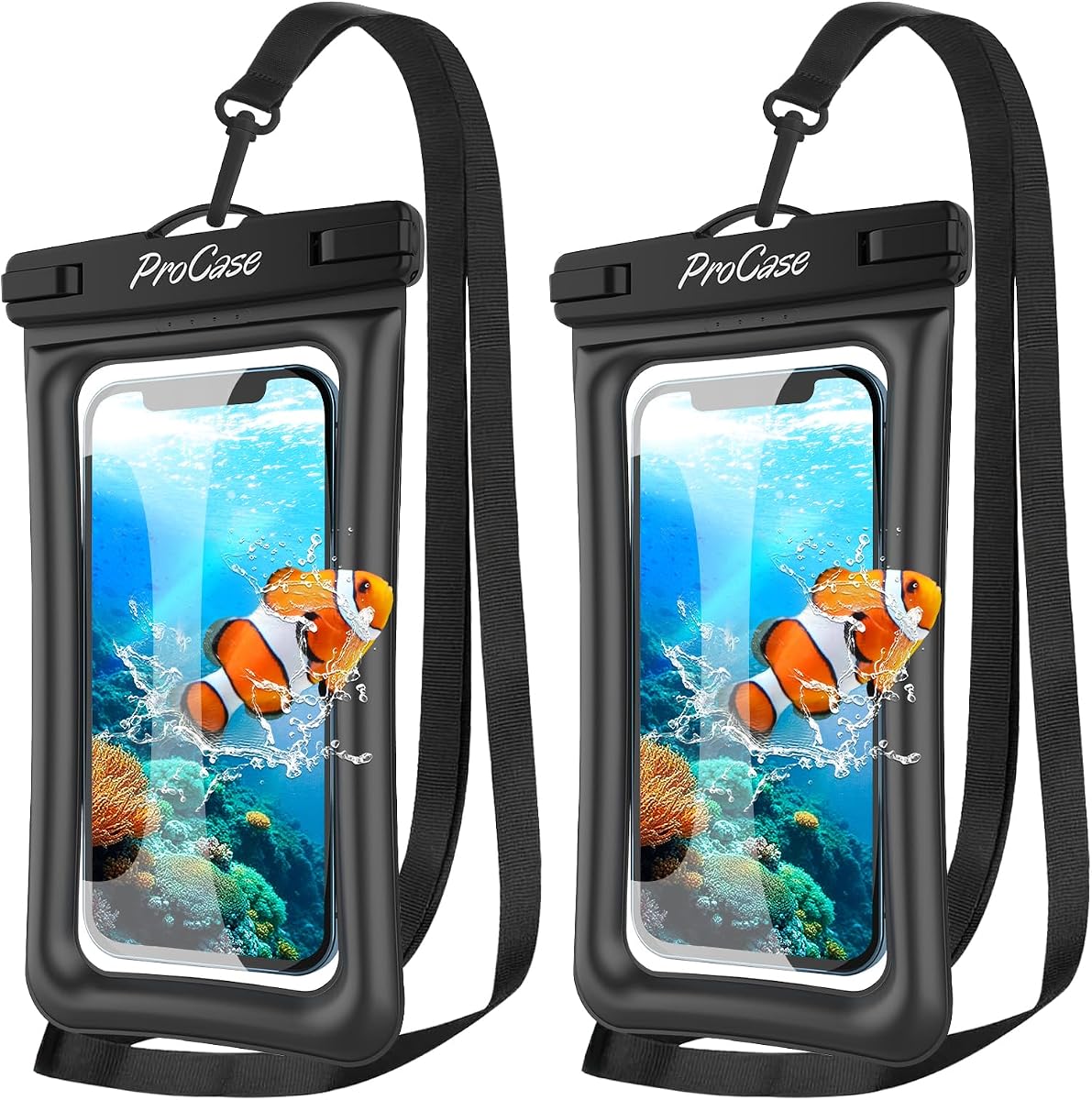
ProCase 2 Pack Floating Waterproof Phone Pouch
4.4Editor score
Two-pouch value set
Built-in floating padding
Clear front and back windows
Adjustable neck lanyards
A floating phone case for snorkeling combines waterproof protection, reliable buoyancy, secure closure, and convenient camera access in one essential travel accessory. The best models keep phones dry and easy to retrieve while remaining practical around pools, beaches, boats, and clear coastal water.
We compared the ten featured pouches using their stated waterproof certifications, supported phone sizes, floating mechanisms, closure designs, viewing windows, touch capabilities, lanyards, and intended water activities. The guide includes compact options, two-packs, dual compartments, and models designed specifically around underwater photography.
Each numbered review explains where a product is strongest, where its compromises matter, and who should consider it. Product ratings reflect the supplied customer feedback, while current prices and availability can change, so shoppers should confirm the latest listing details before buying.
4.4Editor score
4.5Editor score

4.4Editor score
As an Amazon Associate we earn from qualifying purchases.
The comparison covers every pouch in the guide, with emphasis on protection, flotation, phone capacity, visibility, and the features most relevant to snorkeling trips.


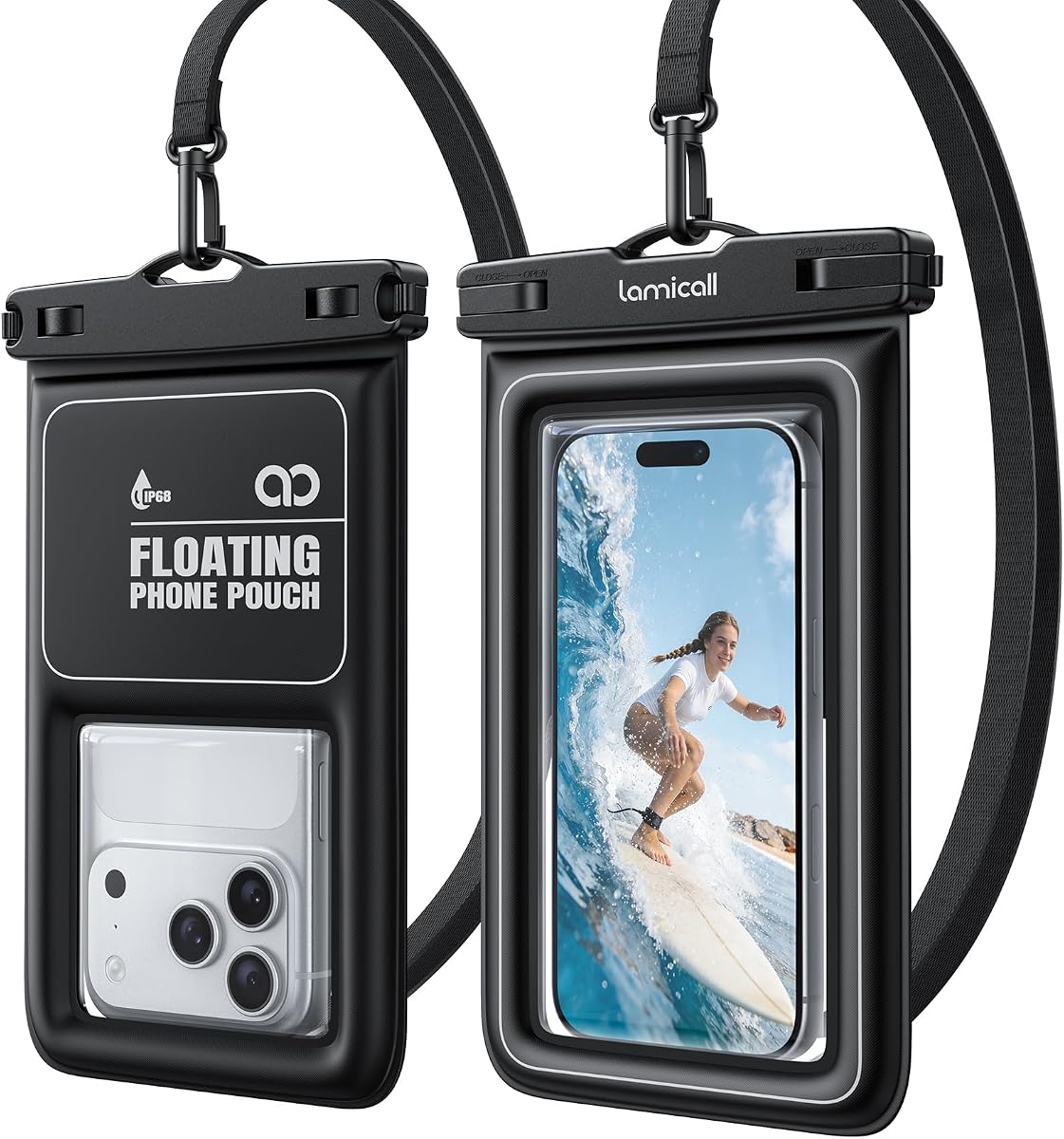
The Lamicall IP68 Floating Waterproof Phone Pouch is a versatile snorkeling accessory with a 4.5 customer rating. Its most valuable combination is a stated IP68 waterproof rating, a roomy interior for phones up to 8.5 inches, a dedicated clear camera window, and a built-in sponge air cushion that supports up to 14 ounces, or 400 grams, of buoyancy.
We may earn a commission when you buy through this link, at no additional cost to you.
This pouch is especially attractive for travelers who want to keep a large phone inside its original protective shell. The stated 8.5-inch by 4.5-inch interior provides more room than most pouches in this guide, while the waterproof touch layer is designed to remain usable with wet hands or splashes. The extra space can also hold cash and cards, making it useful beyond a basic underwater camera sleeve.
The multi-layer shield, anti-pop lock system, and clear camera opening make it a sensible all-around choice for snorkeling, kayaking, boating, and beach excursions. Its trade-offs are bulk and the need to confirm that a large phone with a case can actually fit through the opening. As with the other sealed pouches, it should be tested with a dry paper towel before use rather than assumed watertight.
This is the strongest general recommendation for snorkelers who prioritize a generous phone fit, dependable flotation, wet-hand operation, and the ability to photograph without removing the device. It is less suited to travelers seeking the smallest possible package, but its feature set and two-pouch format make it particularly practical for couples, families, or a backup unit.
The 8.5-inch interior is among the most accommodating sizes listed here, and the product is described as compatible with a bulky protective case. Measure the complete phone-and-case combination before ordering to ensure a comfortable seal.
A dedicated transparent camera window supports underwater photos and video, while the roomier compartment can organize cards and cash. Opening the camera before entering the water and using the volume controls can simplify capture.
We may earn a commission when you buy through this link, at no additional cost to you.
The Rynapac Double Space Floating Waterproof Phone Pouch has a 4.6 rating, the highest among the ten products featured. It combines a stated IPX8 waterproof rating, a three-layer locking structure, built-in sponge flotation, and two separate storage areas within a pouch sized for phones up to 8.5 inches.
We may earn a commission when you buy through this link, at no additional cost to you.
The dual-space format is the defining feature. One section can hold the phone, while the smaller compartment organizes cash, identification, keys, or a room card. That separation reduces the chance of small objects scratching the device and makes the pouch useful for cruise excursions, beach trips, hotel activities, and snorkeling sessions where carrying only a phone would be impractical.
Its clear rear window is positioned for photography, and the pouch supports side-button access and touch use while sealed. The product guidance notes that hydraulic pressure at some depths can affect the touchscreen, so underwater photographers should prepare the camera in advance and use the volume buttons. The lanyard can be worn around the neck or across the shoulder, although the stated instructions recommend removing an oversized protective case.
The Rynapac is ideal for snorkelers who want a phone pouch that doubles as an organized travel wallet. It is less convenient for users who must retain a bulky case, and underwater touch reliability should never be assumed. Subject to proper closure and pre-use testing, it offers one of the strongest balances of capacity, organization, flotation, and photography.
Keeping cards, keys, and cash in a separate section leaves the larger space dedicated to the phone. This is especially useful on boats and at destinations where loose valuables should remain organized.
The rear window supports clear photography, but deep water pressure can limit touchscreen operation. Open the camera before diving and use the physical volume controls when touch input becomes unreliable.
We may earn a commission when you buy through this link, at no additional cost to you.
The CACOE Floatable Waterproof Phone Pouch combines a 4.5 rating with a two-pouch set in black and green. It has a stated IPX8 certification, protection to a maximum depth of 30 meters, a transparent TPU construction, and four-sided double airbags designed to keep the pouch afloat.
We may earn a commission when you buy through this link, at no additional cost to you.
The floating structure is more elaborate than a single foam layer, with cushions positioned around the pouch to improve buoyancy. Its fully enclosed rim and snap-and-lock closure provide a clear sealing mechanism, while transparent material keeps the display and camera view visible. The design is aimed at swimming, boating, kayaking, snorkeling, beach outings, and water parks.
The central compromise is fit. It supports smartphones below seven inches, and some large phones require removal of their protective case. The product guidance also states that underwater water pressure and temperature can interfere with touchscreen operation and that Face ID and the home-button function may be affected. A paper-towel waterproof test is explicitly recommended before use.
This CACOE pouch is a practical choice for travelers who want two compact units, clear windows, and robust flotation without moving to a bulkier dual-compartment design. It works best for people using a relatively slim phone, and underwater users should treat camera control as a prepared task rather than a fully interactive experience.
The four-sided double-air-cushion arrangement is designed to keep the enclosure at the surface if it is dropped. That added visibility can be valuable in a pool, lake, or busy snorkeling area.
Because the pouch accepts devices below seven inches and is not intended for thick cases, compare the complete dimensions rather than relying only on the model name. A snug fit also helps the closure maintain its seal.
We may earn a commission when you buy through this link, at no additional cost to you.
The Floating Waterproof Phone Pouch 2 Pack has a 4.7 rating, making it the highest-rated option in this guide. It offers stated IP68 protection, testing up to 30 meters, high-density foam flotation, and a transparent TPU window for screen viewing and underwater photography.
We may earn a commission when you buy through this link, at no additional cost to you.
The fixed-foam approach is notable because it does not depend on inflatable components that could lose air. The pouch is designed to remain at the surface in pools, oceans, and lakes, giving the user an easier way to locate a dropped phone. Its listed activities include diving, surfing, snorkeling, kayaking, cruises, beaches, rainy days, and snow.
Compatibility is centered on phones below seven inches, with a broad list of current and recent device families. The transparent window supports touchscreen sensitivity, Face ID, and photography, although the product notes that Touch ID fingerprints are unsupported. As with every sealed pouch in the guide, a tissue or paper-towel test should confirm that the closure is working before the phone is exposed to water.
This is an attractive choice for snorkelers who place a high priority on clear underwater images and want flotation that does not need inflation. It may not suit someone whose phone or case exceeds the stated size, and the lack of Touch ID should be considered by users who rely on fingerprint authentication. Within those limits, the high rating and clear viewing window are persuasive.
The high-transparency TPU window gives the camera and display a clear line of sight. It is a strong match for reef, fish, and surface snorkel photography where color and visibility matter.
Built-in high-density foam automatically supports the pouch without inflation. That removes one failure point associated with inflatable flotation accessories.
We may earn a commission when you buy through this link, at no additional cost to you.
The UNBREAKcable Waterproof Phone Pouch is a 4.4-rated two-pack with a stated IPX8 certification, underwater protection to 30 meters, and a built-in sponge airbag. It is positioned as a durable option for swimming, kayaking, snorkeling, boating, rafting, surfing, and other outdoor activities.
We may earn a commission when you buy through this link, at no additional cost to you.
Its detachable adjustable nylon lanyard is one of the more detailed features in the list. The stated adjustment range is 35 to 55 centimeters, and the manufacturer says the lanyard can withstand at least 20 kilograms of tension. That makes it suitable for users who prefer the phone close to the neck or held in the hand rather than carrying a pouch loose around the water.
A clear front display area and a smaller rear window aligned with the camera lenses support photography. The pouch also includes a locking system and impact-resistant design. As with many competing products, thick protective cases are best removed, fingerprint-based Touch ID is unsupported, and underwater camera operation may be more reliable through the physical volume buttons.
The UNBREAKcable model is a good fit for active snorkelers who want a two-pack and value a substantial adjustable strap. It is less suitable for people who need fingerprint authentication or insist on retaining a bulky case. Its balanced protection, flotation, and camera layout make it a versatile all-purpose choice.
The adjustable, detachable nylon lanyard keeps the enclosure within reach and offers a stated tensile capacity of at least 20 kilograms. Its compact adjustment range works well for neck or hand use.
When the touchscreen becomes less responsive underwater, the volume buttons offer a practical way to trigger the camera. Preparing the camera before entering the water helps prevent missed shots.
We may earn a commission when you buy through this link, at no additional cost to you.
The ProCase 2 Pack Floating Waterproof Phone Pouch offers a straightforward combination of a 4.4 rating, stated IPX8 protection, and built-in floating padding. It accommodates phones up to seven inches and is designed for snorkeling, swimming, boating, rafting, beaches, and cold-weather travel.
We may earn a commission when you buy through this link, at no additional cost to you.
Its main appeal is straightforward utility. A clear TPU front and back window support screen operation, photography, and video, while the snap-and-lock closure provides a visible sealing action. The included adjustable neck lanyards make it easy to wear the pouch hands-free, which is useful during pool sessions or boat excursions.
The pouch does not offer the larger phone dimensions or separate storage of some higher-feature alternatives. The floating padding is intended to keep the device on the surface, but it should not be treated as a substitute for the lanyard when swimming in open water. A pre-use waterproof test is recommended by the product guidance.
For shoppers who want a straightforward floating pouch and a two-pack without moving to a premium control system, the ProCase is a compelling budget-oriented choice. It works especially well for families, couples, or anyone who wants a backup enclosure. Its limitations are basic storage, a seven-inch capacity, and no underwater touchscreen guarantee.
The clear TPU material, lock closure, and floating padding cover the core needs of a snorkeling pouch. No complicated inflation step is required before taking the phone into the water.
Two enclosures allow one person to carry a backup or enable two people to protect their phones. That makes the pack especially useful for family trips and shared vacations.
We may earn a commission when you buy through this link, at no additional cost to you.
The TORRAS IPX8 Waterproof Phone Pouch Floating is the standout premium option in this guide, combining a 4.4 rating with underwater touch support through its IceCube Air Button. Its stated certification level is IPX8, and the manufacturer describes immersion capability up to 100 feet for more than 30 hours.
We may earn a commission when you buy through this link, at no additional cost to you.
The Air Button is the defining feature because it attempts to overcome a persistent problem with waterproof pouches: pressure and water can reduce touchscreen sensitivity. Pressing the external air button allows the user to select, photograph, and record while the phone remains sealed. The 95A TPU body is described as flexible, abrasion resistant, and transparent, with usability on both the water and dry sides.
Flotation is integrated through the same Air Button design, while a detachable adjustable lanyard can be worn around the neck or wrist. Compatibility extends to large smartphones below seven inches, but users should compare their device's dimensions carefully. The product also highlights corrosion resistance against seawater and detergents, along with a 365-day quality guarantee.
This pouch is best for snorkelers who prioritize reliable underwater interaction and want the ability to photograph without removing the phone. It is less attractive to buyers who need two pouches or a separate compartment for small valuables. The premium feature set is justified for users who often operate a camera underwater and need a more dependable way to trigger it.
External air-button control is designed to maintain camera and screen access when underwater pressure makes the touchscreen inconsistent. It is particularly useful for recording fish, coral, and other moving subjects.
High-transparency 95A TPU supports clear viewing and photography from either side of the pouch. The material is also described as flexible and abrasion resistant for routine outdoor handling.
We may earn a commission when you buy through this link, at no additional cost to you.
The Pelican Marine Waterproof Phone Pouch has a 4.4 rating and a stated IP68 certification with waterproof protection to 1 meter. It is a compact regular-size option intended primarily for phone screens up to 6.1 inches, making it noticeably different from the larger phone cases in this guide.
We may earn a commission when you buy through this link, at no additional cost to you.
The pouch is designed for a broad range of activities, including snorkeling, kayaking, fishing, surfing, sailing, boating, rafting, showering, and sauna use. A soft TPU body and clear front window provide screen visibility and touch access, while the design gives easier access to the phone's side buttons. A detachable high-visibility keychain lanyard adds a quick way to keep the device close.
The principal limitation is capacity. A modern large-screen phone or a phone with a protective case may not fit comfortably within the stated 6.1-inch limit. The package contains one pouch and one detachable keychain lanyard, and a one-year warranty is included. As with the rest of the guide, users should test the seal before relying on it underwater.
The Pelican Marine is a sensible pick for travelers with smaller phones who value a compact, established marine-style design. It can also serve as an identification holder during cruises or water excursions. Buyers with large phones should look to one of the 7-inch or 8.5-inch options instead.
The regular-size format focuses on portability rather than maximum capacity. It is a better fit for compact phones and travelers who prefer to carry less bulk.
The detachable hi-vis yellow keychain lanyard makes the pouch easier to identify around a pool, boat, or beach. It also keeps the device accessible for quick checks.
We may earn a commission when you buy through this link, at no additional cost to you.
The Floating Waterproof Phone Pouch 2 Pack has a 4.5 rating, stated IP68 protection, and built-in sponge flotation. It supports phones up to seven inches and is designed for snorkeling, swimming, sailing, kayaking, rafting, beach trips, cruises, showers, and other outdoor settings.
We may earn a commission when you buy through this link, at no additional cost to you.
Its most distinctive practical feature is the long adjustable lanyard, which is listed at 87 to 165 centimeters. That range allows cross-body, shoulder, or neck-style carry depending on how the wearer wants the pouch positioned. Wide soft webbing is intended to improve comfort, while the reinforced safety lock helps keep the enclosure closed.
Both sides have clear windows, enabling screen checks and photography without removing the device. The product notes that hydraulic pressure at certain depths may affect touchscreen operation, so underwater use should rely on prepared camera settings and physical controls. The compatibility list includes many current phone families, but a bulky case may prevent a comfortable fit.
This pouch is a strong match for snorkelers who want more lanyard adjustment than a short neck strap can provide. The two-pack is useful for a backup or a second traveler. Its limitations are a seven-inch capacity and the usual loss of touchscreen reliability in deeper water.
The 87-to-165-centimeter lanyard can move from close neck carry to a longer cross-body configuration. This makes the pouch easier to wear over swimwear, beach clothing, or a light layer.
A reinforced locking clip helps maintain closure, and clear windows on both sides support viewing and photography. A paper-towel test should still be performed before each use.
We may earn a commission when you buy through this link, at no additional cost to you.
The TORRAS IP68 Waterproof Phone Pouch Floating with Double Space has a 4.5 rating and a distinctive dual-compartment layout. The larger section holds phones up to seven inches, while the smaller section separates cards, cash, earphones, and keys from the device.
We may earn a commission when you buy through this link, at no additional cost to you.
Its foam cushion technology is described as providing up to 500 grams of buoyancy, the highest stated capacity among the featured products. The white rear design also adds privacy by concealing stored objects. The phone compartment measures 255 by 138 by 21 millimeters, and the pouch is designed for large devices below seven inches.
TORRAS uses high-transparency 95A TPU and a precision closure system. An independent photography window and a larger viewing window support underwater images, screen viewing, and above-water communication. A significant limitation is that the product guidance says underwater touchscreen use is unavailable, although the camera can still be triggered through the shutter button.
The TORRAS dual pouch is best for snorkelers who want excellent flotation and organized storage without sacrificing a clear camera view. It is also a premium option for cruise travelers because the small section can hold cards, cash, keys, and compatible accessories. Those who need live underwater screen interaction should favor the Air Button model instead.
A stated buoyancy of up to 500 grams helps the pouch rise quickly after an accidental drop. Combined with the lanyard, that support gives the snorkeler two ways to keep the phone within reach.
The smaller compartment separates valuables from the phone, while the white backing helps conceal the contents. This arrangement reduces contact between hard accessories and the device.
We may earn a commission when you buy through this link, at no additional cost to you.
The best snorkeling pouch balances verified water protection, positive flotation, a secure closure, an unobstructed camera view, and a fit that accommodates the phone and its case. These factors matter more than extra compartments or touchscreen claims when the device will be submerged.
Look for a stated IPX8 or IP68 certification, but also examine how the pouch closes. A snap-lock, anti-pop lock, precision clasp, or triple-lock design can help prevent accidental opening. Certification is only meaningful if the pouch is closed correctly, free of trapped air, and inspected for damage. A paper-towel test before each use is a simple way to check for leaks before placing a valuable phone inside.
Built-in foam, sponge cushions, air pockets, or a floating Air Button can keep an accidentally dropped phone near the surface. Higher stated buoyancy may be reassuring for heavier phones, but the fit of the pouch also affects how the device displaces water. A lanyard remains essential because flotation can take time to bring the pouch back into view, especially when waves and surface glare make small objects difficult to spot.
Screen size is only one part of fit. Compare the phone's full length, width, and thickness, then add the dimensions of any protective case. Some pouches are explicitly designed to accept a bulky shell, while others require case removal. A tight fit is useful because it prevents the phone from shifting near the closure, but forcing an oversized phone into a smaller pouch can leave the seal vulnerable.
Underwater photography depends on a clear, correctly aligned window and a camera positioned close enough to it. Look for a dedicated rear camera opening and a separate transparent area for the display. Touchscreens often become less responsive as depth and hydraulic pressure increase, so prepare the camera in advance and learn the volume- or shutter-button controls. An external air button provides a more dependable alternative for active underwater shooting.
Above-water touch response is not a guarantee of underwater operation. Water pressure, depth, temperature, and the pouch's material can all affect the screen. Some products explicitly support underwater interaction through an external air button, while others advise using side buttons for photos. If underwater control is essential, prioritize a product designed around that feature rather than relying on a generic claim of sensitive touch.
A short neck lanyard is convenient for quick access, while a long adjustable strap can be worn cross-body or lower around the waist. Wide nylon webbing may feel more comfortable over swimwear and beach clothing. Detachable straps are useful when moving between water and land, and a high-visibility color can make the pouch easier to find. Check the adjustment range and whether the strap is intended to support the pouch while submerged.
Dual compartments let users keep cash, cards, keys, or earphones away from the phone, reducing scratches and clutter. Two-packs are useful for couples, families, or a waterproof backup. Single-pouches are lighter and easier to organize, while premium dual designs often combine separate storage with a stronger floating mechanism. Choose based on how much gear you actually carry instead of assuming extra space is always beneficial.
Flexible TPU and PVC are common because they provide transparency and resist water. High-transparency material improves both screen viewing and camera results, while reinforced closures and abrasion-resistant bodies add durability around rocks, boats, and beach equipment. A clear exterior helps with visibility, although a dark or opaque section can protect privacy. Color also affects how easily the pouch is noticed when it floats.
Before putting a phone into any new pouch, inspect the closure, seams, windows, and lanyard attachment. Place a dry paper towel inside, close the pouch carefully, and follow the manufacturer's recommended immersion test. A tissue can reveal a leak before the device is exposed. If moisture appears, do not continue; remove the phone, dry the pouch thoroughly, and check the closure and instructions again.
Insert the phone after opening the camera app and adjusting any desired settings. Align the camera precisely with the clear window, close and lock the enclosure, squeeze out excess air where the instructions call for it, and attach the lanyard. Before descending, test the volume-button shutter or external air button. Underwater pressure can reduce touch response, so physical controls should be the expected backup.
After the activity, remove the phone, wipe the pouch and window with fresh water, and allow both to dry fully before storing them. Avoid leaving the device in direct sun while it is sealed, and keep sharp objects away from the interior. Check the lanyard and closure for wear after repeated trips, and repeat the paper-towel test whenever the pouch has been opened, dropped, or exposed to unusual conditions.
It depends on the pouch. Some larger models, such as the Lamicall, are described as fitting phones with bulky protective cases, while many 7-inch models instruct users to remove a thick case. Compare the complete dimensions of the phone and shell with the pouch's stated capacity. For the best seal, never force an oversized phone-and-case combination into the enclosure.
Touch response can become unreliable underwater because of pressure, depth, and water conditions. Several products specifically recommend using the physical volume or shutter buttons instead, while the TORRAS Air Button model provides a dedicated external control method. Open the camera before entering the water and treat the volume button or air button as your primary underwater shooting control.
Perform a paper-towel test before putting the phone inside. Dry the towel, place it in the pouch, close the mechanism exactly as instructed, and conduct the manufacturer's recommended submerged test. Any dampness means the closure is not ready for use. Repeat this process before each trip or after the pouch has been dropped, compressed, opened unexpectedly, or inspected for damage.
A correctly fitted pouch with built-in flotation is designed to bring the phone toward the surface, but retrieval is not guaranteed to be instantaneous. Waves, glare, currents, and the phone's weight can affect visibility. Keep the lanyard attached, avoid releasing the pouch unnecessarily, and consider a bright-colored case or a higher-buoyancy model for open-water trips.
Both ratings appear among the products reviewed and indicate a strong focus on water resistance, but proper sealing remains essential. Snorkeling depth is generally within the stated use cases of these products, although every manufacturer gives testing or usage instructions. Follow those instructions, perform the leak test, and use the volume controls when underwater touch is uncertain.
A single pouch is the simplest option for one traveler, while a two-pack is useful for two people or provides a backup. A dual-compartment model adds separate storage for cash, cards, keys, or earphones and can keep those items from scratching the phone. Compare the added bulk with the amount of gear you expect to carry during snorkeling and other activities.
Most of the featured products are described as protecting against water, snow, dust, and sand in addition to full submersion. The sealed design can reduce exposure to beach grit and moisture during boating, rafting, and other outdoor trips. Rinse the pouch after contact with salt water or sand, and keep the closure clean so particles do not interfere with the seal.
Remove the phone, rinse the pouch with clean water, and let the interior and window dry completely before storing it. Keep the pouch away from direct sunlight while a phone is enclosed, and do not store sharp objects against the screen. Periodic inspection of the closure, windows, and lanyard helps identify wear before the next trip.
The Lamicall pouch is the strongest all-around choice because it combines a large 8.5-inch capacity, stated IP68 protection, solid built-in flotation, wet-hand touch, and a clear camera window. The ProCase two-pack delivers the most budget-oriented route, while the TORRAS Air Button model stands out for snorkelers who require more dependable underwater camera control.
Prioritize the features that directly affect your trip: a properly sized interior, a secure closure, credible waterproof certification, visible flotation, a reliable camera window, and a comfortable lanyard. Larger phones favor the Lamicall or Rynapac, seven-inch phones work with many alternatives, and smaller devices can use the compact Pelican Marine pouch. Underwater touch should never be the only planned method for taking photos.
Finally, check the current listing, compatibility details, included accessories, and customer feedback before ordering, because product designs and availability can change. Current prices and promotions also fluctuate, so compare the latest offer rather than relying on an old review. Whatever model you select, perform a paper-towel test before every snorkeling outing and keep the lanyard attached.