
Ring Alarm 8-Piece Kit
4.7Editor score
Sensible starter sensor set
One-touch keypad control
Optional monitoring support
Discover the best cellular alarm systems, comparing 4G LTE backup, Wi-Fi control, sensors, app alerts, installation, expandability, and monitoring options.
A cellular alarm system combines local detection with a communication path that can keep alerts moving when ordinary internet service is unavailable. The strongest choices balance cellular reliability, Wi-Fi convenience, useful sensor coverage, understandable setup, and dependable app-based control for homes, apartments, offices, and warehouses.
This guide compares ten products based on the information supplied for each listing, including connectivity, channel capacity, sensor bundles, app support, backup power, installation requirements, and monitoring options. It covers standalone communicators, expandable complete kits, and systems designed for users who want cellular backup without a conventional landline connection.
Each review explains the product's most useful qualities, practical trade-offs, and ideal buyer. Ratings and specifications reflect the supplied listings, while availability, subscription requirements, carrier compatibility, and prices can change, so readers should confirm current details before purchasing.
4.7Editor score
4.6Editor score

4.6Editor score
This side-by-side comparison highlights the main differences in connectivity, sensor coverage, control options, power resilience, and monitoring support, helping buyers match each system to their property and response requirements.




The Alula BAT-Connect-V is a universal alarm communicator rather than a ready-made home security kit. Its 4.7 rating reflects a product aimed at users who already have an alarm panel and want to add cellular, Ethernet, and Wi-Fi communication. The Verizon configuration, onboard network options, and broad compatibility make it especially relevant for a retrofit or upgrade.
We may earn a commission when you buy through this link, at no additional cost to you.
Its strongest advantage is flexibility. Instead of replacing an entire security installation, the communicator can connect an existing panel to modern communication paths. That can be useful where a landline is undesirable, local Wi-Fi coverage varies, or cellular backup is important. The listed keyswitch arming and remote interactive controls also extend control beyond the physical alarm panel.
There are important limitations. This is not a complete package of sensors, keypads, detectors, or a base station, and the title specifies Verizon compatibility. Buyers must verify panel compatibility, carrier coverage, account setup, and the exact communication requirements of their existing installation. The “near universal” positioning should be checked against the user's panel rather than assumed.
This communicator is a strong choice for a property with an existing alarm system that needs modern cellular connectivity. It is less appropriate for someone seeking a ready-to-install starter kit. For those buyers, one of the complete Ring bundles or Wi-Fi-plus-GSM systems may be the more direct path.
The combination of Verizon cellular, Ethernet, and onboard Wi-Fi gives installers several ways to carry alarm information. A compatible existing panel can gain a cellular path without requiring the buyer to assemble a new sensor ecosystem from scratch.
Keyswitch arming for remote interactive control can simplify daily operation when users want to manage an alarm away from the panel. This is particularly valuable in installations where reaching a fixed keypad is inconvenient.
We may earn a commission when you buy through this link, at no additional cost to you.
The 4G 3G GSM Alarm Security Module is a configurable communications and input module for homes, warehouses, and commercial properties. Unlike the Alula product, it is not presented primarily as a retrofit communicator for a conventional panel. Its defining feature is eight independent detection channels, each able to carry customizable alert content.
We may earn a commission when you buy through this link, at no additional cost to you.
That channel count makes the module useful for a distributed property where different doors, zones, machines, or access points need separate identification. Each input can operate in normally closed or normally open mode, allowing it to work with a broader selection of sensors and trigger arrangements. Its stated DC five-to-fifteen-volt input range adds installation flexibility as well.
Buyers should note that this listing does not include a customer rating, so there is no rating signal to compare against the better-reviewed kits. It also does not describe a complete sensor package. The module appears better suited to a technically informed buyer or installer who understands input wiring, trigger polarity, and cellular provisioning than to someone wanting an instantly deployable consumer alarm.
The product is a compelling choice for a warehouse, rental property, or custom monitoring setup requiring multiple separately labeled channels. For a standard apartment or small home, a complete kit with included sensors, app controls, and simple pairing may be easier to operate. Confirm power, wiring, SIM requirements, and alert destinations before choosing it.
Each of the eight channels can be assigned custom alert content, helping users identify the source of a trigger more quickly. This is useful in buildings where a single generic alarm message would not tell an operator exactly which area needs attention.
Normally open and normally closed modes broaden the range of sensors that can be connected. A five-to-fifteen-volt input range and low-power design also make the module adaptable to different installed environments.
We may earn a commission when you buy through this link, at no additional cost to you.
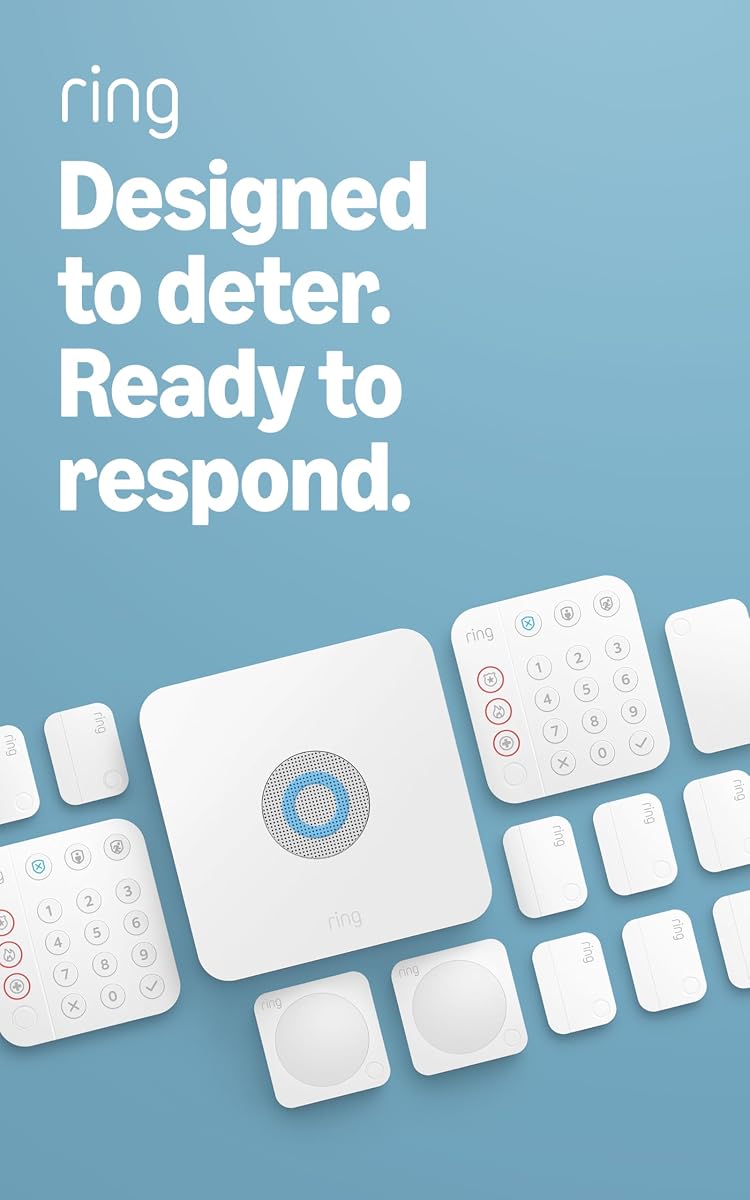
The Ring Alarm 8-Piece Kit is a balanced starter package for a one- or two-bedroom home, small office, or similar property. It carries a 4.7 rating and includes a base station, keypad, four contact sensors, one motion detector, and one range extender. That combination covers common entry points and a primary area without overwhelming a new user with a large installation.
We may earn a commission when you buy through this link, at no additional cost to you.
Its defining strength is a sensible balance of hardware and familiar digital control. The keypad handles local arming and disarming, while the Ring app provides mobile notifications and centralized device monitoring. The range extender can improve radio coverage, and additional compatible sensors can be added as the property or security needs evolve. Voice control through Alexa is also listed for users with a compatible subscription.
The main qualification is that this is not a self-contained professional monitoring package. Mobile notifications, remote arming, cellular failover during internet outages, voice control, and access to professional monitoring depend on a compatible Ring Protect Plan sold separately. Buyers who require cellular communication as the primary path rather than an optional feature should examine those service terms carefully.
This kit is a good value for someone seeking a recognizable, expandable platform with a balanced collection of sensors. It is better for modest homes than for large properties that need numerous contact sensors and multiple motion detectors. For those larger spaces, the 14-piece kit offers more comprehensive coverage.
Four contact sensors cover multiple doors or windows, while the motion detector broadens protection to an occupied room. The range extender adds flexibility in homes where the base station and sensors would otherwise be spread across challenging radio distances.
Users can manage their Ring devices through the app and add compatible accessories as requirements change. This makes the kit a starting point rather than a fixed configuration, although subscription-dependent features should be evaluated during setup.
We may earn a commission when you buy through this link, at no additional cost to you.
The Ring Alarm 14-Piece Kit is the most complete conventional Ring Alarm bundle in this guide. It is designed for two- to four-bedroom homes and includes two keypads, eight contact sensors, two motion detectors, a base station, and a range extender. Its 4.6 rating indicates strong reception among users while reflecting a slightly more complex package than the smaller kits.
We may earn a commission when you buy through this link, at no additional cost to you.
The number of sensors is the major reason to choose this model. Eight contact sensors offer much better coverage of exterior doors and accessible windows, while two motion detectors can cover separate high-traffic areas. Two keypads provide convenient arming and disarming on different floors, and the range extender supports communication throughout a larger home or small business.
As with the other Ring Alarm systems, optional services shape the final experience. The listing supports mobile notifications, app-based monitoring, remote arming, continued operation if Wi-Fi goes down, and access to 24/7 professional monitoring when a compatible Ring Protect Plan is subscribed to. Users who want those capabilities must account for the separate plan and check its current terms.
This is the strongest all-around choice for buyers who need more sensor coverage than an apartment or starter kit can provide. It avoids assembling every component individually and offers a coherent ecosystem with room to expand. Buyers in very small spaces may find the smaller kits more efficient, while those with particularly complex needs should assess professional monitoring and installation support.
Eight contact sensors and two motion detectors create a more complete first layer of detection than the smaller Ring kits. This configuration is better suited to several entrances, hallways, common rooms, and an exterior access point.
Placing keypads on separate floors reduces the need to walk to a single control point. It also gives household members or staff a more convenient way to arm and disarm the alarm.
We may earn a commission when you buy through this link, at no additional cost to you.
The Telular TG-7 LTE-A is a dedicated cellular alarm communicator with a narrow, installation-focused purpose. Its supplied information is brief, identifying it as a TG-7 LTE-A cellular unit rather than a complete security system. Buyers should therefore view it as a component for an existing or planned alarm installation, not as a ready-made home kit.
We may earn a commission when you buy through this link, at no additional cost to you.
LTE-A is the central feature. A cellular communicator can give an alarm panel a wireless path for sending event information when a traditional telephone line is unavailable or unwanted. This makes the TG-7 relevant for retrofits, secondary monitoring paths, and installations where cellular continuity is a priority.
The lack of a customer rating and sparse listed specifications require extra diligence. Compatibility, carrier requirements, programming, antenna placement, SIM provisioning, and the exact outputs or controls supported by the unit should be verified before purchase. Buyers who cannot comfortably configure these elements may benefit from professional installation assistance.
For a technically capable owner or installer seeking a dedicated LTE-A communication path, the TG-7 is a focused solution. It is not the right choice for someone expecting included contact sensors, motion detectors, a keypad, or consumer app controls. Its appeal comes from doing one specialized job rather than offering a complete security ecosystem.
Using a purpose-built cellular communicator can modernize an alarm panel without treating the communicator as a full security hub. This keeps the communication role clear and can simplify comparison with other alarm transmission devices.
The TG-7's LTE-A designation makes cellular network compatibility the decisive factor. Buyers should verify current carrier support and service requirements in their location before finalizing the purchase.
We may earn a commission when you buy through this link, at no additional cost to you.
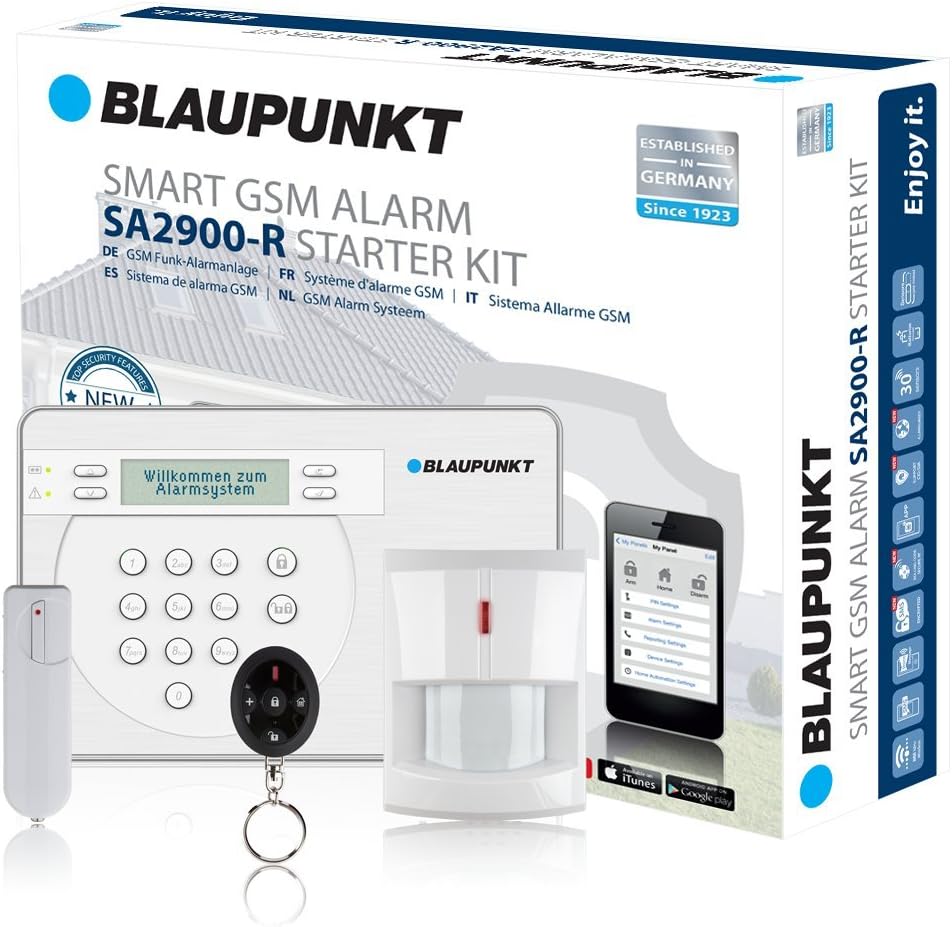
The Blaupunkt SA 2900 is a GSM-based wireless alarm system that includes a motion sensor, a door or window sensor, a remote control, and an alarm center. Its 4.4 rating makes it one of the better-rated options in the guide, though the system is intended for users comfortable managing a SIM card and cellular alarm service.
We may earn a commission when you buy through this link, at no additional cost to you.
The alarm center supports loud sirens and call notifications through a GSM module. A built-in microphone provides a listening function for status assessment, while the listing says damage or breakdowns can be reported wirelessly via SMS. The system also includes a rolling or changing code intended to protect radio signals against replay attacks, adding a useful security consideration for wireless communication.
Its self-installation design uses wireless plug-and-play accessories, making it approachable for a home, office, or small work property. However, a SIM card is required and not included. Users must also determine the carrier, data requirements, activation process, and any ongoing service terms needed for calls or SMS. The eighteen-hour emergency power supply helps preserve operation during an outage.
The SA 2900 is appealing to buyers who want a traditional GSM alarm center with phone-call alerts rather than a Wi-Fi-only ecosystem. It suits small properties that can be protected with a motion detector and one contact sensor. Larger installations may need more sensors, and buyers who prefer modern app automation should compare those priorities before purchasing.
GSM calling gives the system a direct way to reach designated recipients when an event occurs. SMS reporting for faults and damage adds another communication layer that can be useful if the primary alarm path needs an additional signal.
The plug-and-play wireless approach reduces the need for extensive wiring and allows accessories to connect through a button-based process. A self-installed system can be repositioned as security needs evolve, provided the installer follows the operating instructions.
We may earn a commission when you buy through this link, at no additional cost to you.
The 24-Piece Wi-Fi and GSM/4G Home Alarm System offers the largest bundled component count in this comparison. Its 4.3 rating is solid, though lower than the top Ring kits, and its feature set focuses on comprehensive wireless coverage, flexible app control, and several ways to deliver an alert after a sensor is triggered.
We may earn a commission when you buy through this link, at no additional cost to you.
The hub supports 2.4GHz Wi-Fi and can accept a 4G SIM card for phone-call and SMS alarm functions. Users can operate the system through the Smart Life or Tuya app, add compatible PGST accessories, and create custom sensor names. The color display presents status, weather, date, and system information, while support for smart voice assistants enables hands-free control with compatible services.
The listing says there are no monthly fees after activation, which may appeal to users who want alerts without a recurring monitoring subscription. It also describes tamper protection, an emergency SOS button, a 120dB siren, and notifications through phone, SMS, and app channels. Buyers should still verify what the 24-piece package contains, because the supplied information does not enumerate every included item. A 4G SIM and suitable service may be necessary.
This kit is well suited to buyers who want extensive coverage and several alert methods in one package. It is particularly relevant for larger homes or properties with multiple access points. Anyone whose primary network is 5GHz-only should note the stated 2.4GHz Wi-Fi limitation and plan accordingly.
A 24-piece format offers more hardware than the conventional starter kits, reducing the need for separate accessory orders. Buyers should still map the included components to doors, windows, common areas, and emergency controls before installation.
Phone calls, SMS messages, and app notifications provide multiple ways to learn about a trigger. This breadth can be valuable when a user wants a local siren and remote awareness at the same time.
We may earn a commission when you buy through this link, at no additional cost to you.
The Ring Alarm 5-Piece Kit is tailored to condos, apartments, and other relatively compact spaces. It has a 4.7 rating and includes a base station, keypad, one contact sensor, one motion detector, and one range extender. The small footprint makes it easier to deploy without installing sensors in every room or doorway.
We may earn a commission when you buy through this link, at no additional cost to you.
Its simplicity extends to everyday operation. The contact sensor watches an entry point, the motion detector covers an interior area, and the keypad handles local arming and disarming. The range extender can improve communication where placement is less than ideal. Users can monitor their Ring devices in the app and add accessories when their security needs become more extensive.
The trade-off is obvious coverage. One contact sensor and one motion detector cannot protect a large home without additional accessories. Remote arming, continued operation during a Wi-Fi outage, voice control, and 24/7 professional monitoring also require a compatible Ring Protect Plan. This makes the kit most attractive when paired with a straightforward subscription decision or used primarily for app-based notifications.
For an apartment occupant or condo owner wanting an uncluttered introduction to the Ring Alarm platform, this is a strong fit. It is easy to place, simple to operate, and ready to grow. Larger households should consider the 8-piece or 14-piece kit to avoid purchasing several extra sensors immediately.
One entry sensor and one motion detector form a manageable core for an apartment or condo. The limited starter set can be placed strategically without creating unnecessary hardware around the property.
The base station, keypad, and app create a straightforward control structure. Compatible sensors and accessories can be added later as the resident gains a better understanding of vulnerable entry points.
We may earn a commission when you buy through this link, at no additional cost to you.
The SimpliSafe 8-Piece Wireless Home Security System is designed around approachable setup and optional professional monitoring. Its 4.5 rating reflects a well-regarded package for homes that want wireless entry sensors, motion coverage, and app control without drilling or complex installation. The base station, app, sensors, keypad, and panic button form a complete beginning.
We may earn a commission when you buy through this link, at no additional cost to you.
Entry sensors protect doors, windows, and cabinets, with customizable Secret Alerts that notify users without sounding the alarm. Motion sensors detect movement within 35 feet, offer a 90-degree field of view, and are described as suitable for pets under 60 pounds. The wireless keypad provides local arming and disarming, while app and smart-assistant support add remote control.
Professional monitoring is optional, and some advanced responses depend on it. The product listing notes that a free introductory monitoring period is included, with no long-term contract or hidden fees described for the service. Users should confirm current plan terms, supported locations, trial conditions, and warranty implications before making a long-term decision. The manufacturer states that products and professional monitoring are supported only in the United States.
This is an attractive choice for a homeowner who prioritizes simple setup, polished app control, and the option of monitored emergency response without a contract. It is less suitable for a buyer seeking a dedicated cellular communicator or a large catalog of included accessories. US buyers should also verify current service availability in their area.
Secret Alerts can notify a user when a monitored entry point is accessed without sounding a full alarm. This is useful for cabinets, interior doors, or other spaces where an audible alert could create unnecessary disturbance.
The optional professional monitoring service allows owners to select monitoring based on their needs rather than relying on a mandatory long contract. The included introductory period also provides an opportunity to evaluate the service before deciding on an ongoing arrangement.
We may earn a commission when you buy through this link, at no additional cost to you.
The Wireless Alarm System 16-Piece Kit stands out for its combination of dual-network communication and a substantial sensor package. Its 4.6 rating places it among the stronger-reviewed choices. It includes six door or window sensors, three motion detectors, a hub, and a keypad, giving a typical home or apartment broad initial coverage.
We may earn a commission when you buy through this link, at no additional cost to you.
Its most important feature is Wi-Fi plus 4G failover. When the local internet connection fails, the system can switch to a cellular network when a compatible SIM card and service are available. The listing states that app usage carries no monthly fee, although cellular service may still require a separate SIM arrangement. That distinction should be understood before purchase.
Power resilience is another major strength. The hub includes a rechargeable battery that can maintain operation for up to 48 hours during an outage. Physical anti-removal protection is paired with a local alarm and real-time phone alerts. Motion sensors offer a stated 110-degree viewing angle and 12-meter detection range, while the system can produce a 120dB siren.
Installation differs from many wireless competitors. Although sensors communicate wirelessly, the hub supports drilled mounting and includes mounting hardware, so it is not entirely drill-free. Users can pair through 2.4GHz Wi-Fi, control the system through the Smart Life or Tuya app, and use Alexa voice commands. This is a premium feature-rich choice for buyers who prioritize cellular continuity and outage resilience.
When Wi-Fi becomes unavailable, 4G backup can maintain communication to the user's app and other configured alert destinations. This is especially relevant where an internet outage would otherwise leave the alarm hub disconnected.
A rechargeable reserve rated for up to 48 hours gives the hub time to continue detecting and communicating after utility power fails. The anti-removal feature adds a second layer by reporting attempts to detach the unit from its mounting position.
We may earn a commission when you buy through this link, at no additional cost to you.
The right cellular alarm system depends on the existing alarm hardware, property size, communication needs, monitoring expectations, and installation preferences. Buyers should distinguish between a complete kit and a communicator designed to connect an existing panel.
A complete kit includes a hub or base station, sensors, and controls that can be installed as a unified system. A communicator serves a narrower role by carrying alarm signals from an existing panel through cellular, Ethernet, or Wi-Fi. The Alula BAT-Connect-V and Telular TG-7 fall into the latter category, while the Ring, SimpliSafe, Blaupunkt, and large Wi-Fi-plus-4G bundles provide broader combinations of user-facing hardware.
Choose a complete kit for a new installation unless an existing alarm system already meets your sensor and control needs. Choose a communicator when retaining an installed panel is simpler or more economical than rebuilding the security ecosystem.
A cellular alarm can use 4G LTE, older 3G or GSM service, or a product-specific carrier, and those paths are not interchangeable. The Alula model specifically identifies Verizon, while other modules may support broader or regional networks. Systems with a 4G SIM option generally require a compatible SIM card, which may or may not be included.
Check the carrier, coverage, activation process, supported frequency bands, and any recurring service requirements before ordering. A cellular label alone does not guarantee service in every location or under every account configuration.
Wi-Fi is convenient for app control, configuration, and everyday management, but it becomes less useful when the local connection fails. Cellular backup addresses that gap by providing an alternative communication path. Some products use cellular as a backup, while others present Wi-Fi and 4G as a dual-network system that can switch automatically.
Decide whether cellular continuity is essential or merely desirable. If a landline or internet outage would leave the property unmonitored, prioritize a system with a properly provisioned cellular route and confirm that the intended alerts work over that path.
Start by listing every exterior door, accessible window, common hallway, parking area, and other location worth monitoring. A five-piece kit may suit an apartment with only one priority entry point, while an eight- or fourteen-piece Ring bundle or a sixteen- or twenty-four-piece Wi-Fi-plus-cellular system offers more comprehensive coverage. Motion sensors should be positioned where they can detect movement without unnecessary false alerts.
Use the included sensor count as a starting point rather than a final coverage plan. Verify the exact contents of larger bundles, note any recommended motion-sensor placement, and budget for additional compatible sensors if the property has more vulnerable openings than the package covers.
Self-monitoring gives users direct app notifications and control, while professional monitoring adds a service that can contact emergency responders. Ring and SimpliSafe offer optional professional monitoring under their respective plans. Other systems emphasize direct phone, SMS, or app alerts and describe their local alarm operation without presenting the same monitored-service option.
Review service terms rather than assuming every alert reaches emergency services. Consider the cost, trial period, contract length, response process, supported location, and whether a panic or emergency function depends on a subscription. The distinction can materially change the value of two otherwise similar kits.
Wireless sensors generally reduce cabling, but the hub still needs a reliable location, adequate radio communication, and suitable power. Most kits promote simple setup, while some describe plug-and-play pairing, and the 16-piece hub explicitly supports drilled mounting. Tabletop placement, drilling, app pairing, and account setup should all be considered part of installation.
Read the included accessories and mounting guidance before installation. If you rent, cannot drill, or are uncomfortable configuring electronics, select a system that emphasizes adhesive or freestanding placement and offers straightforward self-installation assistance.
A cellular communicator still depends on local power, so backup battery duration matters. The Blaupunkt SA 2900 states an eighteen-hour emergency supply, while the 16-piece Wi-Fi-plus-4G system describes up to 48 hours. These figures provide a meaningful difference in longer outages, though actual duration can depend on operating conditions and alert activity.
Tamper protection is another valuable layer. Several hubs detect unauthorized removal and can trigger local or remote alerts. Choose a design that keeps the hub visible or securely mounted, uses a code to prevent casual disarming, and records tampering through the same communication path as ordinary events.
App control should make arming, disarming, status checks, and notifications straightforward. Several complete kits support Smart Life or Tuya, while Ring uses its own app and SimpliSafe uses the SimpliSafe app. Voice-assistant support appears across multiple products, including Alexa compatibility and, for SimpliSafe, Google Assistant compatibility.
Consider whether a shared smart-home platform matters more than brand-specific automation. Confirm the app's region, account requirements, notification permissions, voice-control subscription conditions, and support for the exact sensors included with the kit before finalizing.
Begin by planning the system rather than immediately mounting every component. Walk through the property, identify priority entrances and movement areas, and place the hub where it can receive sensor signals while remaining accessible for power and network connections. Read the manual, confirm the included component list, and gather the required SIM card, account information, app, and compatible subscription before pairing devices.
Power on the hub and complete the manufacturer's setup process in the prescribed order. Connect the hub to the desired Wi-Fi network, provision cellular service if the product supports it, create or sign into the app account, and then pair one sensor at a time. Test each contact sensor by opening and closing its designated entry point and test each motion detector by walking through its intended coverage area. Name every zone clearly so alerts identify their source.
For ongoing care, test the alarm regularly according to the manufacturer's guidance, check battery indicators, keep sensors free of dust and obstruction, and verify that the hub remains securely mounted. Test cellular failover by temporarily disconnecting the internet connection after confirming cellular service is active. Review subscriptions and account settings periodically, and update the app and firmware when instructed by the manufacturer.
No. Some cellular products are communicators that require an existing alarm panel, while complete kits may use Wi-Fi as their primary connection and offer 4G only as a backup. Review the operating modes carefully and verify whether cellular service is included or requires a separate SIM card.
It depends on the product. The 16-piece Wi-Fi-plus-4G system and the Blaupunkt SA 2900 explicitly state that a SIM card is not included, while other listings do not make that detail clear. Buyers should confirm the exact package contents and obtain a compatible SIM with appropriate service before setup.
Usually not. A communicator such as the Alula BAT-Connect-V or Telular TG-7 is intended to connect an existing compatible alarm panel to a cellular communication path. A complete system additionally provides sensors, keypads, detectors, and a control hub.
Wi-Fi normally serves as the primary connection for configuration, app access, and notifications, while 4G takes over if the internet becomes unavailable. The 16-piece kit specifically describes automatic switching to cellular service when Wi-Fi goes down.
Not necessarily. Direct app, SMS, or phone notifications may notify only the people you designate. Ring and SimpliSafe offer optional professional monitoring, while a panic button in some systems may require a monitoring subscription to initiate an emergency response.
A smaller five-piece kit may cover an apartment with one priority entrance and one motion-covered area, while larger homes require more contact sensors. Count vulnerable doors and windows first, then add motion coverage for common rooms without placing sensors where everyday movement is likely to cause nuisance alerts.
Several products are designed for expansion. The Ring kits support additional compatible sensors and accessories, the 16-piece and 24-piece systems support extra PGST sensors, and the eight-channel module offers multiple configurable inputs. Expansion compatibility should be verified before adding third-party equipment.
Most consumer-oriented kits emphasize DIY installation, while dedicated communicators and custom input modules may require more technical configuration. The main differences are wiring, SIM provisioning, hub mounting, app pairing, and whether the existing alarm panel must be programmed for communication.
The Ring Alarm 14-Piece Kit is the strongest all-around option for larger homes because it combines broad sensor coverage, two keypads, app control, and optional professional monitoring. The Ring Alarm 8-Piece Kit offers a more balanced starter configuration, while the Wireless Alarm System 16-Piece Kit stands out for automatic 4G failover, extended battery reserve, and a generous sensor set.
Prioritize the path that matches the property: choose a complete kit for a new installation, a dedicated communicator for an existing compatible panel, and dual-network equipment where internet outages must not silence alerts. Carrier compatibility, included sensors, backup duration, app behavior, and monitoring terms deserve as much attention as the alarm hardware itself.
Availability and pricing change over time, and some features require subscriptions or SIM service even when no recurring fee is advertised. Before purchasing, confirm the current package contents, cellular provider, coverage, service terms, installation requirements, and warranty information for the exact model.
