
Audio-Technica ATH-M20x
4.6Editor score
Enhanced low-frequency tuning
Practical 40 mm drivers
Circumaural sound isolation
Single-side cable exit
Our closed back headphones for gaming guide compares ten wired models for isolation, comfort, sound quality, microphones, connectivity, and long-session value.
Closed back headphones for gaming can deliver focused, immersive sound without the open design that may let distractions enter your session. The right pair should balance accurate directional cues, dependable isolation, comfortable padding, reliable connectivity, and a microphone that suits your preferred communication setup.
We compared ten closed back gaming and studio headphones using the supplied specifications, customer ratings, driver designs, acoustic construction, comfort features, and connection options. The list includes dedicated gaming headsets, traditional studio monitors, audiophile models, and mobile-friendly headphones for PC, console, and listening.
Each review identifies the strongest use case, important technical qualities, and practical compromises rather than assuming every gamer wants the same headphone. Rankings reflect the available product information, while current prices and promotions can change at any time and should be checked before purchasing.
4.6Editor score

4.7Editor score

4.2Editor score
The comparison below highlights the major differences in acoustic design, driver configuration, isolation, comfort, microphone support, and connectivity. It helps separate dedicated gaming headsets from studio and audiophile headphones that may require an external microphone.




The Sony MDR7506 earns the top position because it combines a strong 4.7 customer rating with a proven studio design that translates effectively into gaming. Its 40 mm neodymium drivers promise powerful, detailed sound, while the closed-ear construction helps reduce distractions from the room. For competitive titles, shooters, and expansive single-player games, this is a dependable all-round choice.
We may earn a commission when you buy through this link, at no additional cost to you.
The large-diaphragm drivers are designed to provide more scale and impact than the small drivers found in many lightweight gaming headsets. Sony specifies a 10 Hz to 20 kHz frequency response, giving the headphone broad coverage for deep effects, dialogue, environmental detail, and sharp treble cues. The secure closed-ear fit also makes it useful when nearby activity could otherwise compete with in-game audio.
There are two clear compromises. The nine-point-eight-foot cable is fixed, so damage cannot be solved by replacing the cable, and the headphones do not include a microphone. That makes the MDR7506 less convenient for voice chat than a dedicated gaming headset. It also means gamers using laptops may need to manage a long cable or connect through a hub with the appropriate 3.5 mm connection.
The MDR7506 is best for players who prioritize dependable sound, isolation, and durability over an integrated microphone. It works especially well for PC gaming, console play, and listening sessions in a shared space. A separate microphone or headset can handle team communication, while this headphone handles the part of gaming that matters most to many players: clear, full-bodied, and immersive audio.
The powerful, detailed 40 mm driver configuration should help players distinguish footsteps, dialogue, and environmental effects. Sony's stated 10 Hz to 20 kHz response covers the low and high ends without limiting the frequencies available to a game mix.
The closed-ear structure is intended to reduce external noise, which helps maintain concentration. Rugged construction and folding earcups also make the MDR7506 practical for repeated use, although the fixed cable remains less flexible than a detachable design.
We may earn a commission when you buy through this link, at no additional cost to you.
The Audio-Technica ATH-M20x is the value-focused selection in this guide, pairing a 4.6 rating with a straightforward studio-monitoring design. It uses 40 mm drivers with rare-earth magnets and copper-clad aluminum wire voice coils, while its tuning is specifically described as enhanced for low-frequency performance. That makes it appealing for action games where footsteps, engines, and effects carry substantial weight.
We may earn a commission when you buy through this link, at no additional cost to you.
Its circumaural shape surrounds the ears with a closed design intended to provide solid isolation. The single-side cable exit avoids having a cable descend from both earcups, reducing tangling and making the headphone easier to manage on a desk. It is also built with the sort of straightforward functionality that suits players who want a reliable wired headphone without complicated controls or active features.
The ATH-M20x is not a dedicated gaming headset, so buyers must supply their own microphone. Its studio-oriented tuning may also sound less spacious than audiophile-oriented models with wider imaging, and it does not provide the same luxury comfort or refined construction as more expensive premium alternatives. Those limitations matter most if spatial presentation and polished materials are primary buying goals.
This is a compelling pick for budget-conscious PC or console players who want fuller low end, reliable isolation, and a dependable wired connection. It can serve equally well as an everyday listening headphone. If the main priority is getting a capable closed-back audio tool without paying for dedicated gaming features, the M20x delivers a focused and understandable package.
Audio-Technica's enhanced low-frequency tuning gives the ATH-M20x a more forceful foundation than many neutral studio designs. That emphasis can make explosions, footsteps, and layered effects feel more tangible during play.
The single-side cable exit reduces visual clutter and makes the wired connection easier to organize. A detachable or separate microphone can add team-chat capability without changing the headphone itself.
We may earn a commission when you buy through this link, at no additional cost to you.
The Sennheiser HD 569 brings a 4.5 rating and a useful combination of audiophile design and everyday convenience. Its proprietary 38 mm, 23-ohm transducers sit inside a closed-back, around-ear structure. The relatively low impedance makes the headphones sensible for a wide range of sources, while the included short cable includes an inline microphone and remote for calls and music control.
We may earn a commission when you buy through this link, at no additional cost to you.
Two detachable cables provide flexibility: a three-meter lead with a 6.3 mm jack for desktop equipment and a 1.2-meter lead with a 3.5 mm jack for a laptop, phone, or controller connection. Soft replaceable ear pads improve comfort and make long-term maintenance easier. For a player moving between a gaming desk and mobile setup, having both cable lengths available is more useful than choosing only one permanently.
The trade-off is that this remains a traditional wired headphone rather than a modern USB gaming headset. The inline remote only appears on the short cable, so switching to the longer desktop lead means losing its microphone and control functions. It also lacks a boom microphone, which can make team communication less consistent in noisy rooms. The 38 mm transducers are smaller than those found in several flagship alternatives.
The HD 569 suits gamers who want serious closed-back listening quality and value the convenience of two cables. It is a strong option for PC gaming, casual console sessions, and everyday music, particularly when an inline microphone is acceptable for voice communication. Those who want a dedicated boom mic or gaming-oriented controls should choose the EPOS H6Pro instead.
The included long and short leads cover desktop and mobile use without requiring another purchase. The short lead's inline microphone and remote make it the more convenient gaming and communication option.
Soft replaceable ear pads are valuable during long sessions because they can be renewed as the material ages. This makes the HD 569 more serviceable than a headset whose cushions and cable are permanently fixed.
We may earn a commission when you buy through this link, at no additional cost to you.
The Sennheiser HD 620S is the premium choice for players who care more about a natural, spacious presentation than gaming-specific hardware. Its 4.2 rating is lower than those of several studio alternatives, but the specification sheet presents a thoughtful design: 42 mm dynamic transducers, angled drivers, a 150-ohm aluminum voice coil, and an open-baffle system within a closed-back enclosure.
We may earn a commission when you buy through this link, at no additional cost to you.
The open-baffle approach is intended to create a wide, natural soundstage while retaining the isolation benefit of a closed design. Angled transducers are positioned to mimic speaker placement, improving stereo imaging and the sense that sounds occupy a defined space. The specification explicitly connects these qualities with clear positional cues in single-player, console, and PC games, making the model relevant beyond music listening.
Its main limitation is system demand. A 150-ohm load is less demanding than some studio headphones, but it is not the simple plug-and-play choice that many gamers expect from a 32-ohm model. Dedicated DACs and headphone amplifiers can provide cleaner, more stable performance, especially with demanding PC, console, or hi-fi equipment. There is also no integrated microphone, and the 3.5 mm to 6.3 mm adapter is optimized for wired desktop sources.
The HD 620S is best for immersive single-player games, cinematic adventures, and players building a serious desktop audio setup. Its combination of isolation, natural tonality, and wide imaging can be especially rewarding when the game mix is well produced. For competitive play or quick mobile sessions, a lower-impedance model may be more convenient.
The open-baffle acoustic system gives the HD 620S a more spacious presentation than a conventional sealed design while preserving closed-back isolation. This balance can help cinematic games feel less compressed and more dimensional.
The angled transducer placement is designed to reproduce the spatial relationships of a conventional speaker setup. That can make it easier to understand where footsteps, vehicles, and environmental sounds originate without relying on exaggerated virtual surround effects.
We may earn a commission when you buy through this link, at no additional cost to you.
The Sony MDR7506 remains one of the most recognizable closed-back headphones in professional audio, and its 4.7 rating reflects a well-regarded foundation for gaming use. Neodymium magnets and 40 mm drivers provide a powerful, detailed presentation, while the closed-ear design is created for comfort and strong reduction of outside noise.
We may earn a commission when you buy through this link, at no additional cost to you.
The headphone folds for storage and travel and comes with a soft case. It also includes a quarter-inch adapter, making it suitable for larger desktop inputs. The frequency response of 10 Hz to 20 kHz supplies a broad foundation for game music, cinematic effects, speech, and low-frequency impacts. Its secure construction should appeal to players who keep one wired headset in rotation for years.
Gaming convenience is its weak point. The cord cannot be detached, and the included 9.8-foot length is substantial. There is no microphone, so players need a separate solution for team chat. A desktop USB controller or inline mixer can help organize the connection, but those are additional accessories rather than integrated features of the MDR7506.
The MDR7506 is a strong recommendation for competitive shooters, action games, and players who value clarity, isolation, and robust construction. It can also function as a general-purpose wired headphone for music and media. Choose it when audio performance and durability matter more than compact cable management or turnkey voice chat.
The closed-ear construction is specifically designed to reduce external noise. That focus can be particularly valuable in a shared room, at a tournament, or during long online sessions where environmental distractions are frequent.
A rugged frame, folding earcups, and an included soft case suit regular transport. The fixed cable is durable but also creates a single failure point, so cable routing deserves attention.
We may earn a commission when you buy through this link, at no additional cost to you.
The EPOS H6Pro is the most straightforward choice for a complete gaming setup because it includes a boom microphone and a closed acoustic design. Its 4.3 rating reflects a solid overall proposition, while the lift-to-mute mechanism offers a quick way to control communication without navigating software menus.
We may earn a commission when you buy through this link, at no additional cost to you.
The redesigned boom arm is described as slim, with a detachable microphone for added convenience. This makes the headset more flexible than a permanently attached design. A proprietary high-quality speaker system is intended to provide dynamic sound while preserving accuracy, and the closed acoustic construction is built to keep outside activity from interrupting play.
Its lightweight over-ear profile includes a softer headband intended for all-day comfort. Compatibility is listed for Xbox, PS4, PS5, and PC, which makes it appealing for players who move between platforms. The supplied information does not identify the exact cable, connector, or included adapters, so buyers should verify the physical connection for their particular controller or console before ordering.
The H6Pro is ideal for players who want a wired headset that sounds purposeful and handles voice chat without a separate microphone. The lift-to-mute action is particularly useful during competitive play, while the removable arm offers flexibility for music and other uses. Those seeking more detailed transducer or impedance specifications may prefer a studio-focused model instead.
Lifting the boom arm immediately mutes the microphone, which can prevent unwanted background noise from reaching teammates. This direct physical control is faster than relying on an in-game toggle during a tense match.
The stated Xbox, PS4, PS5, and PC compatibility is a major practical advantage for cross-platform players. Confirm the included adapter and connection method because the supplied specifications do not state the connector type.
We may earn a commission when you buy through this link, at no additional cost to you.
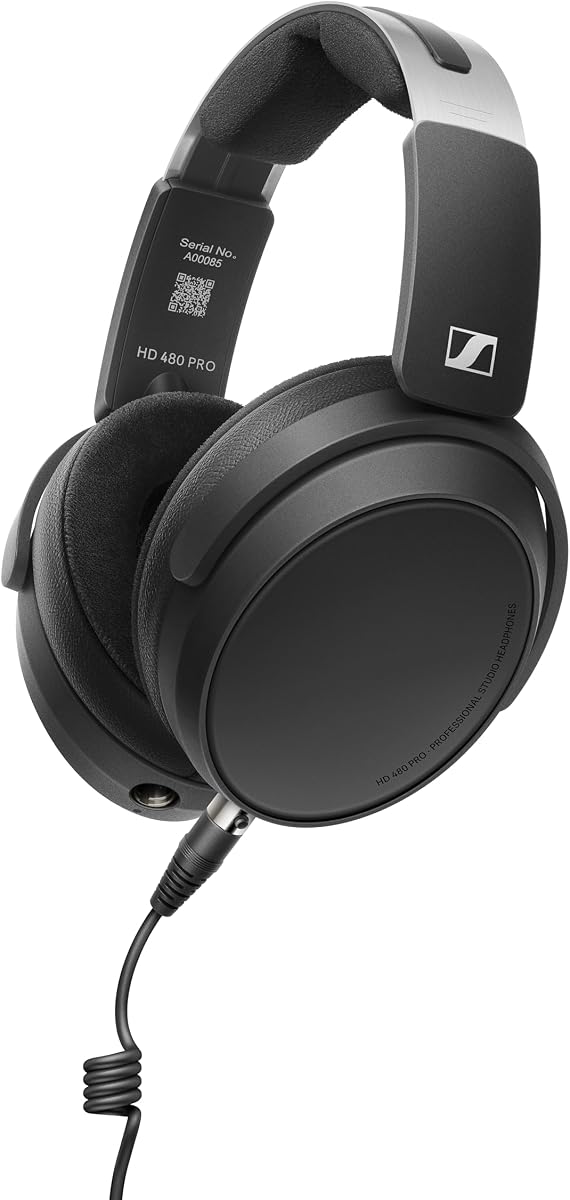
The HD 480 PRO holds the highest customer rating in this selection at 4.8, making it a strong choice for accuracy-focused players. Sennheiser describes the headphone as professional closed-back studio equipment, with advanced neodymium drivers and an ultralight voice coil designed to deliver clear, full-spectrum sound and exceptional detail.
We may earn a commission when you buy through this link, at no additional cost to you.
Noise control is handled through multi-stage passive shielding and a Vibration Attenuation System intended to reduce distortion and leakage. The angled earcups and grooved pads are designed to limit pressure points, support a precise fit, and improve comfort for wearers who use glasses. These are meaningful features during long sessions because a stable acoustic seal can support isolation without requiring excessive clamping force.
The headphone is built for studio versatility rather than gaming simplicity. Dual left and right jack connections and a detachable cable offer flexibility, while the patented cable coil helps block unwanted noise. There is no integrated microphone, and a serious desktop setup may require appropriate adapters, an interface, or an amplifier. Players should not expect plug-and-play headset behavior across every device.
The HD 480 PRO is best for gamers who want reference-oriented sound, strong passive isolation, and professional connection options. It also makes sense for game audio creation, video editing, and critical listening around the same setup. Those who primarily need a detachable boom mic should consider the EPOS H6Pro, while desktop audiophiles may favor the simpler connector arrangement of the HD 620S.
Full-spectrum reproduction and an ultralight voice coil are intended to preserve detail and respond cleanly to transients. Accurate cue presentation can help players identify subtle environmental sounds, dialogue, and movement.
Multi-stage shielding and vibration attenuation reduce leakage and unwanted resonance without requiring a battery or external processing. This keeps the design straightforward while supporting focused play.
We may earn a commission when you buy through this link, at no additional cost to you.
The Sennheiser HD 280 Pro combines a 4.5 rating with an emphasis on practical isolation and maintainable construction. It is a dynamic, closed-ear around-ear headphone that can attenuate outside sound by as much as 32 dB according to the supplied specifications, making it appealing in busy or distracting environments.
We may earn a commission when you buy through this link, at no additional cost to you.
The sound is described as warm and natural with an extended frequency response. That character should suit games, music, and spoken dialogue without the extreme brightness associated with some gaming headsets. Its lightweight ergonomic shape, padded earcups, and replaceable headband padding help maintain comfort when the session continues beyond a few matches.
Long-term ownership is a major strength. The ear pads, headband padding, and audio cord can all be replaced, reducing the likelihood that one worn component ends the product's useful life. Collapsible earcups simplify transport. On the other hand, the coiled cable occupies more desk space than a straight cable, and the absence of a microphone means it is not a complete communications solution.
The HD 280 Pro is a good match for players who want strong passive isolation, a lighter physical design, and replaceable parts. It is particularly useful for travel, shared workspaces, and long listening sessions. Pair it with a separate gaming microphone when team communication is essential, or use it for immersive single-player play where environmental focus matters more.
The specified attenuation of up to 32 dB makes the HD 280 Pro a practical choice where external sound is distracting. A proper seal around the ears is important for achieving the intended isolation.
Replaceable ear pads, headband padding, and cable help extend usable life. Owners can refresh worn components without replacing the complete headphone.
We may earn a commission when you buy through this link, at no additional cost to you.
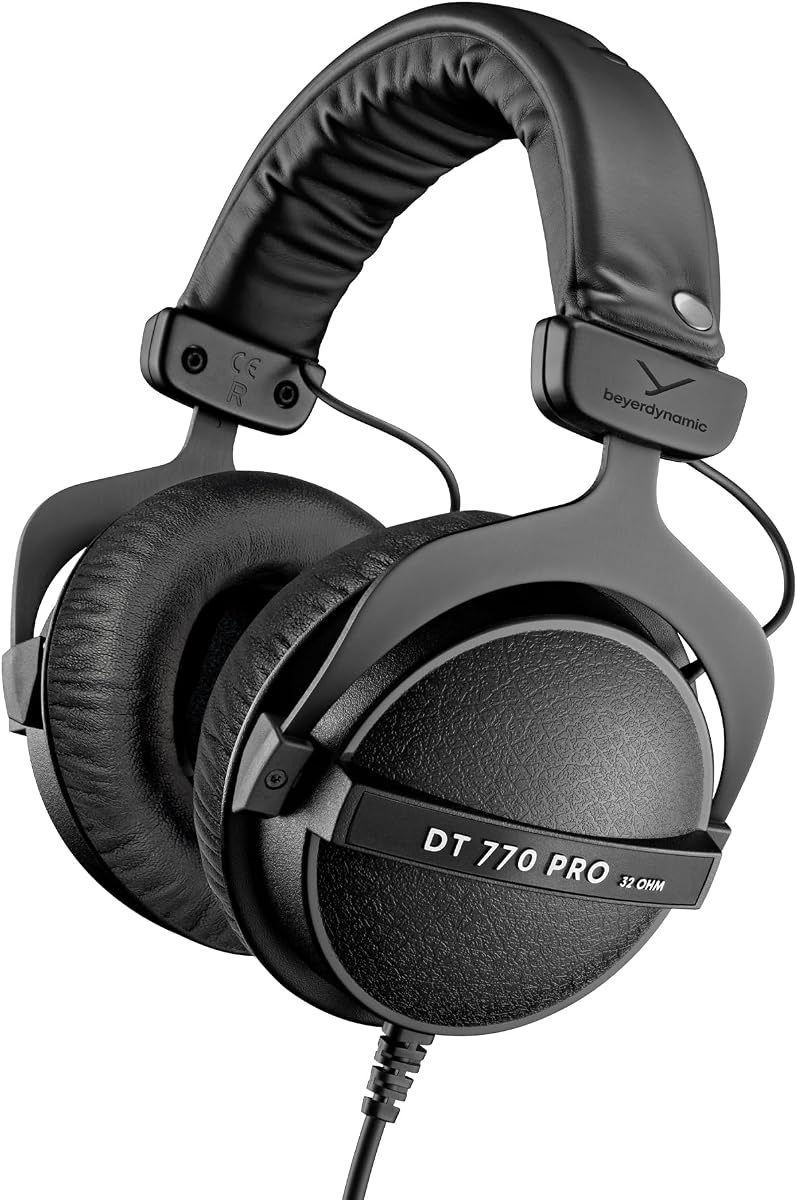
The beyerdynamic DT 770 Pro 32-ohm version is built around convenience for phones, laptops, tablets, and consoles. Its 4.4 rating and familiar closed-back studio design make it a credible gaming option, particularly for players who do not want to manage a high-impedance headphone and dedicated amplifier.
We may earn a commission when you buy through this link, at no additional cost to you.
The 32-ohm specification is the key feature. Beyerdynamic describes it as capable of full volume directly from common mobile sources without an amplifier, which simplifies connections to a console controller, laptop, or phone. Its closed-back passive shielding also helps reduce distraction, and the leatherette pads sit on the classic spring-steel headband for a secure, adjustable fit.
The main compromises are the fixed 1.6-meter straight cable and lack of a microphone. The cable is shorter than many studio leads, making it easier to move around a desk, but it cannot be replaced separately. Players who need team chat should plan for an external microphone or another way to capture voice. Cable drag may also be noticeable when the headphone is worn for long periods.
The DT 770 Pro is a versatile pick for console gaming, laptop sessions, and players who want one closed-back headphone across music and games. Its lower impedance makes it easier to use than many premium studio alternatives. Competitive listeners should compare its famously strong bass character with their own sound preferences, since the model is not designed to deliver an entirely neutral presentation.
The 32-ohm version reduces the need for a separate headphone amplifier. That makes the DT 770 Pro easier to connect to a broad range of gaming devices while retaining the isolation of a closed-back design.
The straight 1.6-meter cable is shorter and tidier than many studio cables, which helps when space is limited. Its fixed construction limits repair options, so careful routing can protect the connection.
We may earn a commission when you buy through this link, at no additional cost to you.
The Audio-Technica ATH-M40x combines a 4.6 rating with the practical flexibility of detachable cables and rotating earcups. Its 40 mm drivers use rare-earth magnets and copper-clad aluminum wire voice coils, while the circumaural closed design is intended to provide strong isolation in loud environments.
We may earn a commission when you buy through this link, at no additional cost to you.
The 90-degree swivel makes one-ear monitoring straightforward, a useful feature for players who need to hear the room or a teammate during a session. Detachable cables also allow the connection to suit different sources without replacing the entire headphone. Professional-grade earpad and headband materials are intended to support durability and comfort over extended use.
Like the other studio-oriented choices here, the ATH-M40x lacks a built-in microphone, and the gaming experience depends on the output quality of the connected source. Its driver size is conventional rather than oversized, and the included accessories determine how conveniently it connects to a PC, controller, or audio interface. Players should verify the supplied cable and adapter configuration for their system.
The M40x is a versatile recommendation for gamers who want reliable isolation, a serviceable connection, and the ability to rotate one earcup. It is also useful for music production, monitoring, and content creation. Choose it over the M20x when detachable cables and one-ear monitoring matter more, and over the M50x when a larger 45 mm driver and more expansive monitoring features are not necessary.
The 90-degree rotating earcups let a player lift one side to hear nearby conversation or room activity. This is useful during team sessions and makes the headphone more versatile than a fixed, fully symmetrical design.
Detachable cables reduce the impact of connector wear and allow different leads to be used with different devices. The included cable selection provides a more adaptable foundation than a permanently attached cord.
We may earn a commission when you buy through this link, at no additional cost to you.
The most useful gaming headphone balances sound, isolation, comfort, microphone needs, and source compatibility. Consider how you play, which devices you use, and whether you value a complete headset or the flexibility of a traditional studio headphone.
Game audio contains information across a wide frequency range, so driver quality and tuning matter as much as raw volume. Detailed headphones can reveal footsteps, dialogue, and environmental effects, while models with enhanced low-frequency tuning make explosions and impacts feel heavier. Audiophile-oriented designs may also offer a wider soundstage, which can make directional positioning easier to understand in single-player games. Players who switch between competitive shooters and cinematic adventures should consider whether a balanced presentation serves both styles better than an aggressively bass-heavy signature.
A neutral, detailed response is often the safest all-purpose choice for gaming. Avoid assuming that a larger driver automatically produces a better result, and prioritize the overall tuning and driver quality described by the manufacturer.
Closed-back headphones naturally limit the amount of sound entering from the room, and many models add passive shielding to improve that focus. Isolation is especially useful in shared homes, noisy offices, tournaments, and live-streaming spaces. It can also make it easier to hear subtle cues because external voices no longer compete with the game. Properly fitted ear cushions create a more consistent seal, so comfort and isolation are closely connected.
Choose effective passive isolation when distractions are a problem, but remember that greater clamping or bass may create fatigue. Verify the stated attenuation carefully and ensure the earcups seal without pressing uncomfortably against the head.
A dedicated gaming headset is the most convenient option when voice chat is part of your routine. A boom microphone generally provides clearer speech and a more consistent position than an inline remote on a short cable, while lift-to-mute controls let you silence communication instantly. Traditional studio headphones rarely include microphones, so they require a separate desktop mic, inline controller, or another capture solution.
If you use a studio headphone, test the external microphone in your actual room before committing. Consider background noise, keyboard pickup, desk placement, and whether your platform accepts the selected connection method.
Gaming headphones are often worn for several consecutive hours, making weight, pad pressure, headband distribution, and heat management essential. Over-ear circumaural cushions can reduce direct contact with the ears, while lighter materials and a softer headband may reduce fatigue. Premium models frequently add venting, angled cups, or grooved pads to reduce pressure for wearers who use glasses.
A technically excellent headphone is only useful if you can comfortably wear it. Look for replaceable pads or headband sections, and consider trying on multiple models if possible rather than relying only on specifications.
Wired headphones can connect through 3.5 mm, 6.3 mm, USB, or platform-specific adapters, and not every model includes the adapter needed for your setup. Low-impedance models such as 32-ohm headphones are generally more convenient with phones, laptops, and consoles. Higher-impedance studio headphones may benefit from a DAC or headphone amplifier, particularly when connected to a computer.
Check the cable length, connector type, included adapters, and platform support before buying. A headset advertised for Xbox, PS4, PS5, and PC may still require a particular controller adapter, and traditional audio headphones need a suitable microphone path.
A gaming headphone should survive daily use, cable movement, repeated handling, and transport. Detachable cables are easier to replace if a plug is damaged, while replaceable ear pads and headband padding help maintain comfort and extend product life. Folding earcups and a supplied case improve portability, particularly for players who move between locations. Fixed cables are not inherently inferior, but they make damage less convenient to address.
Prioritize models with serviceable components if you expect frequent use. A robust construction combined with replaceable wear parts is often more valuable over time than a feature that remains useful only in one game.
A wired connection removes wireless latency, battery management, and pairing uncertainty. It also provides direct compatibility with many PCs, consoles, phones, and audio interfaces. The tradeoff is cable management: long leads can snag, short leads can restrict movement, and coiled cables can occupy more desk space. Inline controls may include mute, volume, and playback functions, although traditional studio cables often omit them.
Players who prefer a stable low-latency connection should measure their available desk space and understand the included control options. A USB audio controller can simplify volume control and microphone input when using a separate studio headphone.
Connect the headphone to the correct source, confirm that the plug is fully seated, and set the game and system volume to a moderate level before enabling your microphone. If your setup requires a DAC, amplifier, audio interface, or controller adapter, configure the correct output manually and avoid raising software volume so far that it causes clipping.
Position the earcups so the cushion seal sits evenly around both ears. For rotating models, use the swivel only when you need one-ear awareness. Keep the boom microphone clear of the keyboard and adjust it just outside the mouth, while a separate microphone should be positioned similarly to reduce plosives and room pickup.
Store the headphone in a dry, cool place and route cables without creating tight bends around the connectors. Clean removable ear pads according to the manufacturer's guidance, remove the cable before cleaning the earcups, and replace worn pads or cables promptly. Periodic care preserves comfort, isolation, and connection reliability throughout a long ownership period.
Closed-back headphones are usually better when external distraction, consistent volume, and a more contained soundstage matter most. They also tend to leak less sound than open-back models, making them considerate in shared spaces. Open-back headphones can provide a more natural and spacious presentation, but they allow more room noise and sound leakage to reach nearby listeners. The right choice ultimately depends on your environment, game mix, and comfort priorities.
The closed-back design itself does not guarantee superior directional cues; driver tuning, frequency balance, imaging, and the game's audio mix all influence localization. A wide, accurately reproduced soundstage can make it easier to understand where a sound originates, while excessive bass can sometimes blur subtle detail. Players should also use their game's spatial-audio settings and test several games when possible.
Yes, a studio headphone can provide excellent game audio, but team communication then requires another solution. You can add a USB desktop microphone, a microphone-equipped controller, an inline adapter, or a separate audio interface with a clean microphone input. Dedicated gaming headsets are more convenient for plug-and-play voice chat, while studio headphones often provide greater flexibility and a more refined audio design.
A low-impedance model is usually easiest to drive, particularly with phones, laptops, consoles, and other compact sources. The 32-ohm beyerdynamic DT 770 Pro is explicitly positioned for that kind of use. Higher-impedance headphones may benefit from a DAC and headphone amplifier, so check the product's requirements before deciding whether a separate desktop device is worthwhile.
A 3.5 mm connection is common for traditional wired headphones and often works directly with laptops, phones, and many controllers, although console adapters may be required. USB is more convenient for integrated microphone control, volume buttons, or platform-specific compatibility. The EPOS H6Pro is listed for several gaming platforms, but its exact physical connection should be verified before purchase because the supplied information does not specify the connector.
No. A higher cost may reflect advanced drivers, refined materials, replaceable components, broader frequency response, or a more elaborate acoustic design, but it does not guarantee a better experience for every player. Matching the headphone to your system, preferred sound, comfort needs, microphone habits, and platform is more important than simply choosing the most expensive model in the list.
Start by choosing a headphone that does not clamp excessively and use a comfortable headband position. Break up long sessions, keep the earcups clean, and replace worn pads when the seal or material deteriorates. Models with venting, angled cups, grooved cushions, lighter construction, and replaceable padding are particularly helpful for extended play. Cable management also prevents the headset from pulling unevenly on the earcups.
It can, especially during quiet games or late-night sessions. A good fit around the ears generally reduces leakage, and lower listening volumes help further. Open-back-style baffle systems inside a closed headphone can increase the sense of space while retaining more isolation than a conventional open design. Players sharing a room should still keep levels moderate and check the actual sound at the seat beside them.
The Sony MDR7506 stands out as the most balanced overall recommendation because it combines a 4.7 rating, detailed large-diaphragm sound, effective isolation, and rugged construction. The Audio-Technica ATH-M20x offers the clearest budget-oriented path, while the Sennheiser HD 620S serves premium buyers who prioritize a natural soundstage, wide imaging, and a desktop-oriented connection.
Prioritize the details that match your routine. Competitive players may favor isolation, restrained bass, and clear cues; cinematic players may value spacious imaging; and voice-chat users may prefer the EPOS H6Pro's lift-to-mute boom microphone. Also check impedance, connector format, platform support, microphone arrangement, and long-term comfort before making a final choice.
Ratings, product configurations, and current prices can change, so review the latest listing and seller details before purchasing. Comparing the headphone with your computer, console, controller, DAC, and existing microphone setup will help avoid an expensive compatibility surprise and lead to a more satisfying gaming experience.