
Maxone 1TB Ultra Slim Portable External Hard Drive
4.4Editor score
One terabyte of storage
Slim aluminum construction
USB 3.0 and USB 2.0
No external power required
Explore the best external hard drive for Chromebook options, comparing capacity, speed, portability, compatibility, backups, and setup to help you choose.
An external hard drive for Chromebook can turn limited local storage into a flexible workspace for documents, media, downloads, and backups. The right drive should connect conveniently, mount without unnecessary setup, provide enough room for your files, and remain easy to carry between school, work, and home.
We compared ten portable hard drives using the supplied specifications, including capacity, interface, physical design, operating-system support, bundled accessories, warranty coverage, and practical Chromebook-related features. The list includes established models, slim aluminum designs, USB-C-equipped drives, and more budget-oriented portable options.
Each review explains where that product stands out, where compromises may appear, and which type of Chromebook user it may suit best. Although product details and availability can change, the selection criteria remain practical: prioritize dependable compatibility, sufficient capacity, a suitable connector, and a format that matches your workflow.
4.4Editor score

4.7Editor score

4.6Editor score
The comparison below places all ten portable hard drives side by side, highlighting capacity, interface, portability, compatibility, and setup details that matter for Chromebook storage expansion.




The WD 2TB Elements combines a roomy two terabyte capacity with a compact enclosure, making it a strong all-around choice for expanding a Chromebook's working storage. Its listed rating of 4.7 is the highest among the ten products, and the supplied specifications emphasize straightforward plug-and-play use. That combination of capacity, consistency, and portability is especially useful for students or professionals who regularly work with large document collections, photo archives, and media libraries.
We may earn a commission when you buy through this link, at no additional cost to you.
Storage capacity is the drive's most important advantage. A two terabyte drive can hold a substantial mixed workload without forcing users to divide projects between local storage, cloud accounts, and removable media. The small, lightweight enclosure also makes sense for a Chromebook user who travels between classrooms, offices, and home workspaces. Rather than bringing a full computer back to access a large file, the user can connect the drive and work with the Chromebook directly.
The interface is specified as USB 3.2 Gen 1 with a five-gigabit rate and is also identified as USB 3.0. This should align well with the USB-A ports commonly found on Chromebooks, although buyers should still check the drive's physical connector and their device's available ports. The product information does not explicitly mention Chromebook compatibility or file-system support, so users with particular formatting needs should verify those details before committing.
This is the most balanced recommendation for most people because it avoids a cramped capacity, bulky design, or unsupported extra feature. It is particularly suitable for users who want one dependable drive for mixed personal and work files. Those who require explicit Chromebook language, a USB-C cable, or detailed backup software should examine the more purpose-specific alternatives in the list.
Two terabytes provides useful breathing room for large coursework, media collections, and recurring backups without making the drive feel oversized. It is a sensible middle ground between lighter 500GB options and the one terabyte drives aimed at highly mobile users.
The drive's small, lightweight enclosure is well suited to a Chromebook-based mobile workflow. It can remain in a laptop bag or desk drawer without demanding much space, while its plug-and-play positioning reduces setup friction.
We may earn a commission when you buy through this link, at no additional cost to you.
The Maxone 1TB Ultra Slim is a practical choice for Chromebook owners who want meaningful storage without a bulky enclosure. It earns a 4.4 rating and offers a one terabyte capacity, USB 3.0 performance, and a body that is merely 0.4 inches thick. Its all-aluminum construction adds a refined feel while also serving as a protective shell for a drive intended to travel between locations.
We may earn a commission when you buy through this link, at no additional cost to you.
The 0.4-inch profile is the defining feature. A Chromebook user can place the drive in a compact sleeve, backpack, or laptop compartment without adding much bulk. Despite that slim shape, the supplied information states that the aluminum design helps with strength, durability, cooling, and quiet operation. The drive also works without an external power supply, which is helpful because a Chromebook user normally relies on the computer for both data transfer and power.
Maxone specifies compatibility with Windows 7, 8, and 10 and describes the drive as suitable for PCs and laptops. Chromebook compatibility is not expressly stated in the supplied product data, so the safest approach is to confirm the format and connection requirements before purchase. The included 19-inch USB 3.0 cable supports the standard connection method, and the three-year manufacturer warranty adds useful coverage.
This is a compelling option for students and budget-conscious users who want more capacity than a small flash drive but still value portability. It may be less fitting for someone who needs a confirmed exFAT drive, a bundled USB-C adapter, or explicit Chromebook language. For most users seeking a thin, quiet, general-purpose drive, though, the balance of capacity and construction is appealing.
One terabyte is enough for many assignments, downloaded media, documents, and selected backups, while the 0.4-inch body keeps the drive easy to carry. It fills the gap between a pocket flash drive and a larger desktop-style external enclosure.
The aluminum shell is described as helping the drive remain cool and quiet. Those characteristics are particularly useful during long file transfers or when the drive is used beside a Chromebook in a shared study space.
We may earn a commission when you buy through this link, at no additional cost to you.
The Toshiba Canvio Advance 1TB is the premium pick in this roundup because it pairs a polished portable design with backup and security tools. Its 4.6 rating places it among the most highly rated products here, while the textured finish and color options are intended to help it fit naturally into a personal or professional setup. The one terabyte capacity is versatile for a Chromebook user who wants one drive for work, media, and archiving.
We may earn a commission when you buy through this link, at no additional cost to you.
The most significant premium feature is automatic backup software, available as a free download for Windows PCs. While that limitation matters for Chromebook users, the drive remains useful as a straightforward storage device in ChromeOS. The included password protection software also aims to prevent unauthorized access. Chromebook owners should not assume that either Windows-oriented tool will install on their device, but the presence of backup and security options makes this model more versatile for mixed-device households.
USB 3.0 and USB 2.0 compatibility broadens its connection options. A Chromebook with USB-A can use the standard interface, while newer USB-C-only Chromebooks may require an appropriate adapter or cable. The product data does not identify the file system, so users who need a particular format should confirm it before organizing important files. The emphasis on design, backup assistance, and privacy distinguishes it from more basic drives.
This is a strong recommendation for someone who values a refined enclosure and may manage files across both a Windows PC and a Chromebook. It is less obvious for users who require explicit Chromebook compatibility, macOS-focused utilities, or a USB-C adapter in the box. Even so, the combination of high customer rating, useful capacity, and security features makes it a confident premium option.
Automatic backup software can simplify the process of copying important files from a compatible Windows PC to the drive. Chromebook users will need to rely on ChromeOS workflows, but the option remains valuable for households or offices that also use Windows.
Password protection software is intended to discourage unauthorized access to the drive's contents. The compact, textured enclosure and choice of color options also give the drive a more refined appearance than a basic utility drive.
We may earn a commission when you buy through this link, at no additional cost to you.
The Seagate 2TB Portable is built around simplicity, offering a generous two terabyte capacity and a direct drag-and-drop workflow. It has a 4.6 rating and a plug-and-play approach that should appeal to Chromebook users who want extra storage without navigating a complicated setup process. The drive is intended for storing and accessing content while traveling, making it a natural companion to a portable computer.
We may earn a commission when you buy through this link, at no additional cost to you.
Its standout quality is the combination of capacity and straightforward operation. Once connected to a computer, the drive receives automatic recognition with no required software. Users can move files through familiar drag-and-drop operations, which keeps the experience approachable for students and casual users. The included 18-inch USB 3.0 cable provides a direct connection, while the portable format is intended for use on the go.
The supplied specifications identify the drive as designed for Windows or Mac computers rather than explicitly naming Chromebook support. Because Chromebooks use USB connections and web-based workflows, many standard external drives can be useful storage locations, but a user should verify file-system compatibility and mounting behavior before relying on the drive for critical files. No file system or included backup utility is detailed in the product information.
Choose the Seagate when you need considerable space and value an uncomplicated process more than specialized software. It is well suited to a Chromebook student moving coursework between classes or a professional keeping large media files close at hand. The absence of explicit Chromebook and file-system details prevents it from taking the overall lead, but its capacity and ease of use remain compelling.
Automatic recognition and a familiar drag-and-drop process reduce the learning curve for new drive users. That simplicity can make the Seagate a practical first external hard drive for a Chromebook user.
Two terabytes gives users room to keep documents, media, and backups together. Its portable format supports that capacity without requiring a desktop drive that needs to remain plugged into a wall.
We may earn a commission when you buy through this link, at no additional cost to you.
The 500 GB Ultra Slim is a compact, no-frills option for Chromebook users who need more room than a flash drive but do not require a terabyte or more. Its 4.3 rating reflects a generally positive reception, and the supplied details highlight a lightweight 0.35-pound enclosure, plug-and-play setup, and broad operating-system compatibility. The included USB cable makes it straightforward to begin using.
We may earn a commission when you buy through this link, at no additional cost to you.
The product information states that no software needs to be installed and that the drive is ready in Windows. It also identifies support for Windows, Linux, and Mac, with Mac users instructed to format the drive as exFAT first. That is useful context because external-drive behavior depends on the file system, not just the physical connector. The drive's advertised transfer figures and small physical footprint should make it more appropriate for active document and media projects than extensive archival storage.
The main limitation is capacity. Five hundred gigabytes may be perfectly adequate for coursework, a focused photo collection, or a local working folder, but it can fill quickly with large video files, duplicated downloads, and multiple backups. The drive also weighs only 0.35 pounds, which makes it easy to carry. Its one-year warranty is shorter than the three-year coverage listed for several alternatives.
This is a sensible choice for a student who wants a lightweight drive for everyday files, especially when the budget needs to remain controlled. It is less suitable for users building a long-term media archive or maintaining several versions of large projects. Confirm formatting needs and keep a separate backup plan when using a drive of this size for anything irreplaceable.
The drive is ready to use in Windows, while Mac users are instructed to select exFAT when formatting. Chromebook users should also check which format their workflow expects before moving a large collection of files.
At only 0.35 pounds, the enclosure is easy to carry between classes or work locations. Five hundred gigabytes remains useful for organized project folders, coursework, and lighter media collections.
We may earn a commission when you buy through this link, at no additional cost to you.
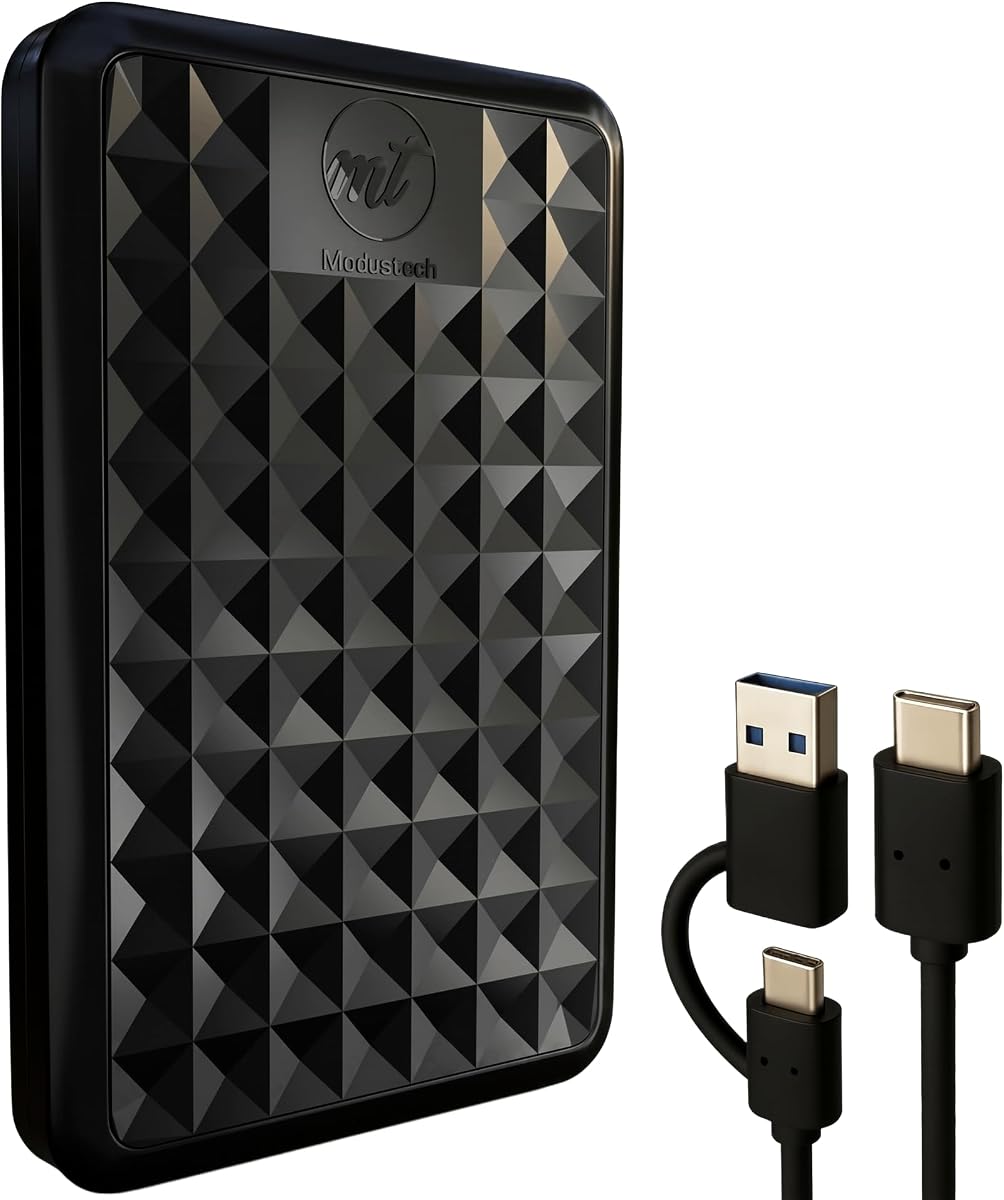
The Facet 500GB is one of the most directly relevant options for Chromebook users because its supplied specifications explicitly state that it works with Chromebooks. It is preformatted in exFAT, designed for plug-and-play use, and includes both a USB-C-to-USB-C cable and a tethered USB-A adapter. Those details make it easier to use across modern USB-C Chromebooks and older USB-A models.
We may earn a commission when you buy through this link, at no additional cost to you.
The two-in-one connection solution is a major practical advantage. A USB-C-first Chromebook can use the supplied USB-C cable, while a USB-A Chromebook can use the tethered adapter. The drive is bus-powered, so no separate power adapter is required. Its 2.5-inch design and listed weight of 160 grams also support portability, and the manufacturer describes the enclosure as shock resistant with a faceted top texture.
Capacity is the trade-off. Five hundred gigabytes is adequate for a working collection of assignments, photos, and selected media, but it is less suitable for users who need to maintain a large video archive or numerous backup revisions. Its 4.1 rating is the lowest listed in the roundup, although the rating should be considered alongside the unusually clear Chromebook compatibility information. The product also carries a one-year limited warranty.
Choose the Facet when connector certainty and explicit Chromebook support matter more than maximum capacity. It removes uncertainty about file formatting and comes equipped for both common Chromebook port styles. Users who need terabytes of room should instead consider the WD, Seagate, or Toshiba 2TB models, but the Facet is a focused solution for lighter storage needs.
The included USB-C cable and tethered USB-A adapter let the drive accommodate both newer and older Chromebook configurations. This reduces the need to purchase a separate adapter for ordinary file transfers.
The exFAT format is described as ready for Windows and macOS systems, with Chromebook support explicitly listed. That makes the drive approachable for users who may not want to begin with a formatting project.
We may earn a commission when you buy through this link, at no additional cost to you.
The 1TB Portable Mobile HDD is built around mobility and includes explicit Chromebook compatibility in its product information. Its 4.3 rating, one terabyte capacity, and pocket-sized enclosure make it a credible middle-ground option for students who want more storage than a flash drive without carrying a large hard drive. The included USB 3.0 cable and USB-to-Type-C adapter also help accommodate different device ports.
We may earn a commission when you buy through this link, at no additional cost to you.
Its upgrade to USB 3.0 supports transfer speeds stated at up to five gigabits and remains compatible with USB 2.0. The supplied information lists Windows, Mac, Linux, Android, and Chromebook compatibility, as well as TVs and game consoles. Because the drive does not require installation software, a Chromebook user can connect it and begin using it as extra storage, subject to the device's file-system and permission behavior.
The sturdy case is described as protecting a mini portable hard drive that fits comfortably in the palm. This makes the product a natural fit for a mobile learning routine, where a drive may move between a school bag, shared computer, and home desk. The 2.5-inch format also suggests a conventional portable hard drive rather than a small flash accessory. However, the product information provides fewer details about the file system and enclosure materials than some competing listings.
This drive is a good match for a Chromebook user who needs a balance of capacity, portability, and connection flexibility. It may be less attractive than the Facet for users who value a preformatted exFAT file system or clearer USB-C cable details. The three-year warranty and technical support included in the package are positive additions to an otherwise straightforward mobile storage option.
One terabyte offers enough room for many active projects without reaching the bulk of a two terabyte archive drive. The compact enclosure makes that capacity convenient to carry every day.
The bundled USB 3.0 cable supports standard connections, and the USB-to-Type-C adapter adds flexibility for compatible devices. The listed Chromebook support provides reassurance for a mobile workflow.
We may earn a commission when you buy through this link, at no additional cost to you.
The UnionSine 1TB Ultra Slim is a refined, quiet option for users who want portable storage with a one terabyte capacity. Its 4.4 rating and stated use of a JMicron 578 noise-free solution make it especially interesting for quiet study environments, shared offices, or any situation where drive noise would be distracting. The upgraded shell combines a mirror logo strip with a striped, non-slip design.
We may earn a commission when you buy through this link, at no additional cost to you.
The exterior is not merely decorative. According to the product information, the shell strips help with heat dissipation, supporting stable and fast transfers, while rounded corners improve handling. The aluminum anti-interference layer is also described as protecting the drive's chip and improving thermal performance. These details make the enclosure feel purpose-built for regular portable use rather than simply hiding a basic drive.
The stated transfer figures reach up to 125MB/s for reading and 103MB/s for writing, and the drive supports both USB 3.0 and USB 2.0. It requires no external power or software installation. The bundle contains a USB 3.0 cable, manual, gift-style shell packaging, a three-year manufacturer warranty, and technical support. Chromebook compatibility and the file system are not explicitly specified, so buyers should verify both for their particular setup.
This is a good selection for a student or professional who values quiet operation, a slim profile, and a longer warranty. It may be less fitting for a USB-C-only Chromebook unless the user already owns the right adapter. Those who want explicit Chromebook and exFAT details may prefer the Facet, while this model stands out for its refined shell and strong stated transfer performance.
The JMicron 578 solution is described as noise-free, which is useful during study sessions or shared workspaces. A quiet drive can also make routine backups feel less intrusive when a Chromebook is used for long periods.
The striped shell is described as contributing to heat dissipation, while the aluminum layer adds another layer of thermal management. Rounded corners and a non-slip texture improve everyday handling.
We may earn a commission when you buy through this link, at no additional cost to you.
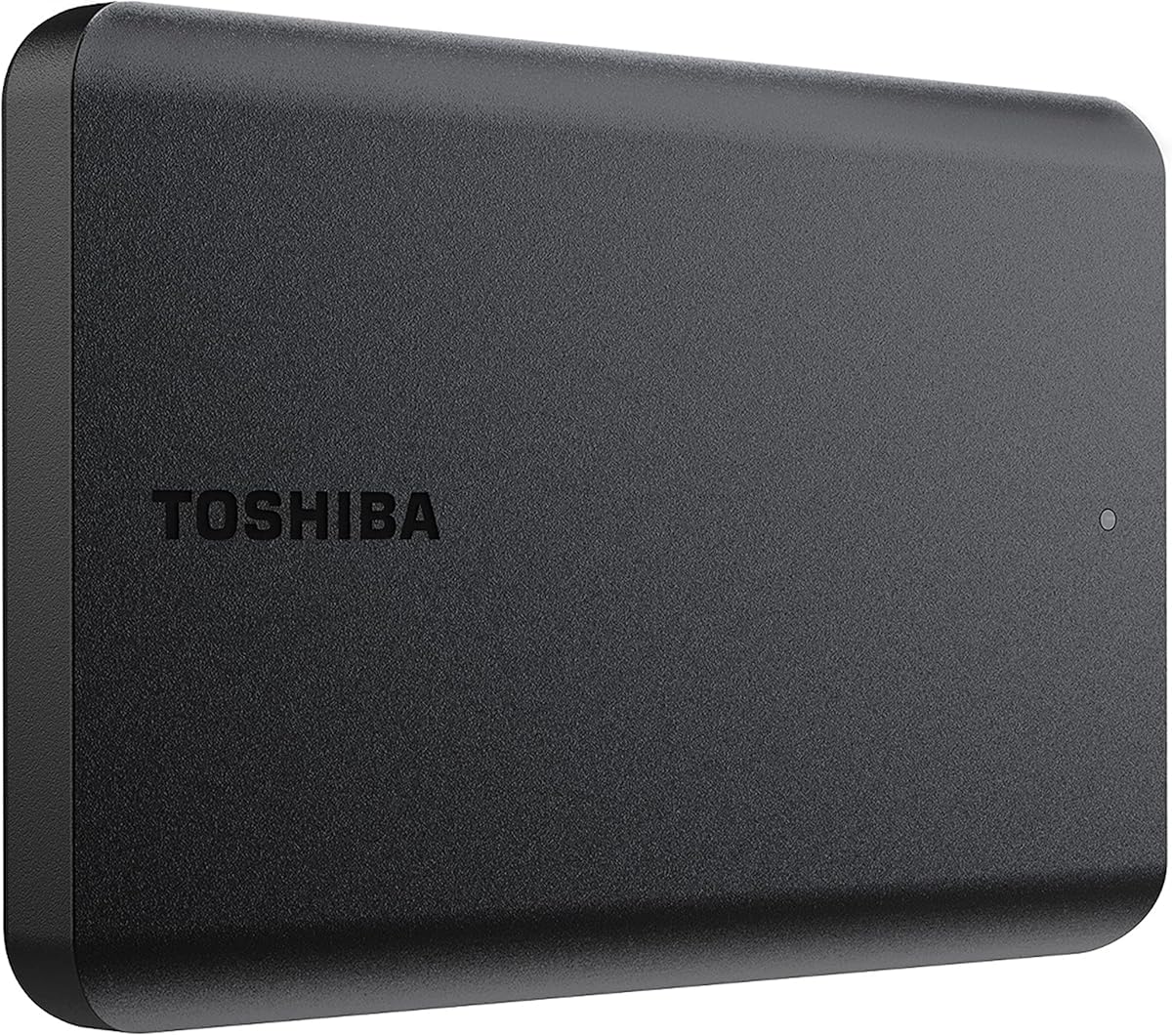
The Toshiba Canvio Basics 2TB delivers high capacity in a straightforward portable format. Its 4.6 rating reflects a strong customer reception, while the two terabyte capacity makes it useful for users who want to keep large folders, media collections, and backups on a dedicated drive. A matte, smudge-resistant finish also gives it a clean appearance suited to a desk or laptop bag.
We may earn a commission when you buy through this link, at no additional cost to you.
The drive supports USB 3.0 and USB 2.0, making it flexible across different equipment generations. It is bus-powered and requires no external AC cord, while its plug-and-play design eliminates the need to install software for basic use. Those qualities align well with a Chromebook workflow, provided the drive's file system is suitable for the user's files. The product data does not explicitly identify Chromebook support, so a cautious buyer should check the intended format before moving important work.
The key technical consideration is that the drive is preformatted in NTFS for Windows PCs. Mac users are told that reformatting is required, and Chromebook users should consider whether their planned files and workflows work with NTFS or whether they need to reformat the drive. Reformatting can make the drive more broadly convenient, but it also erases the existing contents, so the operation should be completed before important files are placed on the drive.
Choose the Canvio Basics when you need abundant capacity, a clean design, and a simple connection without bundled backup utilities. It is less suited to buyers seeking explicit Chromebook support or a cross-platform exFAT drive out of the box. With careful formatting and normal backup discipline, it can be a dependable high-capacity workspace for a Chromebook.
The portable enclosure offers a large amount of storage while remaining designed for travel and regular connection to laptops. It suits users who want one drive to hold coursework, media, and backup sets.
Plug-and-play operation and USB 3.0 support keep everyday use uncomplicated. The lack of an external power cord also keeps the connection setup minimal.
We may earn a commission when you buy through this link, at no additional cost to you.
The Aiolo Innovation 500GB is a slim portable drive designed for users who need moderate capacity and quiet operation. It carries a 4.5 rating and includes a USB 3.0 cable along with a USB-to-Type-C adapter. The drive is described as fitting in a pocket, making it convenient to pair with a Chromebook that is used in class, while its aluminum anti-interference layer is intended to aid heat dissipation and data protection.
We may earn a commission when you buy through this link, at no additional cost to you.
The stated read speed ranges from 110MB/s to 133MB/s, while write speed reaches up to 103MB/s. These are theoretical figures, but they indicate that the drive is designed for modern USB 3.0 transfers. It also offers plug-and-play operation without software installation. Compatibility is listed for Windows, Linux, Mac, Android, PS4, and Xbox One environments, creating a broad device profile even though Chromebook support is not expressly named.
Five hundred gigabytes is the main limitation for users with extensive media or backup needs. It works well for a current semester's coursework, a curated music library, documents, and smaller photo collections. A quiet design can be valuable in libraries and shared study spaces, while the three-year manufacturer warranty provides a meaningful support period. The included Type-C adapter gives users more connection options than a basic cable-only package.
This is a sensible option for a mobile student who wants a light drive with flexible connections and a long warranty. It is not the strongest choice for high-capacity archives, and explicit Chromebook or exFAT information would make it more reassuring. If the goal is a compact 500GB drive with broad platform support, however, the Aiolo Innovation covers the essentials well.
The lightweight, ultra-thin format is designed to fit easily in a pocket or small laptop bag. That portability makes the drive convenient to keep close at hand whenever a Chromebook is needed.
A USB 3.0 cable and a USB-to-Type-C adapter are both included, helping the drive connect to a wider range of compatible devices. The three-year warranty adds reassurance for regular use.
We may earn a commission when you buy through this link, at no additional cost to you.
A useful Chromebook external drive should combine the right connector, file system, capacity, and physical design with dependable plug-and-play behavior. The following factors help narrow the field according to how and where the drive will actually be used.
Start by confirming that the drive works with the operating systems and devices in your routine. The Facet 500GB and 1TB Portable Mobile HDD explicitly list Chromebook support, while several other products emphasize Windows and Mac compatibility and use a standard USB interface. A Chromebook can use many conventional external hard drives, but the file system, permissions, and mounting behavior still matter. Check the manufacturer's current instructions and your Chromebook's file manager before committing a drive to an important project.
Modern Chromebooks may use USB-A or USB-C, so the physical connector on your computer should guide the choice. Drives with USB-A often work directly with a USB-A Chromebook, while USB-C-only models require a compatible cable or adapter. The Facet includes a USB-C-to-USB-C cable and tethered USB-A adapter, and the 1TB Portable Mobile HDD and Aiolo Innovation include USB-to-Type-C adapters. A drive that works with a single included cable or adapter is generally more convenient than one requiring an extra purchase.
Capacity should reflect the size and number of files you expect to keep. A 500GB drive is useful for coursework and focused collections, one terabyte is a flexible middle ground, and two terabytes is better for extensive media, project archives, or several backup sets. At the same time, the file system influences compatibility. The Facet is preformatted in exFAT, the Toshiba Canvio Basics is preformatted in NTFS for Windows, and the 500 GB Ultra Slim tells Mac users to format it as exFAT. Confirm the format before storing files you cannot easily recreate.
USB 3.0 and USB 3.2 Gen 1 are both described as five-gigabit interfaces in the relevant product information. Several drives publish theoretical read and write speeds, which can be useful when comparing products, though actual results depend on the files, source device, and Chromebook. Faster transfers are helpful for large videos, extensive photo libraries, and regular backups. For ordinary documents, interface speed matters less than reliability, compatibility, and a correct connection method.
A Chromebook is designed for mobile use, so the external drive should be easy to carry. The Maxone is listed as only 0.4 inches thick, the Aiolo Innovation is described as pocket-friendly, and the 1TB Portable Mobile HDD is said to fit comfortably in the palm. The Facet weighs 160 grams and uses a 2.5-inch enclosure. Consider thickness, weight, cable length, durability, and whether the drive will fit in your actual bag rather than comparing size claims alone.
Extra software can make a drive more useful, provided it supports your device. The Toshiba Canvio Advance includes automatic backup and password protection software for Windows PCs. Chromebook owners should not assume those downloads will run in ChromeOS, but they can still be useful in a mixed-device environment. Other drives emphasize plug-and-play storage without dedicated utilities. Decide whether you want a simple file repository or a drive that also provides dedicated tools for scheduled archiving and access control.
Think about how quickly the available space will be consumed. Coursework, documents, and a modest media collection may fit comfortably within 500GB. One terabyte is a useful balance for active users, while two terabyte models are better suited to larger archives, creative projects, or backup sets. Avoid buying more capacity than you can organize or back up, but also avoid choosing a drive so small that frequent deletion becomes necessary. A little extra room helps when projects expand or file versions accumulate.
Warranty length can provide a useful indication of the manufacturer's confidence and the availability of direct support. The Maxone, Aiolo Innovation, UnionSine, and 1TB Portable Mobile HDD each list three years of coverage and technical support. The 500 GB Ultra Slim lists one year, while the Facet has a one-year limited warranty. Warranty terms are not a substitute for backups, but they can be important for a drive holding work that would be inconvenient to replace. Read the current terms before making a final decision.
Before transferring important files, connect the drive to a powered Chromebook and allow ChromeOS to recognize it. Open the Files application, locate the external drive, and verify that you can create and retrieve a small test file. If the drive is not visible, inspect the cable and port, reconnect it, and review the manufacturer's formatting instructions. Use exFAT for a broadly shared drive when supported, and avoid changing the file system after important data has been placed on it.
Organize files into clear folders and avoid relying on a single copy of any important document. Copy rather than move large archives when possible, and confirm that transfer progress has finished before disconnecting the drive. Safe removal through the Chromebook's file manager is essential because unplugging during an active write can corrupt files. For routine backups, maintain at least one additional copy in a separate location, such as trusted cloud storage or another drive.
Handle the enclosure gently and keep it away from moisture, excessive heat, impact, and magnets. Use the included or compatible cable, avoid sharply bending it near the connector, and do not move the drive while files are transferring. Periodically review storage health through the available system tools, replace the cable if connections become unstable, and safely eject the drive before putting it away. These habits help reduce the risk of data loss and extend the useful life of the storage.
Yes, many external hard drives work with a Chromebook through its USB port and the Files application. The important details are the physical connector, file system, and whether the drive's permissions are recognized by ChromeOS. Products that explicitly mention Chromebook support include the Facet 500GB and the 1TB Portable Mobile HDD. Confirm the drive's format and test it with a small file before moving important data.
Only if your Chromebook has USB-C ports but lacks a compatible USB-A port. Many Chromebooks still include USB-A, allowing a standard external drive to connect directly. USB-C-only users should choose a drive with a USB-C cable and adapter, as offered by the Facet, or purchase an appropriate adapter separately. The connector should match the physical port on the device rather than merely the shape of the drive.
It depends on the devices you use and the access requirements of your files. exFAT is often convenient for moving a drive between Windows and Mac systems, while the Toshiba Canvio Basics is supplied preformatted in NTFS for Windows. Chromebook support can vary with formatting and ChromeOS behavior, so verify the current requirements and test the drive before relying on it for critical work.
It can be enough for coursework, documents, a focused photo collection, and a moderate media library. It becomes less suitable for extensive video editing, large game archives, or numerous backup revisions. The 500GB models are thinner and lighter, while one and two terabyte options offer more room without changing the basic workflow. Choose based on your current volume and realistic growth.
First confirm that the drive is recognized and writable in the Files application. Copy selected folders or files to a clearly named backup folder and let the transfer complete before disconnecting the drive. You can then safely eject it and repeat the process on a schedule. For important files, maintaining another copy in a separate location is safer than keeping only one backup on the external drive.
Usually, but the file system and user permissions should support both devices. A drive formatted in exFAT is commonly used for broad file exchange, while NTFS may require additional steps on some non-Windows systems. The Facet is preformatted in exFAT, and the 500 GB Ultra Slim provides exFAT formatting guidance for Mac users. Test compatibility and avoid converting the format repeatedly.
No. An external drive is best treated as an additional storage and backup location rather than an automatic replacement for cloud services. ChromeOS workflows may still depend on online access for syncing and collaboration, while an external drive is excellent for offline files, large media, and local backups. For irreplaceable documents, use a layered strategy that includes more than one storage location.
The WD 2TB Elements is the strongest overall choice for most Chromebook users because it combines a high rating, a generous two terabyte capacity, a fast interface, and a compact plug-and-play design. The Maxone 1TB Ultra Slim is a compelling budget-oriented alternative for users who value a thin aluminum body, while the Toshiba Canvio Advance 1TB stands out as the premium option with backup and password-protection software.
For lighter storage needs, the Facet 500GB deserves special attention because it explicitly supports Chromebooks, arrives in exFAT, and includes both USB-C and USB-A connection options. Users seeking a similarly clear Chromebook connection but a larger one terabyte capacity can examine the 1TB Portable Mobile HDD. The remaining drives remain viable when capacity, enclosure design, quiet operation, or a particular warranty term takes priority.
Before buying, verify the connector, file system, capacity, and current product specifications. Product details and availability can change, so compare the latest listing carefully and test the drive with a small file before transferring irreplaceable work. A sensible external hard drive for Chromebook should make storage simpler, remain portable, and provide a dependable place for files that matter.