
Solar Fan with 24/7 Operation
4.1Editor score
Built-in rechargeable battery
Two programmable timer modes
Dual quiet fan design
A solar chicken coop fan can remove heat, moisture, dust, and odors while keeping a poultry shelter ventilated without running electrical cables across the property. The right model depends on flock size, available sunlight, overnight conditions, and whether you need simple daytime airflow or battery-backed ventilation.
We compared ten solar fan kits by examining their airflow design, solar-panel output, fan count, battery capability, weather resistance, controls, coverage claims, mounting hardware, and suitability for chicken coops and related outdoor spaces. The list includes direct solar models, battery-powered options, and smart systems.
Each review explains the product's strongest features, practical limitations, and ideal installation environment. Ratings and specifications reflect the supplied product information, while current availability and pricing can change at any time. Buyers should therefore compare current product pages carefully before making a final selection.
4.1Editor score

4.4Editor score

4.2Editor score
As an Amazon Associate we earn from qualifying purchases.
The following comparison highlights the major differences among all ten models, including daytime-only versus battery-backed power, fan count, solar-panel wattage, weather protection, intelligent controls, and the outdoor spaces each kit is designed to ventilate.
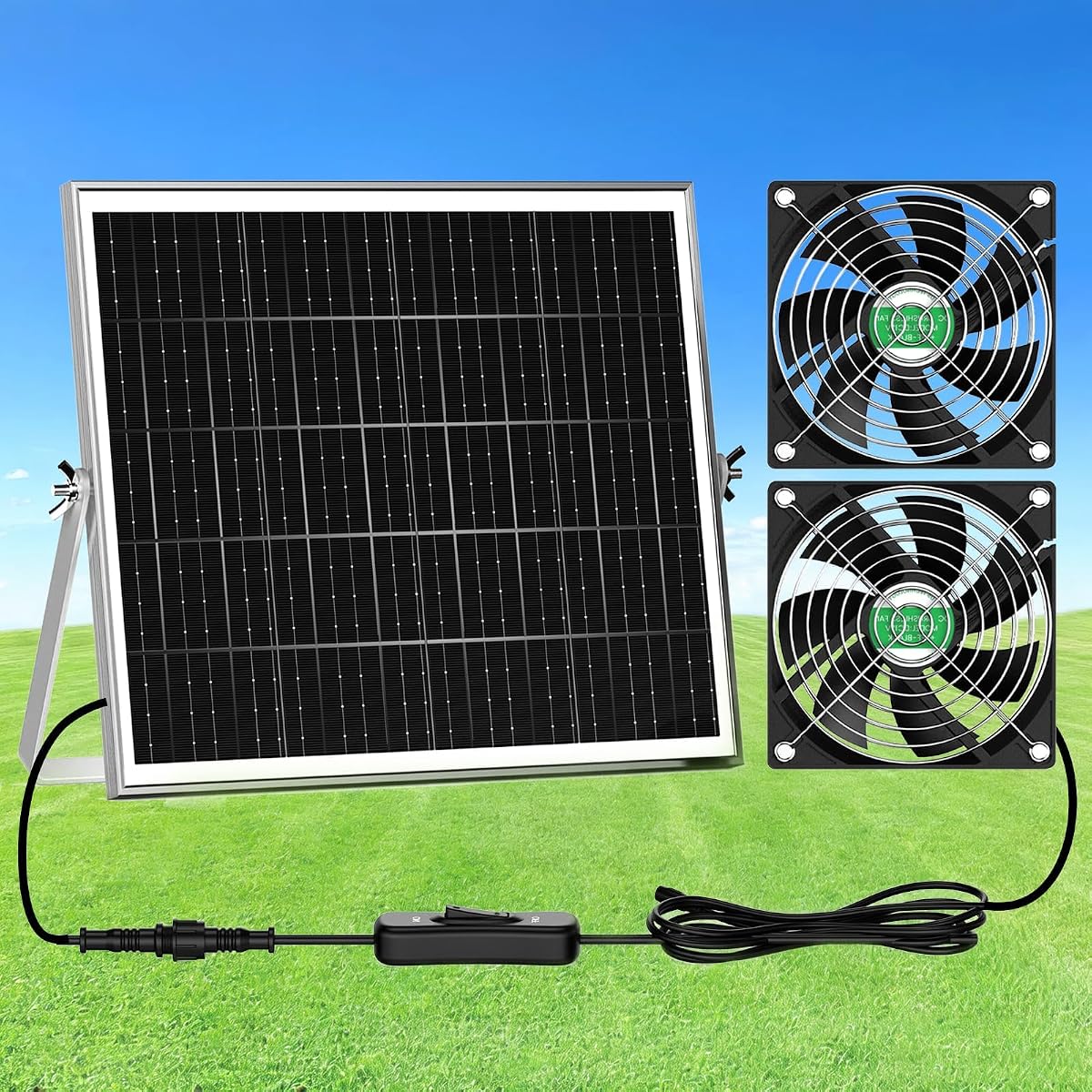


The MARBERO Solar Panel Powered Fan Kit earns a 4.4 rating and stands out as a flexible ventilation solution for a chicken coop, greenhouse, shed, or pet house. It combines a 15W monocrystalline solar panel with two detachable fans, giving users more installation options than a conventional single-fan unit while maintaining a relatively compact system.
We may earn a commission when you buy through this link, at no additional cost to you.
The two fans can be installed as a pair for exhaust, as a pair for intake, or divided between intake and exhaust. That flexibility makes the kit useful for preventing stale air from accumulating while also drawing in fresh air. A 9.8-foot main cable and two 3.2-foot fan cables extend the total possible reach to approximately 13 feet, offering room to place the panel where it receives strong sunlight and mount the fans in different openings.
Its primary limitation is the lack of battery backup. The fan will not operate at night or during rainy weather, and cloudy or shaded conditions can reduce performance. The manufacturer recommends positioning the solar panel at a 45-degree angle. Those constraints are reasonable for a daytime ventilation system, but they make the kit less appropriate for locations that need continuous airflow around the clock.
This is an excellent choice for coop owners seeking strong daytime ventilation without electrical wiring and who want the freedom to configure two openings. The aluminum housing, double metal guards, brushless waterproof motor, and included mounting plates, screws, and ties support a secure outdoor installation. It is best suited to sunny, dry climates where daytime cooling is the primary goal.
Using one fan for intake and the other for exhaust creates a more complete ventilation path than a single directional fan. The separated panel and fan positions also make it possible to optimize sunlight and airflow independently.
The aluminum bodies, double protective nets, and water-resistant brushless motors are designed for exposed installations. Guarded blades are particularly useful in a coop, where moving parts must be inaccessible to poultry.
We may earn a commission when you buy through this link, at no additional cost to you.
This 20W two-fan solar kit carries a 4.2 rating and is designed for small greenhouses, chicken coops, sheds, pet houses, attics, windows, and other spaces needing fresh daytime air. Its combination of a 20W monocrystalline panel and a stated maximum speed of 3,200 RPM makes it a strong option for users who prioritize visible fan performance in direct sunlight.
We may earn a commission when you buy through this link, at no additional cost to you.
The detachable fans can be mounted together, separated, or arranged as one intake and one exhaust. That flexibility supports different coop layouts, especially when air must enter through a screened opening and leave through a higher vent. A multi-purpose panel bracket, mounting plates, screws, nylon ties, and a plug-and-play cord simplify installation, while an integrated on/off switch on each fan allows manual control.
Like most direct solar ventilation kits, it stores no energy. The fan operates during daylight hours, reaches its strongest output on sunny days, and may slow in cloudy weather or near dusk. It also will not provide nighttime ventilation. Buyers who need continuous air movement should consider a battery-backed alternative rather than expecting this unit to bridge darkness or overcast periods.
This kit is best for sunny locations with small-to-medium coops and a straightforward need for intake and exhaust ventilation. Its aluminum construction, IP67 rating, and dual metal protective grilles provide a reassuring construction combination. The listed 100-square-foot coverage makes it particularly relevant for compact backyard coops, provided the panel is placed in unobstructed sunlight.
The 3,200 RPM maximum is a sunlight-dependent figure, not a constant rate around the clock. Install the panel where it can avoid shade from the coop, trees, fences, and other structures to achieve more consistent ventilation.
Heavy-duty aluminum housings and metal guards help protect the motors and moving parts. The included hardware supports wall, roof, upright, and suspended placements for adapting the kit to an existing shelter.
We may earn a commission when you buy through this link, at no additional cost to you.
The 7.5-inch two-pack solar fan system receives a 4.2 rating and targets small greenhouses, sheds, pet houses, attics, campsites, cabins, and chicken coops. With two large fans and two 15W monocrystalline solar panels, it offers more installation flexibility and potentially stronger air distribution than a compact single-panel kit.
We may earn a commission when you buy through this link, at no additional cost to you.
The split construction separates each panel from its fan, allowing the panel to be mounted outdoors in a favorable sun location while the fan is positioned at an intake or exhaust opening. Each fan can reach 3,200 RPM according to the supplied information. The listed suitability extends to areas up to approximately 20 square meters, or about 210 square feet, subject to actual sunlight and installation conditions.
There is no built-in battery, so airflow falls in cloudy conditions and stops after dark. The included mounting bracket, iron plates, screws, nylon ties, plug-and-play cord, and inline switch make the setup fairly accessible, although a two-panel arrangement requires more available solar exposure than a single-panel kit. The IP67 waterproof design and double-layer metal nets support outdoor use.
This product is a strong candidate for a larger backyard coop or a multi-zone ventilation plan. It offers greater reach than smaller kits and lets the owner place fans at separate openings. It remains most appropriate for owners who can guarantee good sunlight during the hours when ventilation is needed and who do not require overnight operation.
The 7.5-inch fan format is a meaningful change for buyers seeking more substantial air movement. It is particularly appropriate for wider wall openings and spaces where the listed 210-square-foot coverage target is relevant.
Two separate panels give the installer more freedom to avoid shade. Positioning each panel near its fan can also simplify wiring, although users should still preserve the required airflow path between the openings.
We may earn a commission when you buy through this link, at no additional cost to you.
The 5.5-inch two-fan solar kit has a 4.2 rating and offers a compact way to ventilate chicken coops, small greenhouses, sheds, pet houses, attics, windows, and camping areas. It combines a 20W monocrystalline panel with two detachable 5.5-inch fans, creating a compact system that can serve two openings without running household electricity.
We may earn a commission when you buy through this link, at no additional cost to you.
Its maximum speed is listed at 3,200 RPM, although actual output follows sunlight intensity. The detachable arrangement gives the installer freedom to position the panel away from the fan and route the connection through the shelter. The two fans can work together as exhaust or intake units, or one can perform each function. An inline on/off switch provides basic manual control.
This model is rated IP67 for waterproofing and uses heavy-duty aluminum with dual metal protective nets. The stated lifespan is up to five years. A solar panel bracket, mounting plates, screws, nylon ties, and a plug-and-play cord are included, making it possible to mount components on walls, roofs, upright supports, or poles.
The best fit is a smaller coop or related outdoor shelter where quick daytime ventilation matters more than overnight operation. Its compact fans are easier to incorporate into limited wall space than larger models. Owners should place the panel in strong, direct sun and accept that the system will slow under overcast skies and stop after sunset.
At 5.5 inches, the fans are suited to smaller vent openings and compact shelters. This can be advantageous for backyard coops where a larger fan would require additional cutting or framing.
Two fans provide more airflow options than a single fan while retaining a relatively compact footprint. One exhaust and one intake configuration can improve circulation through the entire enclosure.
We may earn a commission when you buy through this link, at no additional cost to you.
This Ropelux dual-fan solar system earns a 4.1 rating and addresses the main weakness of direct solar models: the loss of airflow at night. A built-in battery stores daytime energy and, according to the supplied information, can run the fans for up to 10 hours without sunlight. That makes the kit a more practical choice for coops needing ventilation after sunset.
We may earn a commission when you buy through this link, at no additional cost to you.
Two timer settings allow the fan to continue for either three or six hours after dark. This approach helps preserve stored energy while extending evening circulation. The dual-fan design is intended to move more air than a single-fan unit, expel dust and odors, and draw in fresh air. The stated operating noise of 36–40 decibels supports quiet use around resting poultry.
Because the system relies on a rechargeable battery, runtime still depends on how much energy the panel captures. Cloudy weather can limit charging even though the battery allows operation to continue. Owners must also treat the battery as a finite component that may eventually need replacement. Nevertheless, the system avoids the sudden shutdown that occurs with battery-free kits after dark.
This product is well suited to remote coops, sheds, greenhouses, cabins, and other off-grid shelters where continuous ventilation is valuable. It is particularly attractive for users who want simple timers rather than a thermostat or animal-detection controls. Place the panel in direct sun, select the appropriate timer, and allow the battery to build a reserve before relying on overnight operation.
The stored-energy design lets the fan continue after sunset without an outlet or generator. This is a major convenience for coops located far from conventional electrical service.
The two post-sunset settings offer an easy way to balance overnight cooling with battery preservation. Shorter timer operation is more suitable when sunlight exposure is limited.
We may earn a commission when you buy through this link, at no additional cost to you.
The Smart Thermostat Exhaust Fan carries a 4.2 rating and is the most feature-oriented product in this roundup. It combines a bifacial solar panel, a rechargeable battery, two 5.5-inch fans, and an adjustable temperature-control system for automatic ventilation in a coop, greenhouse, garage, shed, animal house, or similar space.
We may earn a commission when you buy through this link, at no additional cost to you.
The double-sided 16W panel is designed to generate power from both its front and transparent rear surfaces. The supplied information states that output can reach up to 41W when both sides receive light, while also noting that real generation varies with sunlight and cloudy conditions. A 4400mAh battery provides up to eight hours of operation after a full charge, extending ventilation into nighttime hours or overcast periods.
Its defining feature is the adjustable thermostat. Owners can set the desired ambient temperature, after which the intelligent system switches the fan on and off according to the selected condition. The dual 5.5-inch fans are rated at a combined 169 CFM, with an suitability range of up to 850 cubic feet. IP44 waterproof fan blades and a waterproof plug improve outdoor resilience.
This premium-style system is best for owners who want ventilation that responds automatically rather than relying on a fixed schedule. Correct placement and thermostat configuration are essential, and the battery still requires dependable sunlight. Buyers who value temperature-based control, a bifacial panel, and battery-backed performance will find this model more versatile than a basic daytime-only kit.
Automatic temperature switching can reduce unnecessary fan operation and maintain a more consistent environment. The correct threshold depends on the flock, shelter, season, and local conditions.
A transparent rear surface allows the panel to collect light from behind as well as in front. This design can improve charging opportunities when the panel is mounted in an open area with reflected or rear light.
We may earn a commission when you buy through this link, at no additional cost to you.
The three-fan 25W solar kit has a 4.2 rating and provides the largest fan count among the conventional direct-solar systems reviewed. It is intended for small greenhouses, chicken coops, sheds, pet houses, attics, camping tents, and windows, with a stated suitability for spaces up to 160 square feet.
We may earn a commission when you buy through this link, at no additional cost to you.
The three detachable fans can be used together, independently, or arranged with some serving as intake and others as exhaust. This allows an installer to support a larger enclosure or distribute ventilation across several openings. A 25W monocrystalline solar panel powers the system, while the fans can reach a stated maximum of 3,200 RPM under favorable sunlight.
As with the other battery-free kits, there is no stored energy for nighttime operation. Cloud cover, dusk, and shade reduce airflow, and the system stops when the panel cannot generate sufficient power. The upside is a simpler energy system with no battery to age or replace. The package includes a versatile panel bracket, fan mounting plates, screws, nylon ties, a plug-and-play cord, and inline on/off switches.
The extra fan makes this model appealing for larger coops or installations with several vents. Its IP67 rating, aluminum housing, and dual metal grilles support outdoor use and help protect the fan blades. The most important buying consideration is sunlight: this kit works best for owners who can place the panel in an open, unobstructed location and need airflow primarily during the day.
Three fans give an installer more freedom to build a distributed ventilation network. They can cool different sections of a long coop or provide several exhaust points for better stale-air removal.
The 25W panel is intended to support the three-fan arrangement. It remains a direct solar design, so the expected result is strong daytime performance rather than continuous nighttime ventilation.
We may earn a commission when you buy through this link, at no additional cost to you.
The TARKARI Solar-Powered Chicken Coop Exhaust Fan has a 4.1 rating and offers an unusually broad control system for a solar ventilation product. Its most distinctive feature is an infrared sensor that can start the fan when an animal is detected and stop it after 10 minutes, while continuous and timer modes provide alternatives.
We may earn a commission when you buy through this link, at no additional cost to you.
A 25W panel is paired with a 2500mAh battery. According to the supplied information, the panel can fully charge the battery in about four hours of sunlight, while the battery supports approximately five to eight hours of nighttime use. It can also slow-charge under cloudy conditions. In extremely cold environments, the manufacturer recommends placing the controller inside a shelter to protect battery performance.
The system includes two 120 CFM fans, a three-meter fan-to-controller cable, and a three-meter controller-to-panel cable. Users can mount both fans on one side for concentrated cooling or distribute them for cross-ventilation. Smart modes include high and low settings, programmable one-hour intervals, infrared sensing, and a memory function that retains the last configuration after a restart.
This is a good fit for a 6-by-6-foot coop or similarly sized pet house, with additional units recommended for larger spaces. The IP65 housing and protective fan guards are useful for poultry safety. The advanced sensing function adds convenience, but buyers should prioritize direct sunlight, sensible sensor placement, and protection from extreme cold to maintain reliable operation.
Infrared sensing allows the fan to respond when the flock enters the sensor area. Automatic shutdown after a short run period can preserve stored energy when the sensor no longer detects movement.
High, low, timer, and sensor modes accommodate different weather and flock routines. The memory function reduces repeated setup after a restart, making the controls practical for regular use.
We may earn a commission when you buy through this link, at no additional cost to you.
The 25W Metal Frame Solar Powered Fan receives a 4.4 rating and emphasizes rugged construction alongside battery-backed operation. Its metal frame is designed to resist corrosion and withstand wind, rain, and high temperatures, making it an appealing option for long-term outdoor installation in a chicken coop, greenhouse, shed, barn, or similar shelter.
We may earn a commission when you buy through this link, at no additional cost to you.
A 25W solar panel charges an 18000mAh battery, allowing operation on cloudy days or at night when energy has been stored. The IP65 waterproof design and steel mesh guard provide outdoor protection, while the listed temperature range is 5 to 140 degrees Fahrenheit. The 16.4-foot cable gives the installer considerable freedom to place the panel in the strongest available sunlight.
Installation is straightforward because the fan has pre-drilled holes, instructions, and the necessary screws. It can be attached to a wall, roof, or window without complicated electrical work. The metal frame and guard also create a secure barrier around the blades, which is important where chickens may jump or press against a vent.
This product is best for owners who prioritize long-term durability and need the fan to remain available after dark. The large battery reduces dependence on immediate sunlight, although it still requires regular charging and sensible temperature management. Buyers should verify the available mounting area and ensure the solar panel receives direct light before installation.
The metal body offers a sturdier alternative to all-plastic fan frames. It is particularly useful in exposed structures where seasonal weather, insects, and frequent handling could shorten the life of lighter components.
The stated 18000mAh battery provides a larger energy reserve than most competing systems. That capacity is useful for cloudy spells and nighttime operation, provided the panel receives enough daily sunlight.
We may earn a commission when you buy through this link, at no additional cost to you.
The Dual IPX7 Fan Kit holds a 4.0 rating and provides a straightforward two-fan solar ventilation option for chicken coops, greenhouses, sheds, RVs, cars, and camping setups. The manufacturer suggests it for spaces around six feet by six feet or smaller and recommends additional units for larger areas, making this primarily a compact-shelter solution.
We may earn a commission when you buy through this link, at no additional cost to you.
Two five-inch aluminum fans can be grouped as exhaust, grouped as intake, split into one of each, or positioned independently. The separate panel-and-fan arrangement gives the owner flexibility in routing the 13-foot cable system. Each fan cord includes an on/off switch, allowing either unit to be disabled manually when full ventilation is unnecessary.
The IPX7 rating is one of the strongest stated waterproof designations in the roundup, and the aluminum housings and double metal nets are intended to withstand impacts and protect the blades. A wall or roof panel bracket, fan mounting plates, screws, and nylon ties support several installation methods. The supplied information states that the motor can be immersed in water and then continue working after removal, although the fan should still be installed with normal electrical safety practices.
The lack of a battery means airflow weakens when sunlight weakens and stops at night. This kit is best for buyers seeking a simple dual-fan setup for a small coop or portable shelter. Its compact dimensions, high waterproof rating, and multiple mounting options make it versatile, while the need for direct sun and its smaller suggested area should guide expectations.
The IPX7 rating provides confidence for exposed outdoor use and splash-prone installations. Weather resistance should be considered alongside proper cord routing and secure mounting.
The included bracket, plates, screws, and nylon ties support wall, roof, base, and suspended installations. This makes the kit useful for temporary camping setups as well as permanent coops.
We may earn a commission when you buy through this link, at no additional cost to you.
The right solar chicken coop fan depends less on marketing language than on airflow direction, power continuity, usable sunlight, shelter dimensions, and installation safety. Consider these factors before comparing the models in this guide.
A direct solar fan is mechanically simple and stops whenever the panel cannot produce enough power. This makes it most appropriate for sunny regions and coops that mainly require daytime cooling. Battery-equipped models collect excess energy for later use, providing better evening and cloudy-weather coverage, but the runtime depends on charging conditions, battery condition, temperature, and the selected operating mode.
A higher-wattage panel can support more fans or greater airflow under the same general sunlight conditions, but wattage alone does not determine performance. Tree shade, roof overhangs, fences, dust, and the panel's angle all influence energy collection. Check whether the kit permits a long cable run and whether the mounting bracket supports an angle that captures direct sun without creating installation problems.
One fan can create ventilation in a small shelter, but two or more fans permit more useful intake-and-exhaust arrangements. Pairing an intake with a higher exhaust can move air through the entire coop rather than merely circulating it locally. Three-fan kits offer additional placement options, while dual systems are easier to install through two conventional vent openings.
Manufacturer coverage figures provide a useful starting point but should be treated cautiously. A tightly enclosed, densely stocked coop can require more airflow than the listed area suggests. Consider flock size, internal height, insulation, roof design, shade, and the number and size of openings. For larger or crowded shelters, multiple smaller units distributed around the building may outperform one oversized system.
Outdoor fans need corrosion-resistant housings, sealed electrical connections, and guards that keep poultry away from moving blades. IP65, IP67, and IPX7 ratings describe different levels of water protection, but every installation should include secure wiring, protected connectors, and drip-safe cable routing. Metal protective nets are particularly valuable in a busy chicken coop.
Manual on/off switches are simple and dependable. Timers can preserve battery energy, while thermostats can start and stop ventilation according to a selected temperature. Infrared presence sensing may activate the fan when animals enter its detection zone, but it can also respond to movement or environmental factors. Choose automation that matches your routines rather than adding complexity that you will not use.
Fans close to roosting birds can create noticeable sound, and abrupt starts may disturb resting animals. One model in this roundup states a 36–40-decibel operating range, but buyers should consider overall installation noise as well. Secure mounting prevents vibration, and stable, moderate airflow is generally preferable to unnecessary high-speed operation.
The best kit is one you can mount without compromising the shelter's structure. Confirm whether the included hardware supports your intended wall, roof, pole, or window position. Leave enough access to clean the guards and blades, remove dust from the solar panel, inspect cables, and check the battery. A clean panel and unrestricted fan path are essential for consistent operation.
Begin by mapping the coop's intake and exhaust openings. Mount the solar panel in the sunniest available position, angle it as recommended, and secure it with the supplied bracket. Connect the controller or leads before attaching the fan, then install each fan with its guard facing the enclosure. Keep wiring away from sharp edges, standing water, and areas where chickens can peck or pull at it.
For direct solar models, choose the operating arrangement that matches the shelter: both fans as exhaust, both as intake, or one of each. For battery models, select a timer, temperature threshold, or sensor mode according to the flock's routine. Give a new battery-backed unit adequate sunlight to charge before relying on it overnight, and keep the controller protected when temperatures fall outside its preferred operating range.
Inspect the panel for dust, leaves, and bird droppings every few weeks and wipe it with a soft, damp cloth when needed. Check fan guards, mounting screws, cable connections, and signs of corrosion. Remove accumulated feathers or debris without forcing the blades. For battery systems, follow the manufacturer's charging, storage, and replacement guidance, and discontinue use if swelling, leakage, heat, or damaged wiring is observed.
That depends on the model. Direct solar kits stop when the panel cannot generate enough power, while battery-equipped units can continue using stored energy after sunset. Runtime varies with sunlight, battery capacity, fan speed, temperature, and the selected timer or control mode.
A small backyard coop may be adequately served by one well-positioned fan, while two fans allow separate intake and exhaust placement. Larger, crowded, or poorly insulated coops may need additional units distributed across multiple openings. Coverage figures are useful starting points, but flock size and shelter volume also affect the result.
It depends on the shelter and the location of other openings. Exhaust fans are often placed high to remove rising heat and moisture, while intake fans bring in cooler air from a shaded opening. A matched intake-and-exhaust setup usually creates more consistent circulation than placing both fans in the same area.
Moving moist air outside can help reduce humidity, especially when warm, humid air exits through a high vent and replacement air enters through a lower opening. A fan alone cannot correct persistent dampness caused by leaks, poor bedding, overcrowding, or a poorly drained site, so those underlying issues should also be addressed.
It should receive direct sunlight for as much of the day as possible. Partial shade from trees, fences, coop roofs, and other structures can reduce power generation and fan speed. For battery-equipped systems, several hours of strong sun can build a reserve for evening use, while direct solar systems depend on immediate sunlight.
A properly installed unit should have a secure protective grille that prevents birds from reaching the blades. Also verify that mounting hardware cannot loosen, cables are safely routed, and the fan cannot be pulled from a vent. Automatic controls are helpful, but physical guards and stable installation remain essential.
Many do not because they run directly from the solar panel. Battery-equipped models store excess energy for nighttime or cloudy periods. Direct solar systems have fewer energy-storage components, while battery models require charging, temperature management, and eventual battery replacement.
Clean the solar panel regularly, remove feathers and dust from the guarded blades, and inspect the mounting hardware, cords, and connectors for looseness or corrosion. Keep the airflow path unobstructed. For battery models, follow the specified charging guidance and replace damaged or deteriorated batteries promptly.
The MARBERO Dual Fan Kit is a versatile choice for owners seeking configurable daytime intake and exhaust ventilation, while the Ropelux dual-fan system stands out when battery-backed operation and simple timers are priorities. The Smart Thermostat Exhaust Fan offers the most automated control, combining temperature-based switching, a bifacial panel, and a rechargeable battery.
Before purchasing, prioritize the features your coop actually needs. Match airflow direction to the shelter's openings, confirm that the solar panel will remain in strong sunlight, and account for evening temperatures. A basic direct solar model may be sufficient in a sunny location, but cloudy climates and coops needing overnight ventilation benefit from battery storage.
Review the current product listing for specifications, included accessories, warranty terms, and availability, since product details can change. Comparing the final choice against your flock size, climate, mounting plan, and desired level of automation will lead to a more dependable installation than focusing on a single headline specification.