
Cleartide 1/3 HP
4.5Editor score
2,790 GPH maximum flow
30-foot vertical lift
Automatic sensor control
Manual operating mode
Submersible pumps provide a convenient way to remove standing water, drain pools and ponds, transfer water, or manage water around a home. The right model depends on flow capacity, vertical lift, hose connections, automatic controls, and whether the water contains debris that could obstruct the intake.
We compared ten submersible pumps using the specifications and features listed for each product. The guide covers utility pumps, automatic sump pumps, pool-cover pumps, a pond circulation pump, and a compact water-removal pump, while highlighting important differences in power, placement, and intended use.
Each review identifies the strongest benefits and the practical compromises of its featured pump. Ratings reflect the supplied customer feedback, while performance figures describe stated capacities rather than independently verified results. As with all shopping categories, prices and availability can change.
4.5Editor score

4.6Editor score

4.4Editor score
As an Amazon Associate we earn from qualifying purchases.
The table below compares all ten pumps by motor power, stated flow, lifting capacity, and discharge or control features, making it easier to match a pump to a basement, pool, pond, or other drainage task.




The Superior Pump 91250 is a versatile utility pump with a 4.6 rating, 1/4 HP motor, and stated maximum flow of 1,800 gallons per hour. It is designed for general water-removal work rather than a single specialized application, which makes it an appealing option for homeowners who want one pump for basements, pools, tubs, and garden drainage.
We may earn a commission when you buy through this link, at no additional cost to you.
Its strongest features include a 25-foot vertical lift, thermoplastic construction, a removable suction screen, and the ability to handle solids up to 1/8 inch. The 1-1/4-inch NPT discharge supports relatively high-capacity pumping, and an included 3/4-inch garden hose adapter simplifies connection to common discharge hoses. The pump is also factory tested and covered by the Superior Pumps built-to-last positioning.
The main compromise is manual operation. It does not have an automatic float or electronic water sensor, so someone must turn it on, monitor the water level, and shut it off when the work is complete. Its 10-foot cord is shorter than the cords offered by several competing models. These limitations make it less convenient for unattended drainage but still appropriate for controlled jobs.
This is the strongest all-around choice for buyers seeking proven capacity, debris tolerance, and simple hose compatibility without paying for automatic controls. Choose it when you can supervise operation and need one dependable pump for several water-removal tasks around the home.
The 1/4 HP motor and 1,800 GPH rating place this pump in a versatile performance class. Its stated 25-foot lift also gives it more vertical reach than many smaller utility pumps.
The removable screen and 1/8-inch solid-handling capability make this model more practical for ordinary dirty water than a fine-particle-only circulation pump. Routine screen cleaning remains important.
We may earn a commission when you buy through this link, at no additional cost to you.
The SEESII 1HP Submersible Water Pump combines a 4.4 rating with a substantial stated flow of 4,755 gallons per hour. It is oriented toward moving large quantities of water from pools, hot tubs, flooded basements, yards, and other relatively clean or lightly dirty drainage locations.
We may earn a commission when you buy through this link, at no additional cost to you.
A 36-foot maximum lift distinguishes this pump from many similarly sized units. The included 23-foot hose and adapters reduce the need to source a matching discharge line separately, while the 25-foot power cord offers convenient reach in basements and outdoor work areas. A built-in filter is intended to intercept small debris and reduce clogging, and the durable polypropylene construction supports regular utility use.
This pump is designed primarily for clean and lightly dirty water, so it should not be mistaken for a heavy-duty pump capable of ingesting large debris. It also lacks automatic water-level control, requiring manual supervision and shutdown. Output can decline when discharge restrictions increase, so hose diameter, length, and lift should be considered carefully.
The SEESII is a compelling option for rapid water transfer where relatively clean water and substantial capacity are priorities. It is especially relevant to pool, hot tub, and larger flooded-area users who already own suitable hoses or are willing to use the supplied 23-foot hose.
The 1 HP motor and 4,755 GPH stated maximum make this pump suited to larger water volumes. It can shorten the time required for pool or basement drainage compared with lower-capacity models.
The included 23-foot hose and connection adapters make initial setup easier. Longer runs can reduce actual flow, so buyers should still account for friction and vertical height.
We may earn a commission when you buy through this link, at no additional cost to you.
The AgiiMan 850GPH Pool Cover Pump is a focused, compact option for removing accumulated water from swimming pool covers. Its 4.4 rating reflects generally favorable customer feedback, while the stated 850 GPH flow is well suited to the smaller volume involved in routine cover drainage.
We may earn a commission when you buy through this link, at no additional cost to you.
The pump uses a 75-watt motor, operates on 110-volt power, and has a stated maximum lift of 3.2 meters. Its four mesh-covered sides allow water to enter across a broad area, while a built-in temperature-control core is designed to prevent dry burning. The package includes a 16-foot anti-twist drainage hose, several nozzle options, and a 25-foot power cord.
Its limitations reflect its specialized purpose. The 850 GPH rating is lower than that of most full-size utility pumps in this guide, making it less suitable for rapid removal of large volumes of dirty basement water. It also does not provide automatic on-and-off switching. The product's weather-resistant ABS shell is useful outdoors, but it remains primarily designed for pool-cover work.
Buyers seeking an economical pump for a swimming pool cover should find this model practical and easy to deploy. It is less appropriate for demanding whole-property drainage or applications requiring handling of large solid debris.
The 850 GPH capacity targets routine water removal from pool covers rather than continuous high-volume pumping. Its 75-watt motor can be an efficient choice for scheduled seasonal use.
The sturdy ABS shell and broad mesh intake help the pump operate around wet outdoor pool environments. A temperature-control core adds an extra safeguard against dry-running damage.
We may earn a commission when you buy through this link, at no additional cost to you.
The Acquaer 1/3 HP Automatic Submersible Water Pump offers a convenient combination of 2,160 GPH capacity and automatic level control. With a 4.3 rating, it is aimed at users who want the pump to activate and deactivate without constant supervision during pool, hot tub, or basement drainage.
We may earn a commission when you buy through this link, at no additional cost to you.
Its built-in electronic sensor starts the pump when water reaches 1-1/2 inches and stops it when the level falls below 1/4 inch. The bottom-suction design can remove water down to that same low level, while the strainer base filters debris and remains easy to clean without tools. A temperature-control core helps protect the motor if it runs dry.
The 10-foot three-prong cord fits a standard 115-volt outlet, and the one-inch NPT discharge includes a 3/4-inch garden hose adapter with check valve. Compared with longer-cord models, it offers less installation flexibility. The supplied information also does not identify a manual mode, so users may have less control over activation than they would with a dual-mode pump.
This model is well suited to owners seeking straightforward automatic operation and low-level cleanup. Choose it when its stated activation and shutoff levels suit the drainage area and when a nearby outlet is within reach of the 10-foot cord.
The electronic sensor removes the need to run the pump continuously or switch it off by hand. This is especially useful during unexpected flooding or for routine pool-cover maintenance.
Bottom suction can draw water down to 1/4 inch, while the strainer base captures debris. Its tool-free cleaning design makes routine maintenance more approachable.
We may earn a commission when you buy through this link, at no additional cost to you.
The 1.5HP 4000GPH Submersible Pump is a high-output utility model with a 4.4 rating and a stated flow of 4,000 gallons per hour at a five-foot lift. It is designed for demanding water-transfer and drainage work in homes, pools, ponds, and light commercial environments.
We may earn a commission when you buy through this link, at no additional cost to you.
This pump includes both a 25-foot power cord and a 25-foot discharge hose, creating a ready-to-deploy setup for moving water over distance. Its maximum lift is 31 feet, and suction can reach down to 1/5 inch for shallow puddle and basement cleanup. The outlet accepts common 1-inch and 1.5-inch NPT connections as well as 3/4-inch and 1-inch barb fittings through the included adapters.
Construction features include thermoplastic housing, premium bearings, a hardened stainless steel motor shaft, and an automatic thermal overload protector. The 10.8-pound weight and built-in handle help with portability. Against those strengths, the unit has no automatic sensor, and the lengthy cord and hose require careful routing to avoid trip hazards and kinks.
This is a strong choice for buyers who need high capacity and want both the power cable and discharge hose supplied. It is especially useful for water-transfer projects where the long included hose adds value and where manual operation is acceptable.
The 1.5 HP motor, 4,000 GPH stated flow, and 31-foot maximum lift support demanding transfer tasks. Real output will vary with lift, hose length, and discharge restrictions.
A 25-foot hose, matching power cord, handle, and multiple adapters provide a broad connection setup. Buyers can begin with the supplied components rather than assembling a separate kit.
We may earn a commission when you buy through this link, at no additional cost to you.
The 1HP 5000GPH Sump Pump has the highest stated maximum flow in this comparison, paired with a 4.2 rating. It is intended for rapid transfer or drainage involving clean or dirty water, making it a potential fit for basements, pools, hot tubs, and garden ponds.
We may earn a commission when you buy through this link, at no additional cost to you.
The pump is rated to lift water up to 30 feet and can suction water down to 1/5 inch, which is useful for removing shallow standing water. Bottom suction supports low-level cleanup, and an included mesh bag filters sediment and solids. A 3/4-inch NPT garden hose adapter and multi-size adapter provide connection flexibility for 1-inch and 1-1/4-inch hoses.
Corrosion-resistant thermoplastic construction and a thermal overload protector support durability and reduce the risk of motor damage from overheating. The 10-foot power cord is shorter than the 25-foot cords on some alternatives. It also lacks automatic level control, and its 4.2 rating is the lowest among the ten featured products, although it still indicates generally positive customer feedback.
Buyers focused on the highest stated capacity and shallow-water pickup will find this pump appealing. It is best suited to users who can supervise it and will pair it with an appropriate debris-resistant discharge setup.
The stated 5,000 GPH maximum gives this model a clear capacity advantage. Actual performance depends on lift height, hose diameter, and the length of the discharge line.
Bottom suction down to 1/5 inch can clear very shallow puddles and trapped water. The mesh bag helps protect the intake, but it must be cleaned as debris accumulates.
We may earn a commission when you buy through this link, at no additional cost to you.
The Cleartide 1/3 HP Submersible Utility Pump combines a 4.5 rating with 2,790 GPH of stated flow and an unusually flexible control package. Its ability to operate automatically or manually makes it suitable for both unattended drainage and on-demand pond, pool, or garden watering tasks.
We may earn a commission when you buy through this link, at no additional cost to you.
In automatic mode, the sensor starts the pump at 1-1/5 inches of water and stops it at 1/5 inch. Manual mode provides immediate pumping regardless of the measured water level. The pump can lift water up to 30 feet and handle solids up to 1/8 inch, broadening its use beyond fine-particle circulation tasks.
Motor protections include dry-run shutdown, overload protection, overheating safeguards, an automatic restart after power cycling, and shutoff when the pump is tipped. A copper-wound motor and corrosion-resistant thermoplastic housing support dependable operation. The tradeoffs are a 10-foot power cord and a more premium-oriented design for shoppers whose main criterion is basic utility pumping value.
This is the best pick for users who want one pump to cover automatic and manual jobs without changing equipment. Its low-level automatic cutoff, strong stated capacity, and debris tolerance also make it a particularly attractive flooded-basement option.
The dual operating modes distinguish this pump from models that offer only automatic control. Automatic mode manages water levels, while manual mode supports scheduled pumping and watering.
Dry-run, overload, overheating, and tip-over protections help guard the motor under demanding conditions. These safeguards are especially helpful during unattended drainage operations.
We may earn a commission when you buy through this link, at no additional cost to you.
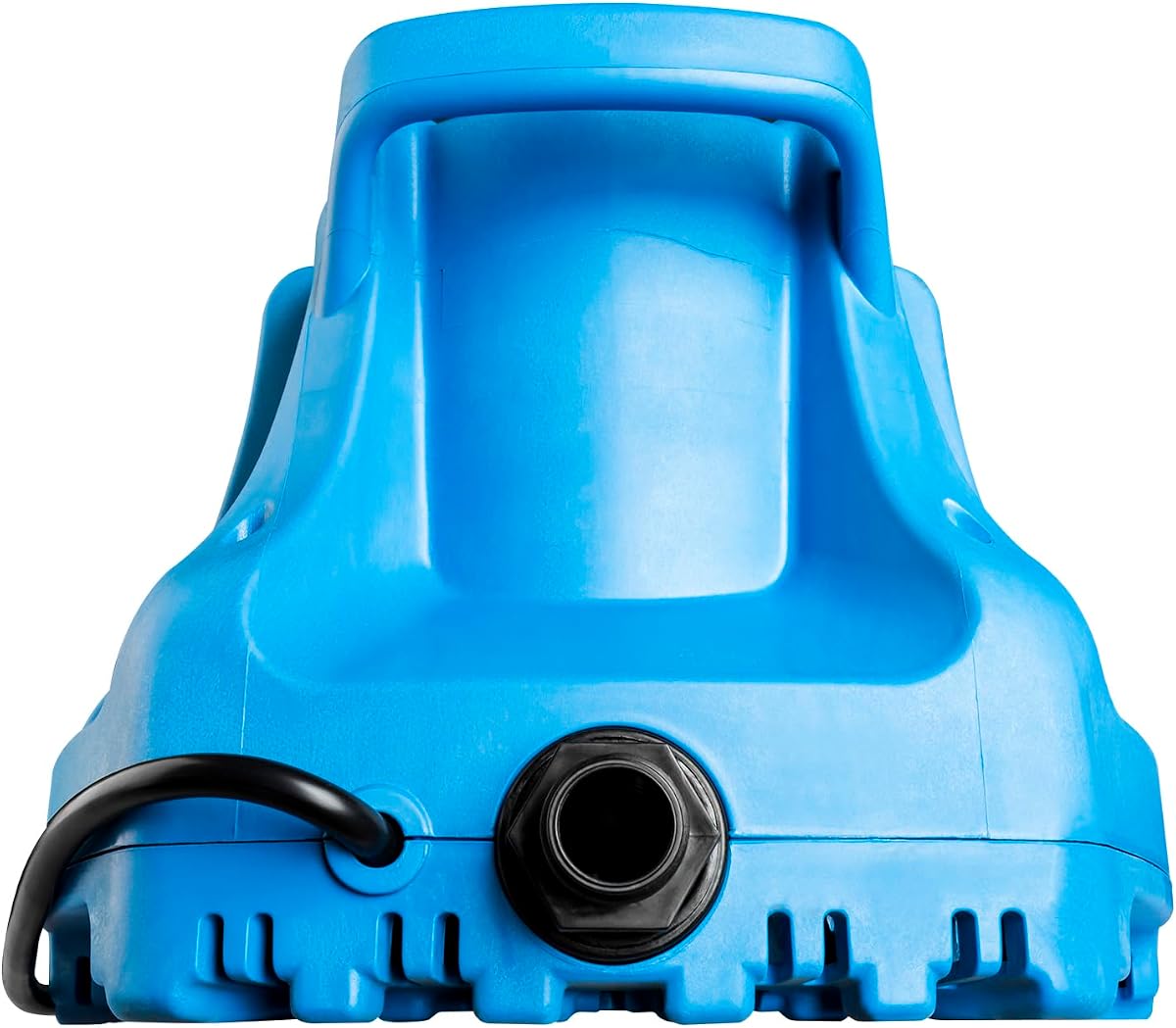
The Little Giant APCP-1700 is a purpose-built automatic pump for removing water from pool covers, boat covers, and rooftops. Its 4.5 rating and integrated float switch make it a natural choice when the goal is reliable, unattended drainage from a covered or partially enclosed structure.
We may earn a commission when you buy through this link, at no additional cost to you.
The pump activates at two inches of water and shuts off when the level drops to one inch. Its 1,700 GPH specification applies at a one-foot lift, while the stated shutoff height reaches 21.5 feet. A 25-foot power cord provides ample reach from an outlet, and the one-inch FNPT discharge includes a 3/4-inch garden hose adapter for simple connection.
The removable intake screen helps owners clear captured debris and release airlocks. Its compact, weighted body and built-in handle improve stability and portability. Compared with more general-purpose models, its specification focuses on controlled cover drainage and does not advertise notable solid-handling capability, making it less suitable for debris-heavy basins.
Choose this model when automatic operation, stable placement, and a long cord matter more than maximum low-level pickup. It is particularly appropriate for seasonal pool covers, boat covers, and flat rooftops where water accumulates on a membrane.
The integrated float switch activates at two inches and shuts off at one inch. This provides a defined operating range for covered areas and reduces unnecessary runtime.
The weighted design helps keep the pump steady while the removable screen allows routine cleaning. A built-in handle simplifies repositioning for maintenance.
We may earn a commission when you buy through this link, at no additional cost to you.
The AOLTCUZ 100W Pond Pump is a specialized circulation model with a 4.3 rating. Its stated adjustable range of 690 to 1,800 GPH makes it appropriate for koi ponds, fish ponds, water gardens, fountains, streams, and small waterfalls where steady circulation matters more than emergency drainage.
We may earn a commission when you buy through this link, at no additional cost to you.
Magnetic-drive technology, a stainless steel rotor, and a ceramic shaft help support quiet operation below 40 decibels. The oil-free magnetic design and dual filtration system are particularly relevant to ponds containing aquatic life. A front flow knob adjusts output, while the outlet can rotate through 180 degrees to direct water toward a feature or filtration system.
Its 13-foot maximum lift is much lower than the vertical reach offered by the utility pumps in this guide. It also uses a 20.3-foot cord and includes adapters for 3/4-inch, 3/4-inch NPT, and 1-1/4-inch connections. The tool-free removable mesh cover, water chamber, and rotor make maintenance convenient.
This pump is best for owners building or maintaining a decorative pond rather than removing deep standing water. Its quiet, adjustable, oil-free design supports continuous circulation, while actual flow varies with lift, tubing length, and hose diameter.
The oil-free magnetic drive and dual filtration system support use around fish and aquatic plants. Low-noise operation also makes the pump practical near patios and living spaces.
The flow knob and 180-degree adjustable outlet let users tune output and aim the stream. Suction cups help maintain the pump's position as the flow setting changes.
We may earn a commission when you buy through this link, at no additional cost to you.
The WAYNE WaterBUG is a compact water-removal pump with a 4.5 rating and an exceptionally low stated pickup level of 1/16 inch. Its Multi-Flo technology allows the discharge to be configured for different spaces, making it useful in basements, yards, window wells, buckets, and flat roofs.
We may earn a commission when you buy through this link, at no additional cost to you.
The top-discharge configuration suits confined or low-clearance locations, while the side-discharge option is better for broad, flat surfaces and open areas. The pump can move up to 1,350 GPH, with non-corrodible plastic outlets designed to fit a standard garden hose. A multi-ring suction strainer filters debris and helps protect the intake from blockages.
Unlike automatic sump pumps, the WaterBUG requires users to unplug it once the water is gone because it will otherwise run dry. Its 1,350 GPH maximum is lower than that of the high-capacity utility models, and the product data does not state a vertical lift figure. These are meaningful limitations for large-volume or high-elevation jobs.
This pump is an excellent specialty choice when removing the final thin layer of water from a window well, floor, bucket, or roof is the priority. Its selectable discharge direction and very low suction level distinguish it from conventional hose pumps.
A stated minimum water level of 1/16 inch is useful after larger pumps have removed most of the volume. It helps address shallow puddles that conventional intake screens may leave behind.
Top discharge works well in tight spaces, while side discharge suits open, flat surfaces. This flexibility lets one pump handle several drainage geometries.
We may earn a commission when you buy through this link, at no additional cost to you.
Choosing a submersible pump involves balancing water volume, vertical distance, hose restrictions, debris conditions, and control preferences. The most useful starting point is the intended job, because drainage, circulation, and automatic sump-pump applications have materially different requirements.
Maximum flow indicates how quickly a pump can move water under ideal conditions. Higher ratings are useful for large pools, basements, ponds, and rapid transfer, while a lower-flow unit may be sufficient for pool covers or small puddles. Actual performance falls as lift height, hose length, and outlet restrictions increase, so the maximum figure should be treated as a comparative starting point rather than a guaranteed working rate.
Lift capacity describes how high the pump can move water. A pump rated for only a few feet of lift works well for draining water into a nearby lower outlet, while models with 25 to 36 feet of lift suit basements, raised yards, and elevated discharge points. Every elbow, adapter, and foot of hose adds resistance, so choosing some headroom can help maintain useful flow in real installations.
Clean water, lightly dirty water, and debris-filled water require different intake designs. Pumps intended for ponds often use fine filters to protect aquatic life, while utility pumps may use strainers capable of passing small solids. The Superior Pump handles up to 1/8-inch solids, and the Cleartide offers the same stated capability. Always confirm the stated limits and avoid feeding a pump leaves, stones, or other large objects.
Automatic pumps use floats or electronic sensors to start and stop at defined water levels. They are valuable for window wells, pool covers, and unexpected basement flooding. Manual pumps offer more direct control for scheduled transfer, pond watering, or intermittent cleanup. The Cleartide provides both modes, while the Acquaer and Little Giant focus on automatic operation.
The pump outlet must match the hose or discharge system. Common connections in this selection include 3/4-inch garden hose, one-inch NPT, and 1-1/4-inch NPT. Some products include adapters, while the 1.5HP model provides both NPT and barb options. Check the full hose diameter, not just the connector label, and consider how much capacity is lost through a long, narrow hose.
Because a submersible motor operates in water, dry-run and thermal safeguards matter. Several featured models include temperature-control cores, thermal overload protectors, or automatic dry-run shutdown. These protections reduce damage risk but do not replace correct placement or attentive operation. Follow the manufacturer's startup instructions, especially instructions about removing trapped air before a pump begins moving water.
Cord length determines where a pump can be placed relative to a suitable outlet. The Little Giant and SEESII offer 25-foot cords, while several others use 10-foot or 20.3-foot cords. In a flooded area, electrical safety and access to a grounded outlet are more important than maximum nominal length. Route cords where they will not be pinched, exposed to traffic, or pulled into moving water.
Bottom suction can remove water closer to the floor or basin surface, but each design has a stated minimum level. The WAYNE reaches down to 1/16 inch, the Cleartide automatic mode stops at 1/5 inch, and the Acquaer removes water to 1/4 inch. These differences matter for window wells, flat floors, covered pools, and finishing a cleanup after the main volume has been pumped away.
Before operating, read the supplied manual and confirm that the pump, discharge hose, cord, adapters, and any check valve are compatible. Place the pump fully beneath the intended water level and orient it so the intake remains clear. For models that recommend it, submerge the pump at an angle before starting to help release trapped air bubbles that can interfere with initial pumping.
Connect the discharge hose securely and route it toward a safe drainage destination without kinks, sharp bends, or unsupported sections. Use a properly grounded outlet and keep the electrical connection protected from standing water. Start the pump and monitor its operation: a dramatic change in noise, vibration, or flow can indicate an air lock, blocked intake, excessive lift, or unsuitable debris.
After the water has been removed, disconnect the power before handling the pump. Clean the screen or mesh filter regularly and remove trapped debris from the impeller area according to the manual. For automatic models, confirm that the sensor or float remains free to move. Store the pump in a clean, dry location, inspect the cord for damage, and never allow a manual pump to continue running dry.
Choose a pump with enough stated flow to move the expected water volume quickly and enough vertical lift to reach the discharge point. A model with automatic control is useful for unattended operation, while a garden hose or discharge adapter should match your existing setup. Always check the available outlet and keep the cord and connections away from standing water.
Some utility pumps are designed for clean or lightly dirty water and can pass small solids, but they are not intended to swallow stones, leaves, or other large debris. Pumps with fine filtration are better suited to ponds and aquatic environments. Match the intake screen and stated solid-handling specification to the debris likely to enter the water.
A utility pump generally runs only while someone controls it and is versatile for transfer and temporary drainage. An automatic sump pump uses a float or electronic sensor to turn on and off as water rises and falls. Automatic models are convenient for persistent or unexpected water, while utility pumps often provide more direct operating control.
Trapped air, an obstructed intake, an inadequate water level, or a closed discharge valve can all interrupt startup. Check that the pump is fully submerged and that its screen is clear. Release trapped bubbles as directed in the manual, inspect the hose for kinks, and confirm the power connection before using any automatic sensor reset procedure.
Yes. Extra hose length and fittings create friction, and a narrow or kinked hose can reduce flow substantially. A long discharge run also requires enough pump power to overcome the added resistance and any vertical rise. Choose hose diameter and length carefully rather than assuming the maximum flow rating will remain unchanged.
Only use a pump designed for ponds and aquatic life. The AOLTCUZ model specifies an oil-free magnetic drive and dual filtration system for this type of use. Submersible pumps with exposed oil-filled motors or open impellers may be unsuitable, so confirm the product description before placing any pump in a fish habitat.
Clean the intake screen whenever debris accumulates and after every dirty-water job. Automatic pumps should also be inspected so leaves or sediment cannot hold the float or sensor in the wrong position. More frequent cleaning may be necessary around pools, ponds, or construction areas where the water contains fibers, algae, soil, or other suspended material.
It depends on the model and the task. Continuous circulation models may be designed for long-running pond use, while drain pumps generally require supervision unless they have automatic controls. Manual pumps should be switched off as soon as the water is gone because continued dry running can damage the motor or activate a thermal-protection system.
The Superior Pump 91250 is the strongest general-purpose selection because it combines 1,800 GPH capacity, 25-foot lift, solid handling, and simple hose compatibility. The Cleartide stands out for premium control flexibility with automatic and manual modes, while the AgiiMan offers a budget-focused solution for routine swimming pool cover drainage.
Prioritize the conditions you will actually encounter: water volume, debris, vertical lift, available power, discharge hose, and the need for automatic operation. High stated flow is valuable but cannot substitute for suitable connections, sufficient lift, and correct placement. Automatic sensors, dry-run protection, and easy-to-clean strainers should carry more weight when a pump will operate unattended.
Before purchasing, verify the current product details, included accessories, warranty information, and customer feedback. Prices, promotions, and availability can change, and comparing the final package against your drainage requirements will produce the most satisfying result.