
Vapor Barrier Tape 4" x 180'
4.3Editor score
Aggressive acrylic adhesive
UV-resistant polyethylene backing
Suited to varied surfaces
Tape for plastic sheeting must create a durable, moisture-resistant bond without damaging the film. The right choice depends on whether you are patching a greenhouse, sealing crawl-space vapor barriers, covering construction surfaces, or joining polyethylene liners. Width, adhesive strength, thickness, UV resistance, and compatibility all influence the result.
This guide compares ten tape products intended for plastic sheeting and closely related sealing tasks. We considered stated dimensions, backing material, adhesive type, application guidance, weather resistance, and suitability for seams, patches, or masking. The list includes dedicated vapor-barrier tape, clear greenhouse repair tape, construction tape, and painter's film.
Each pick reveals what makes it best suited to a particular job, from wide-area seam sealing to discreet greenhouse repairs and temporary painting protection. Ratings and product details reflect the supplied listings, while availability and prices can change. Always confirm the material, surface condition, and installation requirements before buying.
4.3Editor score

4.9Editor score

4.2Editor score
As an Amazon Associate we earn from qualifying purchases.
The table below compares all ten options by their stated width, length, backing, and primary use, helping distinguish dedicated construction seals, greenhouse patches, and temporary surface-protection products.


TapeManBlue's 4-inch by 180-foot vapor barrier tape combines a thick polyethylene backing with a strong adhesive designed to seal plastic liners and moisture barriers. Its 4.6 rating reflects broad customer satisfaction, while the white color makes seams visible against many ground-cover and underlayment applications. It is especially well suited to crawl-space encapsulation and other construction jobs where a substantial, weather-resistant seal is required.
We may earn a commission when you buy through this link, at no additional cost to you.
The 9 mil backing provides more substance than ordinary household tape and is intended to resist tearing during application and service. The tape is described as waterproof, UV resistant, and flexible enough for seams, overlaps, repairs, concrete-adjacent areas, and foundation-related projects. A 180-foot roll also reduces interruptions during long runs, making it practical for contractors and homeowners working across multiple rooms or crawl-space sections.
Its primary trade-off is appearance. The opaque white finish will not disappear against a clear greenhouse, which may be important in decorative installations. Because the product is designed to create durable seams, it may not be a casual choice for temporary repairs or surfaces that must remain free of residue. Users should also prepare the polyethylene thoroughly, since dirt, moisture, or wrinkles can interfere with a consistent bond.
This is a strong all-purpose recommendation for anyone sealing polyethylene vapor barriers, liners, or insulation seams. Choose it over a narrow clear patch tape when coverage area, material thickness, and long-term construction performance matter most. For discreet greenhouse holes, one of the clear repair options may be a better fit.
The 180-foot length is useful for crawl spaces, basements, and other installations where repeated roll changes slow the work. A four-inch width also gives enough material to cover a seam generously while remaining manageable by hand.
The listed UV-resistant coating and waterproof polyethylene construction make the roll suitable for exposed or changing environments. These properties are especially relevant when seams must remain intact through humidity, rain, or prolonged sunlight.
We may earn a commission when you buy through this link, at no additional cost to you.
This 4-inch by 180-foot vapor barrier tape offers a straightforward way to seal plastic film, aluminum foil insulation, wood, metal, and other clean surfaces. Its 4.3 rating is supported by a feature set that emphasizes immediate adhesion, a 9 mil polyethylene construction, and resistance to moisture, sunlight, and temperature changes. It works well when a project needs one versatile tape for several materials rather than a narrowly specialized adhesive.
We may earn a commission when you buy through this link, at no additional cost to you.
The acrylic adhesive is described as bonding instantly and requiring no curing period. That makes the roll convenient for emergency repairs, greenhouse film patches, ductwork, and insulation seams where a quick return to service matters. Its four-inch width can be cut by hand, allowing users to tailor each strip to the damaged area without dealing with a stiff or oversized tape format.
As with any permanent construction adhesive, careful preparation is important. The plastic must be clean and dry, and users should avoid assuming the tape will perform equally well on dusty, oily, or heavily textured surfaces. It is also not the most discreet option for a clear greenhouse because the backing is not advertised as transparent. Its benefit is dependable, broad-surface utility rather than invisible repair aesthetics.
This tape is a good pick for DIYers and professionals who want rapid adhesion and dependable performance across mixed materials. It is especially convenient for repairing greenhouse sheeting, insulation, and small moisture-barrier gaps. For a highly visible horticultural installation, choose a clear repair tape instead; for extensive crawl-space work, a dedicated 180-foot construction roll may offer more specialized guidance.
The acrylic adhesive forms its seal without a stated curing period, helping users move from repair to continued work quickly. It is useful for sudden punctures and field maintenance where waiting could leave the sheeting exposed.
Compatibility with polyethylene film, foil insulation, wood, and metal broadens the range of possible repairs. Confirm that each surface is clean and structurally sound before applying the tape.
We may earn a commission when you buy through this link, at no additional cost to you.
Tuck Tape Construction Sheathing Tape is a 2.4-inch red tape rated 4.7, making it one of the highest-rated selections here. Although it was not formulated solely as plastic-sheeting tape, its aggressive permanent adhesive and ability to bond with plastic, metal, and smooth surfaces make it useful for temporary shelters, tarps, protective covers, and demanding construction seams.
We may earn a commission when you buy through this link, at no additional cost to you.
The adhesive is described as retaining strong holding power across hot and cold conditions, while UV resistance helps the tape cope with outdoor exposure. Its permanent bond is particularly useful where a repair must stay fixed rather than peel away. The product also has a specialized epoxy-release characteristic, allowing it to contain poured epoxy without bonding to the finished project.
The warning about residue is important. Because the tape forms a strong, lasting bond, it can be difficult to remove and may leave adhesive behind. It should therefore be tested on a discreet area before use, particularly on plastic film that might later need to be reused. Its red color and construction-tape appearance also make it less appropriate when visual discretion matters.
This is a compelling choice for temporary outdoor structures, house-wrap joints, garage tents, foam insulation, and plastic covers that need rugged adhesion. It is less specialized than the clear greenhouse products but more versatile around the workshop. Choose it when strength and durability outweigh the need for a clean, removable, or invisible repair.
The aggressive adhesive is intended to keep tarps, shelters, and wrapped materials securely positioned. This makes the tape useful when a repair will face wind, handling, or prolonged outdoor exposure.
Residue can be difficult to remove, and the listing specifically advises testing the application area. Use this option on surfaces where a permanent bond is acceptable rather than temporary film.
We may earn a commission when you buy through this link, at no additional cost to you.
The 6-inch by 108-foot Greenhouse Repair Tape is tailored to plastic coverings and is the widest dedicated repair tape in this guide. Its clear polyethylene construction blends more discreetly than opaque construction tape, while the six-inch width can cover a large tear, a long split, or the overlap needed when splicing two film sections.
We may earn a commission when you buy through this link, at no additional cost to you.
The product is described as heavy duty, UV resistant, and able to withstand extreme temperatures and changing weather conditions. Those features are relevant to greenhouses, where hot interiors, cool nights, condensation, and sunlight can stress a repair. The roll can be cut to the required length and placed directly over damaged poly film for a straightforward field repair.
The main compromise is handling. A six-inch-wide strip is less maneuverable around irregular curves, pipes, or tight corners than a two- or four-inch tape. Its 108-foot length is also shorter than the 180-foot and 263-foot rolls offered elsewhere, although the added width may compensate when a job involves substantial damaged areas. The 4.2 rating suggests solid performance overall, even if it does not stand at the top of the list.
This is the premium pick for greenhouses and visible plastic installations where a discreet, broad patch is wanted. It is a particularly sensible choice for long splits, weather-damaged panels, and locations where a narrow strip may not cover enough damaged material. For small pinholes or a confined corner, a narrower roll will be easier to place accurately.
Six inches of coverage allows one strip to span larger rips and provide useful overlap around a damaged area. It is a better fit for substantial patches than a narrow repair strip.
The transparent construction is less visually disruptive on greenhouse walls and clear poly coverings. It allows the repair to blend with the surrounding film when placement is neat.
We may earn a commission when you buy through this link, at no additional cost to you.
GORILLA Crystal Clear Tape combines a 4.7 rating with a reinforced backing and extra-thick adhesive design. Although it is a general-purpose clear tape rather than a polyethylene-specific seaming product, its waterproof backing and all-surface grip make it a credible option for small repairs to plastic sheeting, tarps, and protective coverings.
We may earn a commission when you buy through this link, at no additional cost to you.
The tape is advertised as gripping rough and uneven materials such as wood, stone, stucco, plaster, and brick, which is useful when a plastic sheet is secured to a textured support. Its backing is also described as resistant to moisture, ultraviolet rays, and temperature extremes. The crystal-clear finish is designed not to yellow, helping maintain the appearance of transparent coverings over time.
Its most obvious limitation is the 18-yard roll. That is much shorter than the dedicated film and construction tapes in this list, so a single roll is best reserved for occasional punctures rather than long seams. The 1.88-inch width also provides less overlap than four- or six-inch options. A very aggressive general-purpose adhesive may be more than necessary for delicate film.
This tape is best for someone who already values the GORILLA brand and needs a small, tough, nearly invisible repair that will not distract from the surrounding project. It can secure clear sheeting to rough framing or patch compact tears. For covering an entire greenhouse seam or completing a crawl-space installation, a longer film-specific roll is more economical and specialized.
The extra-thick adhesive and reinforced backing support tough jobs, including applications on uneven surfaces. This gives the tape more structural presence than a lightweight film patch.
At 18 yards, the roll is best kept in a toolbox for isolated repairs. It is less convenient for covering long runs or completing a large enclosure.
We may earn a commission when you buy through this link, at no additional cost to you.
The 4-inch by 108-foot Greenhouse Repair Tape offers a balanced alternative to the wider premium model. Its 4.3 rating reflects a practical combination of clear appearance, useful coverage, and straightforward application. The product is explicitly intended for rips, tears, and holes in greenhouses and other poly sheeting.
We may earn a commission when you buy through this link, at no additional cost to you.
Its heavy-duty polyethylene film is described as UV resistant and capable of withstanding frigid winter conditions and hot summer temperatures. That makes it suitable for repairs exposed to substantial seasonal variation. The clear construction allows light to continue passing through the repaired film, which is important where the tape covers a greenhouse panel used for plant growth.
Four inches is easier to position than six inches, making this roll more suitable for irregular areas, moderate tears, and long narrow splits. The trade-off is reduced coverage for large ragged holes. At 108 feet, the roll also holds less material than the 180-foot construction tapes and the 263-foot narrow greenhouse option.
This is one of the most balanced choices for greenhouse owners who want a dedicated transparent film patch without an extremely wide or narrow roll. It works well for routine maintenance and moderate damage where a four-inch strip provides enough overlap. Select the six-inch version for larger broken sections, or the longer narrow roll for many small repairs.
The width offers enough material to cover a meaningful damaged zone while remaining easier to curve or trim than a six-inch strip. It is well suited to routine greenhouse maintenance.
The listed resistance to both frigid and scorching conditions supports seasonal use. Clean and dry the film before application to help the adhesive establish a reliable hold.
We may earn a commission when you buy through this link, at no additional cost to you.
This 4-inch by 180-foot crawl-space seal tape earns the highest rating in the guide at 4.9. Its 9 mil polyethylene backing and premium pressure-sensitive acrylic adhesive are tailored to seams, overlaps, and repairs on vapor barriers, plastic sheeting, and polyethylene liners. It is especially compelling for crawl spaces, basements, foundations, and insulation systems.
We may earn a commission when you buy through this link, at no additional cost to you.
The high-tack adhesive is designed to bond to polyethylene film, concrete, wood, insulation, and other clean building materials. Its aggressive bonding characteristics are intended to reduce edge lifting, a common weakness of lighter tapes placed over seams in damp or temperature-changing environments. A 180-foot length also makes the roll efficient for lengthy runs and multiple penetrations around posts and pipes.
The white, opaque appearance makes it unsuitable when the repair must disappear into clear film. The instructions also recommend firm roller pressure after centering the tape over the overlap, so achieving the listed performance depends partly on proper preparation and application. Polyethylene should be clean and dry, and users should avoid covering wet or dusty seams.
This is the strongest recommendation for crawl-space encapsulation, basement moisture control, and other demanding vapor-barrier installations. It combines a generous roll, thick backing, and specialized acrylic adhesive in a format that directly addresses common installation problems. Greenhouse owners wanting transparent film should look to a clear repair product instead.
The product is specifically intended to bridge overlapping sheets with consistent adhesion. Its aggressive acrylic adhesive is designed to resist edge lift and help protect seams from moisture infiltration.
The listed method calls for a six-inch overlap, tape centered over the seam, and firm roller pressure. Following these steps gives the adhesive a clean, well-pressed bonding area.
We may earn a commission when you buy through this link, at no additional cost to you.
The 4-inch by 180-foot Waterproof Seam Tape is a multipurpose maintenance option with a 4.1 rating. Its 9 mil polyethylene construction is described as tear resistant, abrasion resistant, and durable, while the waterproof, UV-resistant coating is intended to block moisture and resist sun damage.
We may earn a commission when you buy through this link, at no additional cost to you.
The product is listed for use on plastic polyurethane liners, vapor barriers, metal, wood, and plastic. That range makes it practical for property maintenance, outdoor pipe wrapping, crawl-space isolation, temporary roofing, and wall repairs. It can also serve outdoor masking and painting tasks, giving the roll more utility than a narrowly specialized patch tape.
Its rating is the lowest among the ten products, so it may not be the first choice for a highly visible greenhouse repair or a critical vapor-barrier installation where extensive independent testing matters. The generic naming also offers fewer details about the precise adhesive formulation. As with other construction tapes, surface cleanliness and proper overlap are likely to influence performance.
This roll is a sensible addition to a general maintenance kit, especially for users who want one long tape capable of handling several materials and temporary outdoor repairs. It is less compelling when a clear, horticultural film or a heavily specialized acrylic construction adhesive is required, but its versatility and long length are meaningful strengths.
The combination of plastic, wood, metal, and other compatible surfaces gives the tape broad utility. It can handle urgent field repairs without requiring several specialty products.
The listed waterproof and UV-resistant coating is designed to limit moisture penetration and sun damage. Maintaining flexibility and stability over extended use is a stated performance goal.
We may earn a commission when you buy through this link, at no additional cost to you.
The 2-inch by 263-foot Greenhouse Repair Tape is built for frequent small repairs. Its 4.2 rating is supported by a heavy-duty 6.3 mil polyethylene backing, sticky adhesion, and claimed resistance to UV exposure, low temperatures, tearing, and water. The unusually long roll makes it efficient for maintenance across several coverings.
We may earn a commission when you buy through this link, at no additional cost to you.
The transparent film allows light transmission while shielding the repair area from further UV exposure. It can be used on vegetable greenhouse covers, polyethylene coverings, tarps, flower film, and plastic bags, making it a useful general patch material. At two inches wide, the strip can be cut with ordinary tools and shaped around smaller rips or puncture sites more easily than a broad six-inch roll.
Its narrower width means it provides less coverage than the four- and six-inch greenhouse tapes. The 6.3 mil backing is also thinner than the 9 mil material used by several vapor-barrier products, though the product is still described as heavy duty for its intended repair category. For larger cracks, the instructions advise applying tape on both sides.
This is the best option for a gardener or maintenance technician who expects many small repairs over time. The 263-foot length reduces the need to replace rolls, while the transparent film keeps localized fixes visually unobtrusive. Choose a wider tape for a large tear or a long splice, but keep this narrow roll for routine punctures and minor damage.
The 263-foot roll is the longest narrow film option here. It is well suited to facilities with several greenhouses, multiple tarps, or a recurring need for small emergency patches.
A two-inch strip is easier to cut, curve, and place over compact damage. For larger cracks, applying tape to both sides of the damaged area improves coverage.
We may earn a commission when you buy through this link, at no additional cost to you.
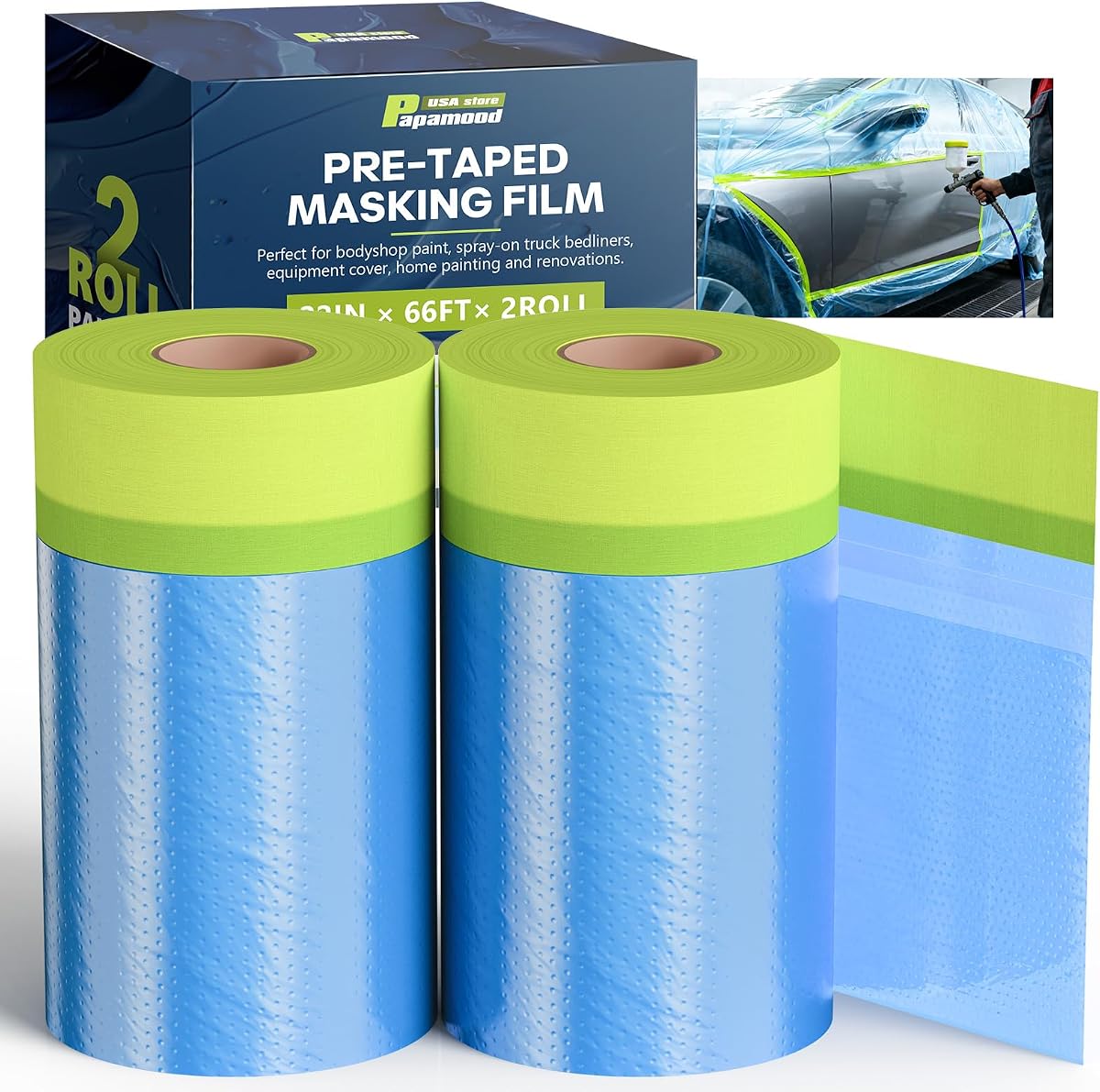
The Pre-Taped Automotive Masking Film is a specialized painting product rather than a permanent plastic-sheeting seam tape. It earns a 4.4 rating for offering a convenient combination of tear-resistant HDPE film and integrated masking tape. Each roll measures 22 inches by 66 feet, and the package contains two rolls for larger painting or renovation projects.
We may earn a commission when you buy through this link, at no additional cost to you.
Its heat-resistant rubber adhesive is stated to withstand 230°F curing for 30 minutes without shrinking or melting. The film provides a temporary barrier against paint and dust, while the taped edge helps create a controlled boundary. The product can be quickly deployed by one person and cut to different lengths, making it more convenient than manually joining separate film and tape.
The most important limitation is intended use. This is not a permanent vapor-barrier or greenhouse-repair adhesive, and it should not be treated as a long-term seam seal. The listing also limits clean removal to within 30 days, so storage or surface condition can affect the result. Its broad compatibility includes walls, floors, glass, metal, plastic, marble, and rubber trim.
This is the right pick for temporarily protecting plastic, glass, walls, cabinetry, or vehicle panels during painting. It offers fast setup and convenient removal rather than permanent adhesion. Anyone seeking a durable seal between polyethylene sheets, especially for moisture control or greenhouse repair, should choose one of the dedicated construction or greenhouse tapes instead.
The integrated adhesive edge removes the need to align separate masking tape and protective film. That design speeds setup and helps maintain a straighter painted boundary.
Heat resistance and tear resistance make the film practical for automotive and home painting. It should be removed within the stated period rather than used as a permanent construction seal.
We may earn a commission when you buy through this link, at no additional cost to you.
The best tape for plastic sheeting depends on the material being repaired, the size of the damaged area, environmental exposure, and whether the bond must be temporary or permanent.
Start by identifying the film itself. Polyethylene vapor barriers, clear greenhouse coverings, general-purpose tarps, and painter's HDPE film do not necessarily present the same adhesive, thickness, or removal requirements. A tape intended to seal construction-grade polyethylene may be too rigid for a delicate horticultural film, while a thin clear patch may not hold a crawl-space seam together.
Choose a product whose listing explicitly mentions plastic sheeting, polyethylene film, vapor barriers, greenhouse coverings, or the exact surface you intend to join.
Width determines how much damaged or overlapping area the tape can cover. A two-inch strip is easy to maneuver around small punctures, while four inches is a versatile choice for ordinary seams and repairs. Six-inch tape can cover larger tears and create a generous overlap, although it is less convenient around tight corners and curved structures.
For long seams, favor four inches or more. For small, irregular repairs, a narrower roll usually gives more precise placement and easier trimming.
Thicker backing generally offers more tear resistance and remains useful in demanding construction environments. The dedicated vapor-barrier options in this guide use 9 mil polyethylene, while the narrow greenhouse option uses 6.3 mil film. These figures describe the backing material rather than the complete adhesive system, but they remain a useful indicator of physical strength.
Match thickness to the job. Heavy construction seams benefit from substantial backing, while thin film repairs may only require enough strength to resist ordinary handling and weather.
A strong adhesive is useful only if it bonds effectively to the intended substrate. Acrylic adhesives are highlighted on several vapor-barrier tapes, while other products use construction-grade bonding suited to plastic, metal, wood, and smooth surfaces. Surface texture, moisture, dust, oil, and plasticizers can all affect adhesion.
Look for products that list the relevant plastic and compatible building surfaces. Clean and dry the area before application, and test aggressive permanent tapes on a discreet spot first.
Outdoor sheeting is exposed to sunlight, rain, condensation, and temperature swings. UV-resistant coatings help prevent deterioration, while waterproof or moisture-resistant backing is essential where a seam is intended to block infiltration. These claims do not mean every installation is permanently sealed, but they indicate the environmental conditions each tape is designed to tolerate.
Prioritize both properties for exposed greenhouse panels and ground vapor barriers. For indoor temporary masking, weather resistance may be less important than clean removal.
Patch tapes are intended to cover punctures, rips, and localized damage, while vapor-barrier seam tapes are designed for overlaps, long runs, and moisture-control systems. A repair can be excellent without being suitable as a continuous vapor barrier. Likewise, a construction tape that creates a permanent bond may be excessive for a removable cover.
Match the product to the intended function rather than choosing solely by appearance. Dedicated repair film is convenient for isolated damage, and dedicated construction tape is better for continuous seam systems.
White construction tape makes seams easier to see during installation, which can help workers check coverage and alignment. Clear film is less conspicuous and can allow light through a greenhouse panel. Clear does not always mean invisible, and the visual result still depends on placement, cleanliness, and the condition of the surrounding film.
Choose white for practical visibility and clear for discreet horticultural or display installations where appearance is important.
Some construction tapes form permanent bonds and may leave residue, making them a poor choice for reusable plastic. Painter's masking film is designed to be removed cleanly within a stated period, but it is a temporary protection product rather than a lasting repair. If the sheeting will be moved or reused, prioritize a removable option.
Never assume ordinary masking tape can replace a durable weather seal. Read the removal guidance and test the product on a hidden section whenever residue would be problematic.
Begin by identifying the damaged film and deciding whether the repair must resist weather, block moisture, or provide only temporary protection. Clean and dry the plastic thoroughly, remove loose dirt and damaged edges, and ensure that both the tape backing and receiving surface are free of oil, dust, and moisture. A clean bonding area is more important than forceful application.
For overlapping vapor barriers, use a generous overlap and center the tape across the joint. One listed installation method recommends at least six inches of overlap, followed by firm pressure with a roller. For a patch, cut the tape to cover the entire damaged zone, press from the center toward the edges, and avoid trapping folds or wrinkles beneath the strip.
Inspect the repair after installation and periodically thereafter, particularly after strong wind, rain, heat, or cold. Look for lifting edges, trapped moisture, wrinkles, or a bond that has shifted. Keep unused tape in a cool, dry, ventilated location away from direct sunlight, and follow the storage guidance supplied with the chosen product.
A 4-inch, 9 mil vapor-barrier tape with an aggressive acrylic adhesive is a strong choice for overlapping polyethylene sheets. The tape should be applied to clean, dry film and pressed firmly over a properly sized overlap. Choose a product specifically listed for vapor barriers, insulation, and polyethylene liners rather than relying on ordinary household tape.
Yes. Clear polyethylene greenhouse tape is specifically designed to cover rips, tears, holes, and splices while allowing light through the repaired area. Clean and dry the damaged film, press the tape down firmly, and use tape on both sides of a larger crack if necessary for better coverage.
No. Wider tape covers more damage and provides a larger overlap, but it is harder to maneuver around curves, pipes, and tight spaces. Narrow tape is often better for small punctures, while four- to six-inch rolls are more appropriate for seams, long splits, and substantial tears.
It can provide a strong repair, but it may be visually obvious and difficult to remove. It can also leave residue, as noted for the Tuck Tape selection. Clear greenhouse film is usually more discreet and better aligned with horticultural use, while construction tape is useful for temporary shelters or non-visible covers.
No. Moisture, dirt, and oil can prevent the adhesive from contacting the plastic evenly. Dry the area thoroughly and remove loose debris before application. If the repair is in a persistently damp location, use a tape specifically formulated for moisture barriers and follow the recommended overlap and pressure instructions.
Start with a clean, dry surface and use enough tape to extend well beyond the damaged area. Center it over the joint, press out trapped air, and apply firm pressure with a roller. Inspect corners and ends, where lifting commonly begins, and avoid creating folds in the underlying plastic.
No. Pre-taped masking film is intended for temporary paint and dust protection. It is useful when covering plastic, glass, walls, or vehicle panels during painting, but it is not designed to function as a permanent greenhouse patch or vapor-barrier seam.
Choose a product explicitly rated for temperature extremes, such as a UV-resistant greenhouse tape or a construction tape that states hot- and cold-weather performance. Even weather-resistant adhesive benefits from proper surface preparation, and installation during an extreme temperature may make application less uniform.
The Heavy-Duty Crawl Space Seal Tape is the leading choice for professional-looking vapor-barrier installations because of its 9 mil polyethylene backing, high-tack acrylic adhesive, and 4.9 rating. The Professional Vapor Barrier Tape provides a versatile, fast-bonding alternative, while the 6-inch Greenhouse Repair Tape offers the most generous clear coverage for conspicuous horticultural damage.
Prioritize compatibility with the exact plastic, then consider width, thickness, environmental resistance, and whether the bond needs to be permanent or removable. Clear film is most appropriate for discreet greenhouse repairs, heavy construction tape suits durable or temporary covers, and painter's film should remain limited to temporary masking.
Ratings and product details can change, and prices and availability vary over time. Review the current listing, confirm dimensions and surface compatibility, and check the manufacturer's installation guidance before purchasing the right tape for your project.