10 Best NFC Tag Emulator for Switch 3DS and Wii U (November 2026) Expert Guide
Written by admin · Updated November 2026
An NFC tag emulator acts as a reusable virtual game tag for compatible Nintendo systems, allowing supported saves and profiles to be stored, selected, and rewritten from a compact device. A useful model should balance capacity, easy navigation, dependable charging, reliable NFC response, and clear support for the games and consoles you actually use.
We compared ten emulators using the information supplied for each product, focusing on storage capacity, built-in game data, supported platforms, display quality, control layout, wireless management, charging method, portability, and any stated compatibility limits. The list includes compact options for casual organization and larger libraries for players who maintain many game profiles.
Each pick highlights a different balance, from a feature-rich budget model with 4,000-plus entries to broader console support, a larger OLED interface, or particularly broad preloaded storage. Ratings and product details can change over time, and current prices, availability, software compatibility, and retailer terms should be checked before purchase.
Top 3 Picks for Best NFC Tag Emulator for Switch 3DS and Wii U
Best Budget
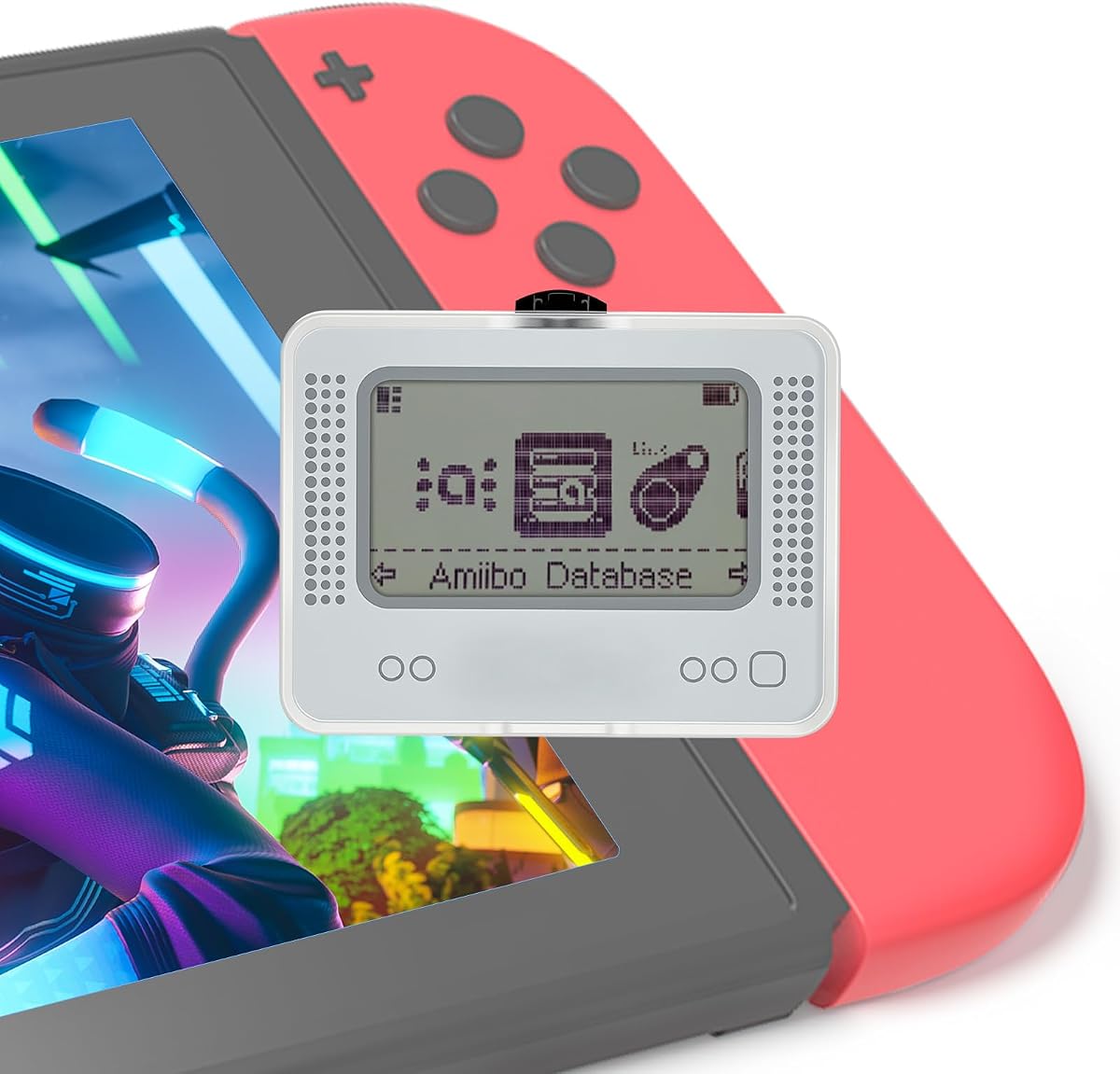
NFC Emulator for Switch, Wii U & 3DS, Smart NFC Tag Emulator with 4000+ Data Storage, 70+ Built-in Games, Unlimited Rewrites, 1.2in LCD, USB Rechargeable Organizer NFC Tags for Popular Adventures
Allmiibo Smart NFC Tag Emulator Compatible with Switch/3DS, 50+ Games and 3000 NFC Data Storage, Support Ulimited Scan, 1.2" OLED Screen, Rechargeable Battery, Easy Button Controls(White)
As an Amazon Associate we earn from qualifying purchases.
Top 10 Best NFC Tag Emulator for Switch 3DS and Wii U in 2026 Compared
The table below compares all ten emulators across the details most likely to affect everyday use: capacity, supported games, display and controls, charging, and platform coverage. The entries reflect the supplied product information, so buyers should also verify game- and software-specific compatibility before buying.
The Smart 4,000+ Entry Emulator is the strongest all-around value in this guide, combining unusually generous storage with a preloaded library of more than 70 games. Its supplied rating is 5.0, and the headline specification—a capacity of more than 4,000 data entries—immediately distinguishes it from many competitors centered on 3,000 slots. It is designed for Switch, Wii U, and 3DS use.
Pros
Exceptional 4,000+ capacity
Large preloaded game library
Bluetooth database updates
Lightweight and portable
Unlimited rewrite support
Cons
LCD rather than OLED
Only one-button-style control emphasis
We may earn a commission when you buy through this link, at no additional cost to you.
Storage and flexibility are its defining strengths. The device can rewrite data without waiting for reset periods, while Bluetooth updates from a phone make database management more convenient than relying only on the onboard interface. A 1.2-inch LCD, Type-C charging, and a stated 27g weight suit daily carry, and the product information specifically highlights a long battery life for travel, home use, and gaming gatherings.
The trade-offs are modest. An LCD is less visually refined than the OLED panels used by several alternatives, and the product description does not advertise a particularly elaborate multi-button layout. It also presents a large library of game data rather than every title, so buyers should still confirm that their preferred games and software versions work as expected. These limitations do not undermine its value for users who prioritize capacity, portability, and wireless updates.
This is a strong recommendation for Switch, Wii U, or 3DS players who want extensive storage without moving to a premium model. It particularly suits anyone who values a large built-in library and phone-assisted database changes, while the lightweight body makes it easy to keep beside a console or carry in a gaming bag.
High Capacity Without Physical Tag Clutter
With more than 4,000 entries and 70-plus built-in games, this emulator is designed for users who would otherwise juggle many separate profiles. It offers a more centralized way to keep supported data ready for selection.
Wireless Management for Regular Updates
Bluetooth database updates allow compatible phone-based management, which is useful when the library needs frequent additions or revisions. The Type-C port complements that practical, travel-friendly design.
The 3,000+ Save NFC Emulator offers a well-rounded combination of capacity, preloaded content, and phone-based management. Its supplied rating is 4.0, placing it behind the higher-rated options, but the feature set is competitive. It stores more than 3,000 save records, supports 70-plus compatible titles, and is intended for Switch, Wii U, and 3DS systems.
Pros
Large built-in save library
Bluetooth app management
Unlimited rewrites
Lightweight 23.8g design
USB-C charging
Cons
Lower rating than leaders
LCD limits visual crispness
We may earn a commission when you buy through this link, at no additional cost to you.
Its main advantage is the balance between a substantial built-in library and convenient administration. Bluetooth app updates are compatible with iOS and Android devices, allowing database additions and updates without relying exclusively on manual entry. Unlimited rewrites, physical switching, a 1.2-inch status LCD, USB-C charging, and a 23.8g body make it straightforward to use at home or while traveling.
The primary concern is its 4.0 rating, which offers less evidence of broad user satisfaction than the 5.0-rated models in the list. The LCD is also less advanced than an OLED, although the information does not indicate that display sharpness is a major constraint. As with every emulator, the 70-plus game support is not a guarantee for every release or software version.
Choose this model if you want iOS and Android database updates, a large preloaded library, and unrestricted rewrites in a light package. It is a sensible option for regular users who do not need the very highest slot count, but the best overall pick offers greater storage and a stronger supplied rating.
Simple Cross-Platform App Updates
The stated support for both iOS and Android makes the management workflow more flexible. Users can update the database through Bluetooth without needing a particular phone operating system.
A Library That Travels Easily
At a stated 23.8g, the device is one of the lightest products featured. Its compact LCD-equipped body is easy to place in a pocket, travel case, or console bag.
The Allmiibo OLED Emulator earns the Editor's Choice position because it combines a 5.0 supplied rating with a clear display, broad hardware compatibility, and refreshingly simple controls. It supports Switch models including OLED and Lite, 3DS and 2DS families, and Wii U, while storing up to 3,000 NFC data entries and offering unlimited scanning.
Pros
Clear OLED display
Exceptional 5.0 rating
Broad console model support
Unlimited scanning
Simple button operation
Cons
Fewer slots than 4,000+ models
50+ game library is narrower
We may earn a commission when you buy through this link, at no additional cost to you.
Its 1.2-inch OLED is particularly useful for checking the selected profile, navigating stored entries, and finding the correct data quickly. The one-button control system reduces the number of physical controls to manage. A built-in rechargeable battery and USB-C charging support dependable use, and the product information specifically mentions compatibility with The Legend of Zelda: Tears of the Kingdom.
Its main limitation is that the advertised game library includes more than 50 titles, which is below the 70-plus figures claimed by some rivals. The 3,000-entry capacity is also 1,000 lower than the top storage figure in this guide. However, a narrower advertised library is not necessarily a practical disadvantage if the games you need are included, and the emphasis on the OLED and wide hardware support makes this a balanced alternative.
This is the best fit for buyers who prioritize screen clarity, straightforward operation, and support across several Nintendo console families. It is a compelling general recommendation, especially for those who appreciate a clean OLED interface without needing the maximum possible number of stored entries.
A Clearer View of Stored Profiles
The OLED screen offers a sharper-looking interface than the LCD panels used by several leading alternatives. It makes the current selection and available data more approachable during regular use.
Broad Hardware and Game Support
Support spans modern and older Nintendo handheld models as well as Wii U. The stated 50-plus game coverage includes popular titles, although individual compatibility still needs confirmation.
The Switch 1 & 2 Game Tag Manager is the most feature-forward premium-style selection here, with a 4.5 supplied rating and explicit support for the newest platform named in the list. It can store 3,500-plus entries, arrives with more than 900 stored entries, and uses a 1.3-inch OLED display with dedicated physical buttons for smoother navigation.
Pros
Largest stated display
900+ entries preconfigured
Explicit Switch 2 support
Broad title compatibility
Dedicated navigation buttons
Cons
No stated Bluetooth updates
No detailed weight specification
We may earn a commission when you buy through this link, at no additional cost to you.
Console coverage is one of its strongest points. The listed systems include Switch 2, Switch OLED, Switch Lite, the original Switch, Wii U, and the 3DS family. The product information also names The Legend of Zelda, Animal Crossing, Super Smash Bros., Splatoon, and Fire Emblem, giving buyers a clearer view of the intended game categories.
Compared with the best budget option, this model has a slightly smaller theoretical maximum than the 4,000-plus entry figure but offers a larger display, preconfigured starting content, and dedicated controls. The supplied information does not mention Bluetooth app updates, so buyers who require wireless database management may prefer a 4,000-plus model with that feature. It also lacks a stated portability weight.
This premium pick makes the most sense for owners with multiple Nintendo systems who want the broadest explicit hardware coverage in the guide. It is especially attractive to Switch 2 users and anyone who values a larger OLED and straightforward physical navigation over phone-based updates.
The Broadest Stated Console Range
Explicit Switch 2 support sets this model apart from listings focused on Switch, 3DS, and Wii U. It also covers Switch OLED, Switch Lite, the original Switch, and the 3DS family.
Ready-Made Entries Reduce Setup Work
With more than 900 entries preconfigured, users can begin with a populated library. The 3,500-plus total capacity still leaves substantial room for additional profiles.
The Four-Button Amiibo Manager is an attractive choice for users who prefer direct physical navigation. It has a 5.0 supplied rating, stores more than 3,000 Amiibo-compatible NFC profiles, includes a display for viewing the current selection, and provides four responsive buttons for browsing, switching, and confirming entries.
Pros
Excellent 5.0 rating
Four physical navigation buttons
Current selection visible
Large profile capacity
Clear third-party disclosure
Cons
No advertised wireless updates
Only select games are supported
We may earn a commission when you buy through this link, at no additional cost to you.
The product's control scheme is its defining feature. Rather than relying on one or three buttons, it gives the user a more conventional interface that can feel easier to learn. USB-C recharging and a compact enclosure make it suitable for a console drawer, gaming bag, or travel case. The stated platform focus includes compatible NFC-enabled games on Switch, Wii U, and 3DS.
The description appropriately notes that compatibility varies by game and software version and clarifies that this is a third-party accessory without licensed game content. It does not advertise Bluetooth management or phone app updates, which may be important to buyers who expect a large library to be maintained wirelessly. Its selection screen is also less clearly specified than the OLED displays offered by competing models.
Choose this emulator when straightforward physical buttons and a visible current profile are the priority. It is best suited to a player who wants a tidy collection of supported profiles and USB-C charging, and its 5.0 rating gives it one of the strongest user-feedback profiles in the roundup.
Controls That Are Easy to Understand
Four physical buttons provide a more conventional navigation experience than minimalist layouts. This can reduce confusion when moving through a large set of saved profiles.
See the Active Profile Before Use
The built-in display shows the current selection before the device is presented to a console. That visibility helps avoid selecting the wrong entry in a crowded library.
The Portable 3,000-Slot Emulator is a clean, straightforward option with a 4.8 supplied rating. It supports NFC-enabled games on Switch and 3DS systems, stores up to 3,000 profiles, and uses a 1.2-inch OLED with button controls for browsing and selecting saved data.
Pros
Strong 4.8 rating
Clear OLED display
Simple profile controls
Portable USB-C design
Transparent compatibility guidance
Cons
No built-in game count
No Bluetooth update claim
We may earn a commission when you buy through this link, at no additional cost to you.
Its appeal lies in the absence of unnecessary complexity. There is no stated need for a particular operating system, and the product information does not claim a built-in game library or wireless update process. USB-C charging and a compact, lightweight design make it easy to keep ready at home, in a gaming bag, or for travel and game nights.
One drawback is that the 3,000-slot capacity is below the largest offerings, and there is no numerical built-in game count in the supplied information. Buyers may also find a model with a larger library or explicit Bluetooth management more useful if they constantly add and revise data. On the other hand, the product clearly advises checking game support before purchase, reducing the risk of assuming every title is compatible.
This is a good recommendation for a player who values a compact OLED design, simple controls, and a strong rating without needing an enormous preloaded library. It is one of the most approachable options for organizing several supported NFC profiles in a single device.
A Minimalist OLED Interface
The one-inch-class OLED gives users a clearer view of stored profiles without adding a large control panel. Simple buttons cover browsing and switching, keeping the overall device easy to carry.
Designed for Flexible Storage
Three thousand slots are enough for substantial collections of characters, profiles, and other supported data. The rechargeable USB-C design helps keep the organizer ready at multiple gaming locations.
The 4,000+ Save Game Writer is a high-capacity alternative to the top budget pick, with a 5.0 supplied rating and nearly identical core specifications. It stores more than 4,000 saves, supports 70-plus games, offers unlimited rewrites, and is designed for Switch, Wii U, and 3DS.
Pros
Massive 4,000+ capacity
Seventy-plus game support
Bluetooth database updates
Unlimited rewrites
Very light 23.8g body
Cons
LCD instead of OLED
No precise display size beyond listing
We may earn a commission when you buy through this link, at no additional cost to you.
Its standout combination is a large library, flexible rewriting, and lightweight construction. The stated weight of 23.8g makes it one of the lightest devices here, while the 1.2-inch LCD provides status information without adding much bulk. iOS and Android app support allows convenient database updates through Bluetooth, covering several common phone platforms.
Compared with the Smart 4,000+ Entry Emulator, this option appears closely related in capacity and feature set, but the supplied information gives it a slightly different weight and feature description. As with its rival, the screen is an LCD rather than an OLED, so it may not offer the same visual refinement. The phrase supporting 70-plus games should still be treated as a general compatibility statement, not a guarantee for every title.
Pick this model if large storage, broad app-based management, and a very low stated weight are your priorities. It is particularly suitable for players who maintain many supported saves or want one compact organizer to accompany several Nintendo systems.
Capacity for Large Game Libraries
More than 4,000 saved records offer considerable room for users with many supported characters or profiles. It reduces the need to carry a large assortment of individual physical tags.
Phone-Assisted Library Maintenance
Bluetooth updates through compatible iOS and Android apps make it easier to add or revise data. This focus on database management is useful for users who regularly change their active files.
The Auto UID Regeneration Emulator stands out for its large 1.4-inch OLED and automatic UID regeneration feature. It is intended for Switch, 3DS, and Wii U systems, stores up to 3,000 NFC entries, supports more than 60 popular games, and offers unlimited scanning.
Pros
Large 1.4-inch OLED
Automatic UID regeneration
Sixty-plus game compatibility
Three-button navigation
Rechargeable design
Cons
No supplied customer rating
Charging described as USB
We may earn a commission when you buy through this link, at no additional cost to you.
The display is larger than the 1.2-inch OLEDs used by several other featured products, giving it a potential readability advantage when scanning a large collection. A three-button control system provides more navigation options than a one-button device without reaching the four-button layout of the Amiibo Manager. The rechargeable battery and USB charging make it suitable for repeated use.
The largest uncertainty is the absence of a supplied customer rating. That makes it harder to evaluate user satisfaction from the available information. The description also refers to a 1.2-centimetre OLED in one bullet while the product title says 1.4 inches, so buyers should examine the actual display specification and product imagery before ordering. Automatic UID regeneration may also not be necessary for every supported game.
This emulator is worth considering for buyers who prioritize a large OLED, flexible scanning, and automatic identifier management. It is best for someone comfortable with a three-button interface and willing to verify the current compatibility details directly from the listing.
A Larger OLED for Rapid Selection
The advertised 1.4-inch screen offers more visual space than the common 1.2-inch format. It is useful when users need to move through many saved profiles and inspect status information.
Automatic Identifier Management
Auto UID regeneration is designed to reduce repetitive identifier handling for supported workflows. Users should still confirm that the feature and intended data format suit the games they plan to use.
The PEGLY Smart NFC Emulator is a polished, uncomplicated organizer for compatible Nintendo games. It carries a 4.7 supplied rating, stores up to 3,000 character data files, uses a 1.2-inch OLED, and supports 50-plus popular games with NFC or Amiibo functions.
Pros
Strong 4.7 rating
Quick profile switching
Rechargeable pocket design
Simple plug-and-play setup
Wide system compatibility
Cons
Fifty-plus game coverage
No wireless update feature stated
We may earn a commission when you buy through this link, at no additional cost to you.
Its 1.2-inch high-clarity screen is designed to show character selection, battery status, and navigation information. The device supports quick loading and switching of NFC data, while plug-and-play operation and a rechargeable, pocket-size body make it easy to incorporate into an existing gaming setup. Compatible systems include Switch, Switch OLED, Switch Lite, New 3DS or 2DS XL, and Wii U.
The 50-plus game figure is lower than the 70-plus claims of the largest libraries, and the listing does not mention Bluetooth database updates. The product guidance also recommends keeping the battery charged, organizing files by game, and avoiding water, heat, or impact. These points make the device straightforward to maintain but less flexible for users who depend on remote library management.
PEGLY is a good fit for a player seeking a polished OLED organizer with quick switching and simple setup. Its strong rating, rechargeable format, and broad hardware list make it a solid general-purpose choice for supported games.
Quick Switching for Daily Play
The device is designed to load and switch between stored NFC data quickly. That focus makes it practical for sessions involving multiple characters or profiles.
Simple Setup and Maintenance
Plug-and-play operation lowers the barrier for first-time users. Charging the battery regularly and organizing files by game helps maintain stable, predictable performance.
The 4,000+ Entry Type-C Writer is a high-capacity organizer with a 25.7g weight, 70-plus game types, and support for Switch, Switch 2, Wii U, New 3DS, and other compatible NFC-enabled devices. The supplied information does not include a customer rating, so its strongest case rests on its practical design and specifications.
Pros
Massive 4,000-save capacity
Seventy-plus game types
Offline standalone use
Protective storage case
High-sensitivity NFC module
Cons
No supplied customer rating
Offline feature limits management options
We may earn a commission when you buy through this link, at no additional cost to you.
It stores up to 4,000 game saves and allows rewrites without a daily usage cap. The listing emphasizes offline standalone use, while a mobile app can synchronize the latest saves. A high-sensitivity NFC induction module is intended to provide a stable response, and the included transparent storage case offers dust, drop, and scratch protection.
The product title calls the screen a 1.2-inch LCD, while the feature description refers to a 1.2-inch OLED. This inconsistency should be checked against the package and current listing. Another trade-off is that offline standalone use does not replace all remote management options, even though app synchronization is available. Without a supplied rating, buyers have less customer-feedback evidence to consider.
This model is well suited to users who want maximum storage, broad supported game types, and a protective case for transport. It is also among the few products here with explicit Switch 2 compatibility, making it relevant to owners building a device collection around newer Nintendo hardware.
Maximum Storage in a Lightweight Body
A capacity of 4,000 saves provides ample room for large collections while the stated 25.7g weight preserves portability. The device is designed to sit in a bag without adding much bulk.
Protection for Storage and Travel
The included transparent case is described as guarding against dust, drops, and scratches. It is a useful addition when the emulator is stored beside a console or carried between gaming locations.
We may earn a commission when you buy through this link, at no additional cost to you.
Buying Guide – How to Choose the Best NFC Tag Emulator for Switch 3DS and Wii U
The most useful emulator is the one that stores the profiles you need, supports the games and systems in your collection, and makes daily selection simple. Capacity, display, controls, update methods, charging, portability, and verified compatibility all deserve attention before purchase.
Game and Console Compatibility
Start with the exact software and hardware you intend to use. The featured products advertise different combinations of Switch, Switch OLED, Switch Lite, Switch 2, Wii U, 3DS, 2DS, and other NFC-enabled systems, while game counts range from 50-plus to 70-plus. These are general claims rather than guarantees for every release, region, update, or software version. Check whether the particular character or data type you need is supported before buying.
Prioritize current console coverage, but do not choose only by the largest advertised game number. A device that supports the titles you use and accepts the appropriate data is more useful than one with a long compatibility list that omits your favorites.
Storage Capacity
Storage determines how many profiles, characters, or saved records you can keep available without using separate physical tags. Options in this guide range from 3,000 entries to more than 4,000, while some listings also advertise substantial preloaded content. More capacity is helpful for collectors and users who rotate among many profiles, but it is not the only measure of convenience.
Choose capacity based on your actual collection. Three thousand slots are substantial for many players, while a 4,000-plus model offers more breathing room and may reduce how often files must be reorganized or replaced.
Display Size and Visibility
Most devices use a compact 1.2-inch LCD or OLED, with some listings offering 1.3-inch, 1.4-inch, or even 1.2-centimetre screens. An OLED may provide a clearer-looking interface, while a larger panel can make profile names and status details easier to inspect. Because screen dimensions are occasionally described inconsistently, buyers should compare both the listing and the physical product.
A clear display matters most if you maintain numerous profiles and need to identify the correct one quickly. For occasional use, any of the stated 1.2-inch panels may be sufficient, so other features can take priority.
Control Layout and Navigation
The products use different interfaces, including one-button operation, three buttons, four responsive buttons, and a system that emphasizes physical switching. Simpler layouts reduce the number of steps but may take longer to scroll through a large collection. More buttons can make direct navigation and confirmation feel more familiar, particularly for users accustomed to standard game menus.
Think about how you will actually use the device. If you change profiles frequently, prioritize controls that are easy to understand without a phone. If you rarely browse a large library, the difference may matter less.
Bluetooth and App Management
Several products support Bluetooth database updates through iOS or Android apps. This is valuable when the built-in library needs frequent additions, updates, or reorganization, and it can reduce the need to work through a small screen. Emulators with offline standalone operation or no advertised app connection offer a more self-contained experience, but users should be comfortable managing files through the device itself.
Choose app support if remote database maintenance is central to your workflow. If you only need a fixed set of profiles, a simple local device may be sufficient and more convenient.
Charging and Battery Readiness
Every featured option uses rechargeable power, with USB-C or Type-C charging identified in the product information. A rechargeable battery is useful for travel and game nights because it removes the need for disposable cells, while the common charging standard simplifies cable selection. A few listings emphasize long battery life, although they do not provide a standardized runtime measurement.
Build charging into your routine, especially if you expect to use the emulator during travel or extended sessions. Keeping the battery charged can also support stable NFC performance, as one product's care guidance specifically notes.
Portability and Protection
The emulators are designed to be compact, with stated weights ranging from 23.8g to 27g. Such low weight makes it easy to keep one in a pocket, console bag, or travel case. A lightweight body is useful when the device accompanies you beyond a fixed gaming area, but screen size, control complexity, and included protection should also be considered.
One product includes a transparent storage case for dust, drop, and scratch protection. This is worth prioritizing if you plan to transport the emulator frequently or keep it beside a console where keys and accessories could cause damage.
Built-In Game Data and Rewriting
A substantial preloaded library can provide a useful starting point, especially for users who do not want to build every entry from the beginning. Advertised libraries range from 50-plus to 70-plus games, and most devices support unlimited rewrites. These features are convenient, but the quality of the built-in data and the legality or safety of importing any particular file should be evaluated responsibly and within applicable terms.
Treat built-in content as a starting library rather than proof of complete compatibility. Verify the games you need, and use only data and software that you are permitted to manage on your own systems.
How to Use and Care for Your NFC Tag Emulator for Switch 3DS and Wii U
Begin by fully charging the emulator through its USB-C or Type-C port, then consult the included instructions and confirm that the intended game supports the required NFC function. Install the relevant companion app if the model uses Bluetooth management, pair it with your phone, and update the device database before importing or organizing profiles.
Choose a stored entry using the screen and physical controls, confirm that the correct character or save is displayed, and then present the emulator to the compatible console in the same manner required by the game. For Bluetooth-managed models, keep the phone app available when adding or revising data, and avoid changing files while a console is actively reading the device. If the game does not recognize the emulator, verify the title, software version, and selected profile before troubleshooting further.
Store the emulator in its case when possible and keep it away from water, extreme heat, impact, and dust. Recharge it before long sessions, organize entries by game, and clean the exterior with a dry or lightly damp cloth rather than exposing the charging port or NFC area to liquid. Do not open the device, and use only suitable cables and power sources.
Frequently Asked Questions
Will an NFC tag emulator work with every game on Switch, 3DS, or Wii U?
No. An emulator can only work with games that include compatible NFC or Amiibo-related functionality, and software versions may introduce additional limits. The listed devices advertise support for 50-plus or 70-plus games, but those figures are general compatibility claims rather than a guarantee for every title. Check the current listing and game-specific instructions before purchasing.
Is a larger storage capacity always better?
A larger capacity helps when you maintain many characters, profiles, or saved records. It does not guarantee that every stored item will work with every game. A 3,000-slot model is already substantial for many users, while a 4,000-plus model offers more room for collectors. Interface speed, display clarity, and update convenience may matter more than a small difference in maximum slots.
Do these emulators need a phone to work?
It depends on the model and the task. Several products advertise Bluetooth app updates through iOS or Android, but many stored entries can also be selected directly on the device. Some listings specifically emphasize offline standalone use. Buyers who expect frequent remote database maintenance should choose a model with documented app support, while those with a fixed library may prefer a simpler local workflow.
What is the difference between an LCD and OLED emulator screen?
Both can help show the selected profile and device status, but an OLED is generally associated with sharper contrast and a more refined appearance. The featured products include 1.2-inch LCD and OLED options, along with some larger displays. Since individual listings sometimes describe screen size or type differently, check the specifications, images, and package information carefully before ordering.
Can one emulator be used with multiple Nintendo systems?
Yes, many of the listed products are designed for Switch, 3DS, and Wii U, and some also mention Switch 2, Switch OLED, or Switch Lite. The relevant game and data still need to be compatible with each system. Having the hardware listed as supported confirms intended use, but it does not guarantee that every profile works identically across every console or game version.
Do NFC emulators need frequent charging?
All ten products use rechargeable batteries, and most specifically mention USB-C or Type-C charging. Several descriptions advertise long battery life, but the supplied information does not give comparable runtime figures. To avoid interrupted use, recharge the device before travel, game nights, or long sessions and keep the battery charged when relying on the emulator for stable NFC performance.
Are third-party NFC emulators official Nintendo accessories?
No. The products in this guide are third-party accessories, and some descriptions explicitly state that they are not affiliated with, endorsed by, or sponsored by a console or game company. Users should also verify whether particular data, save files, or game content are permitted under the applicable game and platform terms before importing anything.
How should I troubleshoot a game that does not recognize the emulator?
First confirm that the game supports the required NFC function and that your console model is covered by the product information. Charge the device, select the correct entry, and make sure the emulator is positioned where the console expects a physical tag. If the problem continues, check the latest game update, supported software version, and app database requirements, then contact the seller or manufacturer for product-specific assistance.
Final Thoughts on Choosing the Best NFC Tag Emulator for Switch 3DS and Wii U
The Smart 4,000+ Entry Emulator is the strongest overall value, combining more than 4,000 entries, 70-plus built-in games, Bluetooth updates, unlimited rewrites, and a lightweight design. The Allmiibo OLED Emulator is the balanced Editor's Choice for its clear 1.2-inch OLED, 5.0 rating, broad console support, and simple one-button operation, while the Switch 1 & 2 Game Tag Manager serves as the premium pick with explicit Switch 2 coverage, a 1.3-inch OLED, and 900-plus preconfigured entries.
Prioritize verified compatibility for the games and consoles you use, then choose the features that affect your routine. High-capacity models suit extensive collections, app-connected devices simplify database updates, and larger or clearer screens make frequent profile selection easier. Control layout, charging method, and portability should be weighed according to whether you mainly play at home, travel frequently, or maintain a shared collection.
Before ordering, confirm the current product details, supported game list, software-version requirements, accessory contents, and return terms. Customer ratings and availability can change, and current prices should also be checked on the retailer listing. Those final checks help ensure that the emulator you choose matches both your game library and your preferred way of managing NFC profiles.