
Sunrise Alarm Clock with Sound Machine
4.8Editor score
Realistic 10-60 minute sunrise
Thirty soothing sound options
Eight lighting color choices
Our best Sunrise Gentle Alarm Clocks guide compares light, sound, sleep timers, display controls, extra features, and ease of use for gentler mornings.
Sunrise gentle alarm clocks combine a gradually brightening wake-up light with adjustable alarm audio, sleep sounds, and bedside lighting. A well-designed model can make mornings feel less abrupt, create a more consistent wind-down routine, and reduce the number of devices crowding a nightstand.
We compared these ten products by examining their sunrise duration, light coverage, display dimming, sound libraries, alarm controls, timers, connectivity, and setup considerations. The list includes compact bedside units, full-screen light panels, multifunction models, and Philips options designed around established sleep and relaxation routines.
Each review highlights the strongest reasons to consider a particular clock, along with limitations that may matter to different sleepers. Ratings and feature details reflect the supplied product information, while prices and availability can change, so check the current listing before making a final purchase decision.
4.8Editor score

4.7Editor score

4.2Editor score
The comparison highlights sunrise timing, lighting, sound options, alarm versatility, and bedside convenience. Specifications are drawn from the supplied listings and are intended to help readers identify the most suitable combination for their bedroom, routine, and daily technology preferences.


The Odokee Sunrise Alarm Clock is a strong all-around choice for people who want a wake-up light, sound machine, night light, and Bluetooth speaker in one bedside device. Its supplied rating is 4.5, and its defining feature is a customizable sunrise that brightens over anywhere from five to 60 minutes before the alarm. That range lets users choose a fast transition for busy mornings or a longer, more gradual glow for sensitive sleepers.
We may earn a commission when you buy through this link, at no additional cost to you.
Its 25 built-in sounds cover white, pink, brown, and blue noise along with natural selections such as waves and rain. A sleep timer adds further control over when the sound stops, while the 5W stereo speaker can stream music, podcasts, or audiobooks from a connected phone. The 0-100% display dimmer and separate night light offer 12 colors, including a sunset-style option for winding down.
Morning customization is another strength. There are seven alarm sounds, adjustable volume, and three wake modes: light plus sound, a conventional alarm, or light without sound. This flexibility is useful for households with different preferences. The trade-off is that the product does not list two independent alarm schedules, and its wake-up lighting emphasizes the morning sunrise rather than a matching sunset routine. The requirement for physical-button operation also means some users may prefer a touch interface.
This is a persuasive recommendation for anyone seeking a versatile, approachable bedside hub with meaningful light and sound options. It may be especially attractive to people who listen to audio at bedtime or want one device to handle several nightly functions. Buyers who need separate weekday and weekend alarms, however, should consider one of the dual-alarm models in the comparison.
The combination of a gradual sunrise, adjustable alarm audio, sleep sounds, dimmable display, and ambient lighting makes this model useful on both sides of the sleeping period. It reduces the need for separate bedside lamps and basic sound machines.
Twenty-five built-in sounds cover familiar noise types and nature-based choices, while Bluetooth expands the options to personal music, podcasts, and audiobooks. The physical speaker gives those sources a distinct role beyond simple alarm tones.
We may earn a commission when you buy through this link, at no additional cost to you.
The JALL Full-Screen Wake Up Light distinguishes itself with a large illuminated front panel intended to cast light across a greater part of the room. Its 4.3 rating reflects a generally well-received feature set, and the full-screen sunrise gradually moves from dark to full brightness over a selectable 10- to 60-minute period. That broad coverage is a logical choice for heavy sleepers who want a stronger visual cue than a small bedside lamp can provide.
We may earn a commission when you buy through this link, at no additional cost to you.
Dual alarms are especially useful for couples or households with different weekday and weekend schedules. A 5-20 minute snooze is included, and the clock can synchronize its time through Bluetooth. For bedtime use, it offers 25 natural sounds and white noises, a flexible 10-480 minute timer, an L0 blackout mode, and a built-in 76-108 MHz FM radio with auto-scan.
The lighting system goes beyond the sunrise with 17 effects comprising eight solid colors and nine dynamic RGB modes. A music-rhythm mode can flash with connected audio, while the 5W Bluetooth speaker handles streaming from a phone. The compromises are that automatic phone synchronization depends on Bluetooth, and the full front panel likely takes up more visual and physical space than a conventional sunrise lamp. Some users may also find the broad range of effects less relevant to their routine.
It is a good fit for light sleepers, heavy sleepers, couples, and radio listeners who value several scheduling and sound options. If the priority is maximum front-facing illumination rather than the smallest possible footprint, this JALL model deserves serious consideration.
The full-screen panel is the defining advantage. Rather than relying on one compact bulb, the model spreads its simulated dawn across the front surface, which may be more noticeable in a larger or darker bedroom.
Two alarm settings can accommodate separate everyday, weekday, and weekend patterns. Phone synchronization reduces the need to set the clock digit by digit, although Bluetooth remains part of the intended setup.
We may earn a commission when you buy through this link, at no additional cost to you.
The ARUQO Sunrise Alarm Clock earns the highest supplied rating in this group at 4.7. Its sunrise begins 10 to 60 minutes before the chosen wake-up time, and the light changes from red through warm white to imitate a natural dawn. The product information specifically highlights suitability for children and heavy sleepers, making it a versatile family option rather than a narrowly specialized kids' device.
We may earn a commission when you buy through this link, at no additional cost to you.
Thirty built-in sounds include white noise, fan noise, flowing water, waves, rain, fire, birds, insects, a clock, and lullabies. Users can select 15, 30, 60, 90, or 120-minute sleep timers, and the light and natural sounds can remain on all night. Eight ambient lighting modes and stepless display dimming from 0 to 100% support a dark bedroom and provide softer nighttime illumination.
The alarm itself offers seven sound choices, 16 volume levels, and a light-only option for households that prefer not to begin the morning with audio. Snooze adds nine minutes and can apparently be repeated without a stated limit. The main practical caveat is power: the listing specifies two AAA batteries, which are not included. This differs from several continuously powered models and should be considered for travelers or anyone who wants to avoid battery maintenance.
This is our leading recommendation for families wanting a high-rated, approachable combination of sunrise lighting, sound support, and colorful ambience. It is also a credible choice for adults who need volume flexibility. Just verify that a battery-based format suits the intended bedside placement.
Moving from red to warm white creates a more sunrise-like progression than a simple brightness ramp. The broad 10- to 60-minute window gives sleepers time to wake before the alarm sound begins.
The sound library ranges from familiar noise colors to lullabies and nature sounds, while multiple timer lengths suit short naps, full nights, and different wind-down preferences.
We may earn a commission when you buy through this link, at no additional cost to you.
The Philips SmartSleep HF3520/60 is a compact wake-up light built around both simulated sunset and sunrise experiences. It has a 4.3 rating and places unusual emphasis on rounding out a complete sleep routine. Colored sunrise and sunset simulations help create a visual transition at both ends of the day, while five natural wake-up sounds supply gentle audio for the morning.
We may earn a commission when you buy through this link, at no additional cost to you.
The FM radio expands entertainment options without requiring a phone, and tap snooze makes it easy to dismiss an alarm without searching for a small button. An automatic dimming display helps reduce nighttime glare. The model can also serve as a bedside reading lamp with 20 brightness settings, making it useful well beyond the moment the alarm sounds.
Its main limitation is the relatively modest sound library. Only five natural sounds are listed, so buyers who want white noise, rain, fan noise, or a broad selection of lullabies may find the ARUQO or other multifunction models more flexible. It also has fewer decorative lighting modes than the JALL and Odokee options. The supplied information presents the Philips wake-up lights as recommended by physicians and pharmacists for establishing a healthy sleep and wake routine, which adds context to their design approach.
Choose this model if a coordinated sunset-and-sunrise routine, useful reading lamp, and simple physical controls matter more than a large sound library. It is a strong bedroom-focused option for readers and people who appreciate a less visually complex bedside setup.
The sunset simulation complements the sunrise by giving the clock a defined wind-down role. A gradual visual change can make the transition away from evening activity feel more intentional and consistent.
Twenty reading-light settings make the unit practical between bedtime and morning. FM radio, automatic display dimming, and tap snooze add convenience without turning the bedside into a collection of separate devices.
We may earn a commission when you buy through this link, at no additional cost to you.
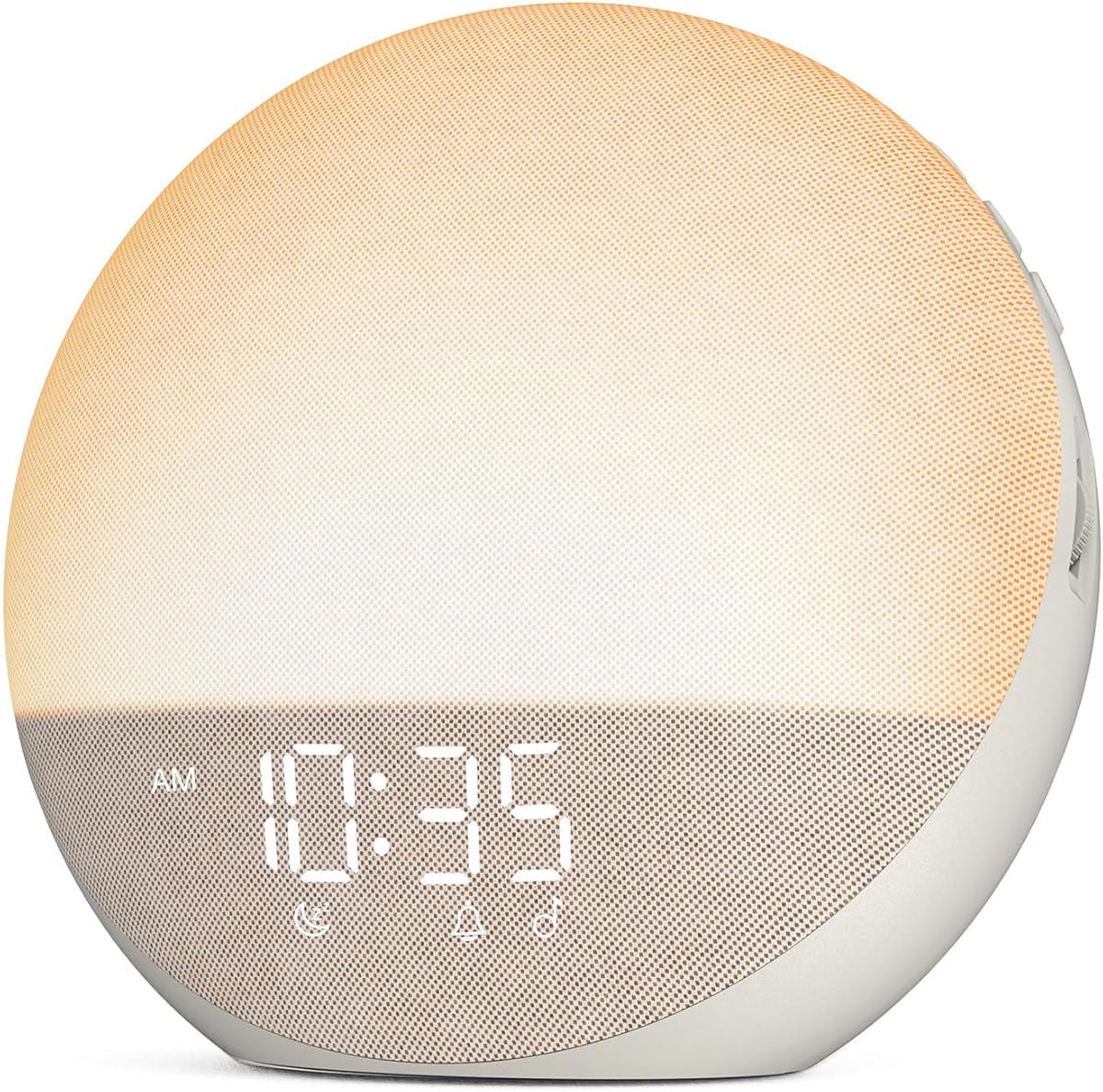
The Sunrise Alarm Clock with Sound Machine has a 4.8 rating, making it the highest-rated model in the supplied dataset. Its wake-up sequence starts with a low crimson glow, progresses through orange and yellow, and reaches bright white over a 10- to 60-minute period. That staged color progression is a notable alternative to a simple brightness increase and gives users a more natural-looking dawn.
We may earn a commission when you buy through this link, at no additional cost to you.
Thirty relaxing sounds include white noise, ocean waves, rain, birdsong, and lullabies. A configurable timer from 15 to 180 minutes automatically ends the sound and light, while 16 volume levels and seven alarm sounds—including conventional beeps—provide flexibility for heavy sleepers. The display can be dimmed or switched off completely, and eight light colors with ten brightness levels also support reading and nighttime use.
This model is deliberately simple: there is no app, no Bluetooth, and no mention of dual alarms. Instead, it focuses on intuitive buttons, a linen-style exterior, and a compact footprint. It requires continuous AC power, although an internal memory battery preserves time settings during an outage. That continuous-power requirement is a potential drawback for people who want cordless bedside flexibility.
It is a compelling value-oriented recommendation for a broad range of users, including children, teens, adults, and heavy sleepers. Its detailed dawn sequence, high rating, and strong sound assortment compensate for the absence of connected features. Choose it when straightforward controls and a complete light-and-sound routine matter most.
Crimson, orange, yellow, and bright white create a more detailed visual progression than a single-color ramp. The gradual effect is designed to signal bedtime gradually while maintaining a clear end point at the alarm.
The same light can serve as a reading lamp, night light, or mood light. Adjustable display brightness, complete display-off capability, and a timed shutdown make it comfortable across different stages of the night.
We may earn a commission when you buy through this link, at no additional cost to you.
The Vivilumens Sunrise Alarm Clock is a compact multifunction model aimed at adults, including heavy sleepers. Its supplied rating is 4.3. The sunrise light brightens for ten minutes before the alarm, offering a shorter visual buildup than most competing models. That compact approach may work well for users who want the light experience without planning around a long ramp.
We may earn a commission when you buy through this link, at no additional cost to you.
Two alarm modes support different wake-up times, and the clock can use either 12- or 24-hour formatting. Its ten built-in sounds include a white-noise-style sleep companion, while selectable 30, 60, and 90-minute timers can turn the audio and light off. A breathing-light function adds a gradual visual rhythm intended to make the room feel calmer as bedtime approaches.
A built-in USB charging port adds everyday utility, while 12-level volume adjustment and a nine-minute nap function support different sleep preferences. The main compromises are the short sunrise duration and smaller sound library. People who want a 30- or 60-minute dawn or a larger range of environmental audio may prefer one of the other models in this guide.
It is a sensible pick for a compact nightstand, a second bedroom, or a user who wants sunrise lighting without a large speaker and sound catalogue. The dual alarms and USB port make it particularly practical for shared or multi-use spaces.
The combination of dual alarms, a breathing light, a sleep timer, and USB charging gives the compact unit more daily utility. It can organize a bedside without filling it with separate accessories.
Two alarm modes and selectable 12- or 24-hour display make the clock adaptable to different users and preferences. Nine-minute snooze or nap timing adds a quick way to extend rest.
We may earn a commission when you buy through this link, at no additional cost to you.
The Natural Wake-Up Light Clock combines a 20- to 30-minute sunrise with 30 nature-based sounds and emphasizes simple physical operation. Its rating is 4.3. The listed light output ranges from 0.5 to 300 lumens, while separate light and volume adjustment levels make it possible to tune both the visual and audio experience.
We may earn a commission when you buy through this link, at no additional cost to you.
The bedtime side of the product is particularly useful. A 15- to 60-minute sunset fade moves from warm amber to dark, and continuous nature sounds include rain, ocean, and lullabies. Morning use combines the sunrise with bird chirps. Dual independent alarms distinguish weekday from weekend schedules, and automatic memory stores brightness and volume selections so they do not need to be reset.
Large top-mounted buttons and physical knobs are intended to make nighttime operation easy without a phone or app. The listing also references a 30-day return period and an 18-month warranty, but buyers should verify current terms on the product page. Some numerical marketing claims in the supplied description, such as a gentle wake-up rate, are not accompanied by independent methodology, so they should be treated cautiously.
This clock is a good fit for people who dislike touchscreens or complicated setup. The combination of a sunset fade, sunrise simulation, dual alarms, and physical controls is particularly compelling for adults and families who want dependable access to essential functions. Its shorter 20-30 minute sunrise means it is not the longest transition in the group, but it offers a balanced and approachable alternative.
Physical knobs and large top-mounted buttons are easier to identify by touch than a feature-dense touchscreen. The product also retains key settings automatically, reducing repetitive setup.
A timed amber sunset fade provides a wind-down counterpart to the morning glow. This two-sided approach makes the clock more useful than a standard alarm with a single sunrise effect.
We may earn a commission when you buy through this link, at no additional cost to you.
The JALL Beige Linen Clock is built around a large front panel that can reach approximately 400 lux during its sunrise. Its 4.4 rating reflects a well-rounded feature set, and the design consolidates a wake-up light, white-noise machine, night light, Bluetooth speaker, and rear USB charging port in a 7-by-7-by-3.6-inch unit.
We may earn a commission when you buy through this link, at no additional cost to you.
The standout bedroom feature is the L0 display setting, which switches the clock face off rather than leaving a faint residual glow. The wake-up light has 20 separate brightness levels, and the sunrise duration can range from zero to 60 minutes. Seven wake-up sounds and 16 volume levels provide morning audio, while 25 built-in sounds cover white, pink, and brown noise along with rain, waves, wind, birds, campfire, and melodies.
A sleep timer can run from 10 minutes to eight hours, which is the longest stated timer in the group. The display offers five levels, including complete darkness. Built-in memory preserves the alarm, sound, and brightness settings following an unplugging or power interruption, and Bluetooth connection enables automatic time synchronization. The limitation is one daily alarm rather than separate schedules, plus the expectation that users will connect by Bluetooth when they want the automatic time update.
This is a strong recommendation for light-sensitive sleepers who need the clock face genuinely dark while retaining the sound machine. The long timer, storage, and USB port also make it well suited to a shared or frequently used nightstand.
L0 turns the clock face off completely instead of merely reducing it to a faint level. The night light and sound functions can continue, offering a practical solution for highly light-sensitive sleepers.
The approximately 400-lux full-panel sunrise and adjustable zero-to-60-minute duration provide a wide range of visual wake-up options. An eight-hour sleep timer gives the sound machine substantially more all-night flexibility.
We may earn a commission when you buy through this link, at no additional cost to you.
The Dreamegg Sunrise Alarm Clock is an all-in-one bedside device with a straightforward appeal. Its 4.2 rating, adjustable 0- to 60-minute sunrise, and library of 29 sounds make it a capable option for adults and kids who prefer gradual light with optional audio. The full-size display can be dimmed or switched off to create a darker sleeping environment.
We may earn a commission when you buy through this link, at no additional cost to you.
The sound library includes seven white noises, seven fan sounds, eight nature tracks, five lullabies, and two meditation tones. The listing describes the audio as non-looping, although the practical experience will depend on playback settings. A sleep timer, night light, white-noise function, and standard alarm audio are all included, allowing the device to cover several stages of a bedtime and morning routine.
Its most useful individual feature is the one-tap favorite mode. Users can save their preferred sound, lighting, brightness, and volume, then restore that combination without repeating several adjustments every night. The lack of stated Bluetooth and dual alarms limits its appeal for people who want phone synchronization or multiple scheduled wake times, but its overall simplicity may be preferable for seniors and other users who value consistent controls.
This is a compelling recommendation for anyone who dislikes repeating bedtime settings or wants a broad sound selection in a single unit. It is less suitable for households that require separate alarms for multiple people, but the favorite-scene function makes it particularly practical for a consistent individual routine.
Saving a favorite scene is a simple but meaningful convenience. It avoids repeated changes to light, sound, brightness, and volume, making the clock easier to use consistently.
White noise, fan sounds, nature, lullabies, and meditation tones cover a broad range of preferences. The organization makes it easier to choose a familiar background or a more focused relaxation track.
We may earn a commission when you buy through this link, at no additional cost to you.
The PHILIPS SmartSleep HF3650/60 is the most feature-oriented premium selection in this guide, with a supplied rating of 4.2. It supports customizable sunset, sunrise, and sound profiles, allowing morning and bedtime routines to be adjusted rather than governed by one fixed program. RelaxBreathe uses light-guided breathing to support a more deliberate transition into sleep.
We may earn a commission when you buy through this link, at no additional cost to you.
The device also includes a midnight light, FM radio, phone charging dock, power back-up, speaker, automatic dimming display, bedside-lamp function, and smart snooze. That collection of features makes it more than a sunrise lamp: it is designed to manage several bedside needs from one central unit. The phone charging dock is particularly useful for users who already keep their phone beside the bed.
The trade-off is complexity relative to simpler models. The supplied description does not list an exact number of sounds, nor does it expose detailed control ranges in the same way as several competing products. Its 4.2 rating is also lower than those of the highest-rated selections, so buyers should consider whether the relaxation and charging features justify the premium design. Philips describes its wake-up lights as recommended by physicians and pharmacists for establishing a healthy sleep and wake routine, adding a strong design rationale.
This is the premium recommendation for someone who wants a deeply integrated sleep and wake routine rather than only a better alarm. It is especially suitable for users who will regularly use guided relaxation, a phone dock, radio, and bedside lighting. Those who mainly want a large sound library should compare it with the ARUQO or budget-oriented models.
RelaxBreathe combines a changing light pattern with guided breathing. Sunset simulation and customizable sound profiles extend the wind-down beyond the basic function of an alarm clock.
A phone charging dock, power back-up, speaker, FM radio, midnight light, automatic display dimming, and bedside lamp create a broad collection of functions. The result is designed to replace several separate bedside accessories.
We may earn a commission when you buy through this link, at no additional cost to you.
The most useful sunrise alarm clock is the one whose light, sound, controls, and power method fit your bedroom and routine. Compare the duration of the sunrise, whether the display can be completely hidden, the available alarm schedules, and how much bedtime functionality you actually need.
Look for a gradual sunrise that lasts long enough to move from darkness to full brightness without making you wait through an excessively long ramp. The choices in this guide range from a ten-minute simulation to adjustable periods of 60 minutes. Some use a simple brightness increase, while others describe distinct color stages such as crimson, orange, yellow, and white. A more gradual progression may feel more natural, but a shorter ramp is easier to fit into a compressed morning schedule. Brightness or lux controls also matter because the correct intensity depends on room size, curtains, and how sensitive you are to light.
A strong alarm clock should do more than replay one tone. Sound libraries commonly include white, pink, brown, and blue noise, as well as rain, waves, wind, birds, fan sounds, and lullabies. Models with around 25 to 30 sounds provide greater variety, while a shorter library may be sufficient if you already know which sounds help you sleep. Also compare timer length. Options such as 15, 30, 60, 90, and 120 minutes suit different wind-down periods, while the JALL Beige Linen Clock extends to eight hours for people who want near-continuous sound.
Light-sensitive sleepers should look for stepless dimming or a display that can be switched off completely. The L0 setting on the JALL Beige Linen Clock is notably different from merely setting the numerals to their lowest brightness, because the face becomes fully dark while the sound machine and night light continue. Auto-dimming is also useful because it allows the display to change according to the ambient light level or time. Consider whether ambient lighting is needed through the night, particularly for children, caregivers, or anyone who wants to read without turning on a separate lamp.
Single-alarm models are generally sufficient for people who keep the same schedule every day. Dual alarms are more valuable for couples, shift workers, and households that distinguish weekdays from weekends. The JALL Full-Screen model supports separate routine settings, while the Natural Wake-Up Light Clock provides independent weekday and weekend alarms. Snooze style also deserves attention: a clearly marked button or tap snooze is easier to use half-asleep than a small control. The ARUQO model offers unlimited stated nine-minute snoozes, which may be useful for short additional rests.
Compact lamps may illuminate only the area directly beside the bed, while full-front panels spread light more broadly across the room. Heavy sleepers may benefit from a larger light source or higher maximum output, whereas light sleepers may need a lower starting level. The JALL Beige Linen Clock reaches approximately 400 lux across its front panel, and the full-screen JALL model is also designed to provide broad coverage. Room size, curtains, and placement remain important because even a powerful lamp may not brighten a large bedroom evenly.
Decide how much technology you want on your nightstand. Physical buttons, dials, and top-mounted controls are straightforward and remain usable without an app. Bluetooth can add phone audio, automatic time synchronization, and favorite-music playback, but it may require a connection and an initial setup routine. The Odokee and JALL models support Bluetooth audio, and both JALL models include phone time synchronization. Models without Bluetooth avoid app and pairing demands, which can be advantageous for people who want fewer devices and simpler routines.
Check whether a model needs continuous wall power, accepts a backup battery, or is designed to run on replaceable batteries. The budget-focused Sunrise Alarm Clock with Sound Machine requires continuous AC power and uses an internal battery to preserve settings during outages. The ARUQO model instead uses two AAA batteries, which are not included. Continuous power is generally convenient for a permanent bedside unit, while battery operation can be preferable for travel, children’s rooms, or locations where an outlet is inconvenient. Make sure the chosen arrangement matches the supplied cable, adapter, or battery requirements.
The best device for you may be one that also supports bedtime. Sunset simulation, a breathing-light function, a reading lamp, FM radio, phone charging, and favorite-scene presets can reduce bedside clutter. Philips focuses on the complete routine with RelaxBreathe and coordinated sunset and sunrise profiles. The Vivilumens model adds a breathing light and USB port, while the Dreamegg clock stores an entire preferred scene. Avoid paying for features you will not use, but do consider them when they solve a recurring bedside problem.
Begin by placing the clock where the sunrise can reach you without shining directly into your eyes at full brightness. Position it at a similar height to the bed, remove anything blocking the light panel, and decide whether the sound volume should carry across the room. If the model has a sunset or bedtime mode, set that before the first morning so the device is ready for a complete routine.
Choose a sunrise duration that matches how long you need to wake, then test the alarm volume before relying on it. If the display is too bright, use the dimming or complete-off setting. For models with a sleep timer, select a duration that ends shortly before the intended alarm. Connect Bluetooth only when you want phone audio or automatic time synchronization, and confirm that the clock still retains its settings after a brief unplugging or power interruption.
Clean the exterior with a soft, dry or lightly damp cloth and avoid spraying liquid directly onto the clock. Do not block the speaker, light panel, touch controls, or ventilation openings. Follow the supplied adapter, cable, and battery requirements, and replace batteries promptly in battery-powered units. Periodically confirm that the alarm, snooze, and light settings still work after a software-free configuration change or power event.
They can be, particularly for people who find a sudden phone or clock alarm jarring. A sunrise clock gradually introduces light before the audio alarm, which may make waking feel less abrupt. The best choice still depends on room brightness, sound sensitivity, schedule, and whether you need features such as dual alarms or a sleep timer.
A 20- to 60-minute ramp is generally the most common range in this guide. Longer transitions may feel gentler, while shorter ones suit busy mornings. The best duration depends on how easily you wake, how dark the room is, and how far the clock is from the bed. Test several settings before settling on one.
Most of the models listed emphasize physical controls and do not require an app for their core functions. Some use Bluetooth for phone audio or time synchronization, but that is different from requiring an internet connection. Check the product listing if automatic phone setup or streaming is essential to your preferred routine.
They may provide a better visual wake-up cue, especially with a wide light panel, strong maximum output, and adjustable alarm volume. No device should be treated as a guarantee against oversleeping. Use the sunrise as part of a consistent schedule, keep the audio at a safe level, and consider whether a conventional backup alarm is appropriate for safety-critical responsibilities.
A sunrise alarm is programmed to brighten gradually before a set wake-up time, while a night light provides general low-level illumination. Many products combine both functions, allowing the same light panel to create ambience, support reading, or fade out during sleep. The sunrise timer and alarm programming are the key differences.
That depends on light sensitivity. Some people are comfortable with a dim time display, while others need darkness. Look for stepless dimming or an L0 setting that turns the face off entirely. Models with separate display and ambient-light controls let you keep the sound machine running without leaving visible numerals in the room.
No. Bluetooth is useful for streaming personal audio, synchronizing the time, or reducing manual setup, but many core functions work without a phone. Choose a Bluetooth model if you regularly listen to music, podcasts, or audiobooks in bed. Choose a non-connected model if simpler controls and fewer pairing requirements are more important.
Look for a large sunrise panel, a gradual color transition, a light-only alarm mode, and sounds appropriate for children such as lullabies, rain, or birds. A fully dimmable display can reduce nighttime disruption, while a snooze control may be useful for an older child. Avoid placing the unit where a curious child could pull the cable or knock it from the bedside.
The Odokee model is the strongest all-around selection because it combines a broad sunrise range, 25 sounds, flexible alarm modes, a dimmable night light, and a stereo Bluetooth speaker. The ARUQO model is especially appealing for families because of its high rating, detailed dawn colors, extensive child-friendly sound library, and silent light-only alarm option. For the best value-oriented experience, the Sunrise Alarm Clock with Sound Machine provides a rich 30-sound library and a detailed color sequence without relying on connected apps.
Prioritize the features that solve a real problem: full display darkness for light-sensitive sleepers, dual alarms for different schedules, a long timer for all-night sound, or a phone dock for frequent bedside use. Brightness and sound should be tested in the room where the clock will live, because a device that seems subtle in a showroom may feel very different beside the bed. Simple physical controls and reliable setting memory are also valuable for daily use.
Ratings, product details, and availability can change, and current prices vary between sellers. Before purchasing, compare the latest listing, confirm power and included accessories, and check whether the sunrise duration and sound controls meet your needs. Use the product links in this guide to review the current version of each clock before making your final decision.